
Road Awareness for New Drivers: Building Safer Habits from Day One
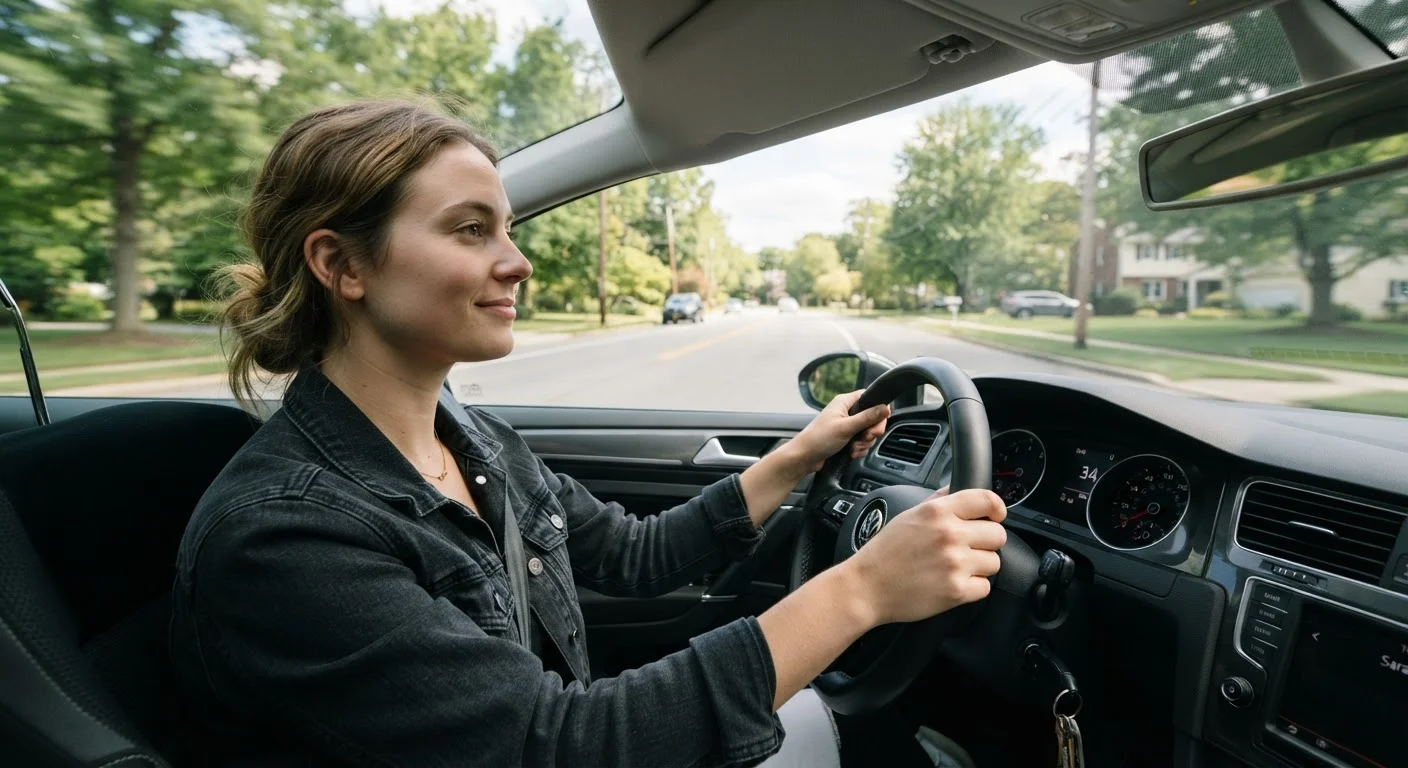
Photo credit: PrimeReads.net | Discover Insightful And Creative Blogs
In this article
New to driving? This guide covers the foundational awareness skills — scanning, anticipation, and positioning — that separate safe drivers from nervous ones.
Key Takeaways
- Road awareness - not reflexes - is the primary skill that keeps new drivers out of trouble.
- Scanning far ahead and checking mirrors frequently reduces surprise and gives you time to react.
- Anticipating what other drivers might do is more protective than reacting to what they do.
- Maintaining a buffer of space around your vehicle is a simple, effective safety tool.
- Most new-driver errors involve fixating too close to the front bumper rather than looking further ahead.
Why Road Awareness Matters More Than Reaction Speed
Most new drivers assume that fast reflexes are the key to staying safe. They're not. By the time you're reacting, you've already run out of options - you're just managing the outcome. What actually protects you is awareness: the ongoing, deliberate process of gathering information about your surroundings before situations escalate.
Research and driver training programs consistently point to the same finding - the majority of crashes involve a failure to perceive a hazard in time, not a failure to react quickly enough. This is why experienced drivers seem calm: they rarely need to panic-brake because they've already identified the risk and adjusted early.
For a complete view of the philosophy behind this approach, see what defensive driving actually means. Road awareness is the bedrock that defensive habits are built on, and the earlier you develop it, the faster everything else clicks into place.
Road awareness
The active, ongoing process of gathering information about your driving environment - including traffic, pedestrians, road conditions, and your vehicle's position - so you can make safe decisions in real time.
Scanning
A systematic eye-movement pattern used while driving to continuously check the road ahead, mirrors, and surrounding areas rather than fixing your gaze in one place.
Hazard anticipation
Predicting likely risks based on what you can currently see - for example, expecting a pedestrian to step out from behind a parked vehicle - before the hazard actually develops.
Following distance
The gap maintained between your vehicle and the one directly ahead. A larger gap gives you more time to stop or maneuver if the vehicle in front slows or stops suddenly.
Space management
Deliberately positioning your vehicle to maintain a buffer of clear space in multiple directions - front, rear, and sides - to preserve response options in case of an unexpected hazard.
Defensive driving
A driving approach that prioritizes hazard awareness, anticipation, and proactive adjustment over relying on quick reactions to sudden events.
Scanning the Road: Where Your Eyes Should Go
New drivers tend to stare at the road just in front of their hood. This is natural - the car feels unfamiliar and the immediate environment feels overwhelming. But fixating close dramatically reduces how much time you have to identify and respond to anything ahead.
The standard guidance is to scan 10-15 seconds ahead in built-up areas and further on open roads. At 30 mph, 10 seconds translates to roughly 440 feet - a substantial look-ahead distance. At highway speeds, you're covering that same 440 feet in about 5 seconds, which is why the principle scales with speed.
Effective scanning is not passive staring - it's active and rhythmic:
- Look far ahead as your primary reference point, checking for slowing traffic, turning vehicles, or pedestrians stepping off curbs.
- Check your mirrors every 5-8 seconds so you always know what's behind and beside you.
- Glance left and right at intersections, driveways, and parking lot exits - even when you have the right of way.
- Return to the far horizon after each check. Your eyes shouldn't dwell anywhere too long.
This systematic pattern builds a mental picture of your environment that makes hazards predictable rather than surprising.
Anticipation: Reading What Hasn't Happened Yet
Anticipation is the ability to predict likely hazards based on what you can see now - before those hazards materialize. It's what separates a driver who spots the gap in traffic and adjusts speed early from one who hits the brakes hard when a car suddenly pulls out.
Practical anticipation looks like this:
- A pedestrian on the sidewalk nearing an intersection might step into the road - ease off the gas early.
- A delivery truck stopped in the right lane usually means a driver will open a door or a pedestrian will walk around it - give extra clearance.
- Brake lights two or three cars ahead indicate slowing traffic - don't wait for the car directly in front of you to stop.
- Children near a parked car in a residential area often means unpredictable movement - slow down proactively.
The mental habit behind anticipation is asking: what could realistically happen here? You don't need to assume the worst, just the plausible. Over time, pattern recognition makes this automatic.
Certain road environments demand heightened anticipation. Merges, roundabouts, and lane changes are situations where conflicts most frequently occur - understanding the geometry of those risks helps you position yourself before they develop.
Practice Anticipation on Every Drive
Treat each routine trip as a low-stakes opportunity to practice reading the road. Narrate hazards out loud - 'that cyclist might move left,' 'those brake lights are two cars ahead' - to build the habit consciously. Within a few weeks, this kind of forward thinking becomes instinctive and requires no deliberate effort.
Positioning and Space Management
Where you place your vehicle on the road determines how much time and room you have to respond to anything that goes wrong. New drivers often focus purely on staying in their lane - which is necessary, but not sufficient.
Space management means actively maintaining a buffer in multiple directions:
- Following distance: The two-second rule is the baseline minimum. In poor weather, at night, or at higher speeds, extend it. See why most drivers apply the two-second rule incorrectly to get this right from the start.
- Lateral space: Don't hug the edge of your lane. Center positioning gives you room to respond to encroachment from either side.
- Escape routes: In heavy traffic, be aware of where you could move if the car ahead stops suddenly - an empty lane or a shoulder that's safely usable.
Good positioning also improves your visibility. A larger following distance means you can see further ahead without the vehicle in front blocking your view. It's one adjustment with multiple compounding benefits.
Before any longer journey, vehicle condition matters too. A well-maintained car is more responsive when it counts - our pre-drive safety checklist covers the checks worth making before you set off.
Common Awareness Mistakes New Drivers Make
Even conscientious new drivers fall into predictable patterns. Recognizing these early helps you correct them before they become ingrained:
- Tunnel vision at intersections
- Checking only the direction required by traffic signals, without scanning for cross traffic or pedestrians on the conflicting path. Always look both ways, even on green.
- Under-using mirrors
- Mirrors become useful only when checked consistently. Many new drivers glance at them occasionally rather than integrating them into a regular scanning rhythm.
- Over-focusing on the car directly ahead
- Reacting only to the car immediately in front gives you minimal response time. Train yourself to monitor two or three vehicles ahead whenever visibility allows.
- Distraction inside the cabin
- Passengers, music, navigation apps - each competes for attention. Cabin dynamics affect driver focus in ways new drivers often underestimate.
- Ignoring environmental context
- Driving identically in a school zone and on an open road is a common error. Different environments require different alert levels. Understanding how driving changes by environment helps you calibrate appropriately.
None of these errors are signs of a bad driver - they're the natural starting point for someone who hasn't yet automated the awareness process. The goal is gradual improvement through conscious practice, not perfection from the first day.
This article provides general driving education and is not a substitute for qualified instruction or your state's official driver training requirements. Always follow local traffic laws and consult a licensed driving instructor for personalized guidance.
Frequently Asked Questions

Author
Cars Editorial Team
Cars Editorial Team is the collective byline for our editorial team and contributor network. Articles published under this byline or an editorial pen name are researched, written, and reviewed according to our editorial standards for clarity, consistency, and independence before publication.
View all articles →