
Driving With Passengers: How Cabin Dynamics Affect Driver Attention
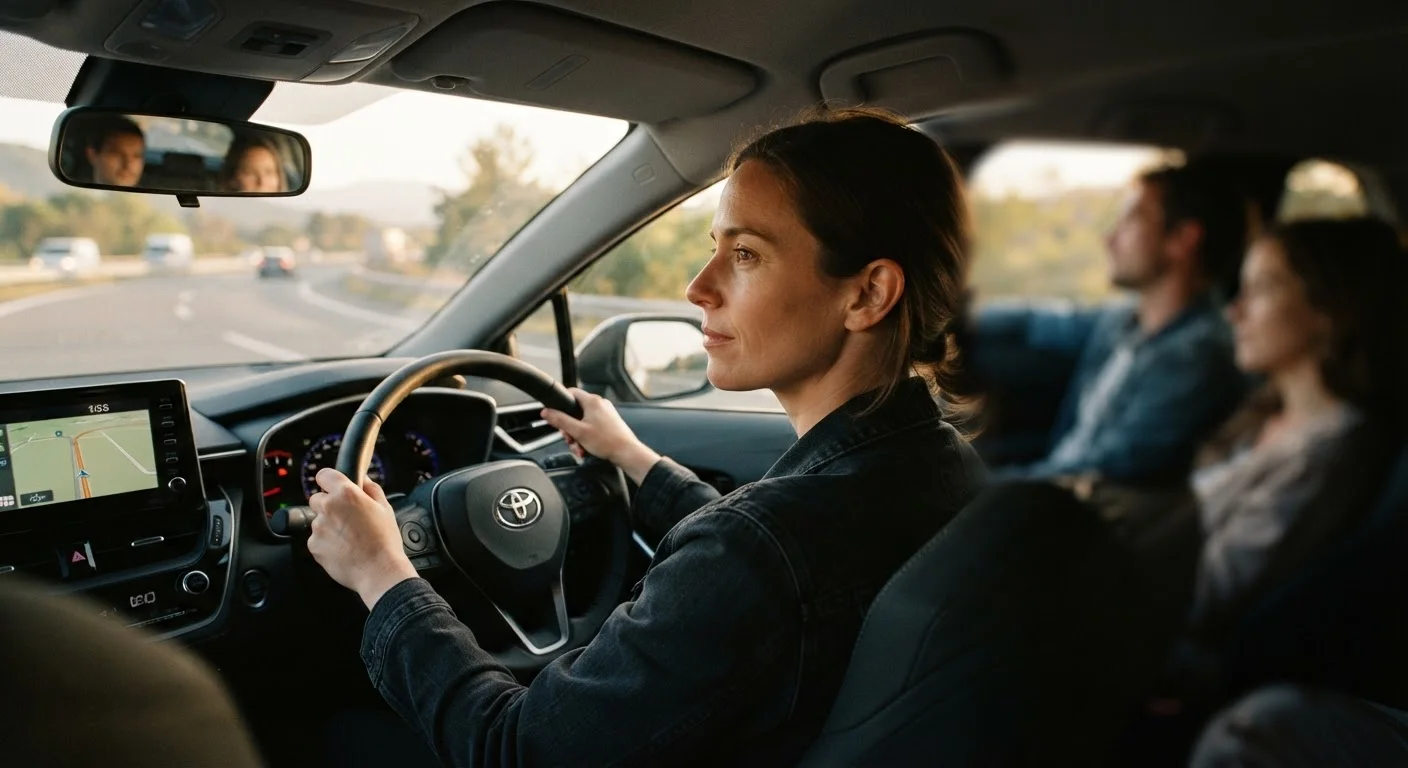
Photo credit: PrimeReads.net | Discover Insightful And Creative Blogs
In this article
Passengers change the dynamic inside a vehicle in ways that can affect concentration and decision-making. Learn how to manage those distractions deliberately.
Key Takeaways
- Conversations with passengers create cognitive load that can reduce a driver's road awareness.
- Unlike phone calls, passengers typically self-regulate their talk during high-demand driving moments.
- New and teen drivers face the highest distraction risk when carrying peers as passengers.
- Simple pre-trip communication with passengers can meaningfully reduce in-cabin distractions.
- Emotional conversations carry a higher attention cost than neutral small talk while driving.
The Cabin Is Not a Neutral Space
Most drivers think of distraction as something that comes from a phone screen or a loud radio. But the people sitting beside and behind you can pull your attention just as effectively - sometimes more so - through conversation, movement, and emotional cues. Research in traffic psychology consistently identifies passenger interaction as a measurable source of driver distraction, distinct from but comparable to other in-vehicle disruptions.
The effect isn't uniform. It depends on the driver's experience level, the nature of the conversation, the road environment, and how many passengers are present. Understanding these variables helps drivers manage the cabin environment deliberately rather than reactively. For a broader look at how everyday patterns chip away at focus, see how daily habits fragment attention.
Why Passenger Conversations Tax Attention Differently
Talking while driving isn't automatically dangerous - but it does consume working memory. The brain's capacity to simultaneously process traffic signals, manage speed, anticipate hazards, and hold a conversation is finite. When conversational demand rises, traffic monitoring can slip.
One important distinction separates passenger conversations from phone calls: passengers share the physical environment. A passenger can see a merge approaching or notice the driver braking hard, and will typically pause or lower their voice in response. That natural social calibration reduces - though doesn't eliminate - the cognitive burden. Phone-based conversations don't carry this self-correcting mechanism, which is one reason hands-free calls still carry meaningful cognitive risk even without a screen involved.
Emotionally charged conversations are a separate category. Arguments, stressful news, or intense personal discussions occupy cognitive and emotional bandwidth simultaneously, leaving less available for the task of driving. This is not a minor effect - studies on driver cognition suggest that emotionally activating content can degrade hazard detection response in ways that feel invisible to the driver in the moment.
“The social nature of passenger conversation is precisely what makes it different from other distractions - it creates pressure to respond, to maintain eye contact, and to process emotional meaning, all of which compete with driving.”
— Donald Redelmeier, Physician and road safety researcher, University of Toronto
Who Is Most at Risk
Experience level matters enormously. Novice drivers - particularly teenagers - show significantly elevated crash risk when carrying peer passengers. This is well-documented enough that many U.S. states restrict the number of passengers teen drivers may carry under graduated licensing laws. The reason is straightforward: new drivers haven't yet automated the fundamental tasks of vehicle control and hazard scanning. Every additional demand on attention, including social pressure from peers, competes directly with skills that still require conscious effort.
Experienced drivers are not immune, but they handle passenger distraction better on average because core driving skills have become more automatic. Even so, experienced drivers can be caught off guard by unexpected conversational demands - a heated argument, a child in distress, or a passenger suddenly pointing at something outside the vehicle.
If you're building foundational awareness skills, the principles in road awareness for new drivers apply directly to managing any in-cabin distraction, not just external ones.
Best Practices for Managing Passenger Distraction
Set expectations with passengers before you pull out of the driveway.
Passengers who understand that you may need to pause conversation during demanding driving moments are less likely to take it personally and more likely to cooperate. This removes the social friction of having to explain yourself mid-drive.
Actively reduce conversation during high-demand driving situations.
Merging onto a busy highway, navigating an unfamiliar intersection, or driving in heavy rain all require more of your available attention. Temporarily suspending conversation at these moments is a deliberate skill, not rudeness.
Avoid initiating emotionally activating topics before or during drives.
Conversations that carry emotional weight - disagreements, stressful updates, difficult decisions - occupy cognitive and emotional resources that overlap with safe driving. Deferring these discussions until you've parked is a practical way to protect attention.
Limit the number of passengers when you're driving in unfamiliar or demanding conditions.
Each additional passenger raises the potential for noise, movement, and social interaction competing for your attention. Reducing passenger count during challenging drives - bad weather, unfamiliar roads, night driving - lowers that aggregate demand.
Keep rear-seat passengers, especially children, organized before you depart.
Children in the back seat generate frequent, unpredictable demands - dropped items, sibling conflict, questions. Proactively addressing needs before setting off reduces mid-drive interruptions significantly.
Driving at night compounds many of these risks - reduced visibility leaves less margin for delayed hazard detection. The habits covered in night driving skill-building pair well with passenger management strategies when conditions are demanding.
Quick Actions You Can Take Before Your Next Trip
Fatigue stacks on top of these effects. A tired driver already has degraded reaction time and narrowed attention - adding active passenger conversations into that equation raises risk further. Understanding how fatigue impairs reaction time gives useful context for why rest before a drive matters as much as managing in-cabin behavior.

Author
Cars Editorial Team
Cars Editorial Team is the collective byline for our editorial team and contributor network. Articles published under this byline or an editorial pen name are researched, written, and reviewed according to our editorial standards for clarity, consistency, and independence before publication.
View all articles →