
The Two-Second Rule and Why Most Drivers Are Following It Wrong
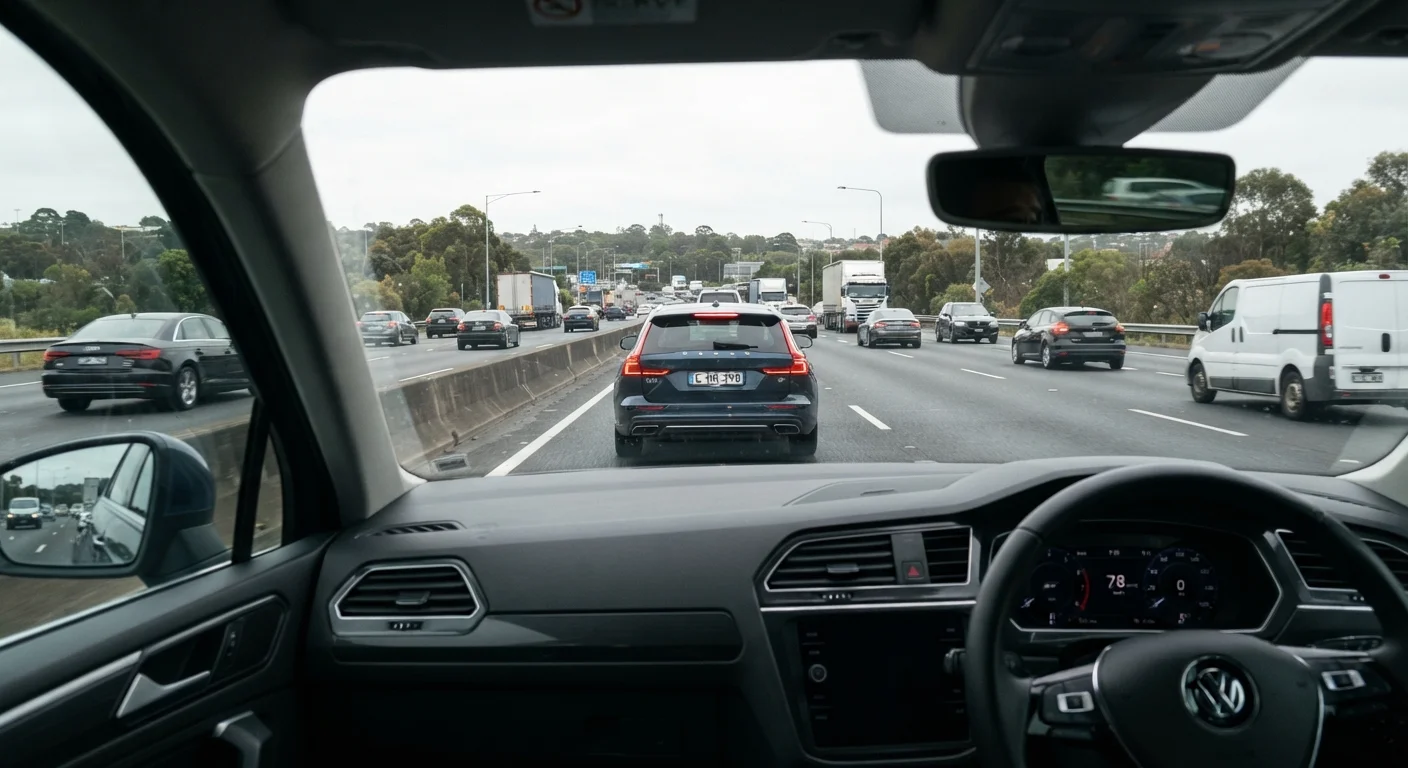
Photo credit: PrimeReads.net | Discover Insightful And Creative Blogs
In this article
Following distance is one of the most misunderstood concepts in road safety. Here's what the two-second rule really means and when to extend it.
Key Takeaways
- Two seconds is the minimum following gap under ideal conditions - not a universal safe distance.
- Most drivers underestimate the gap needed at highway speeds because two seconds covers much more ground than it looks.
- Rain, fog, heavy vehicles, and fatigue all require extending your following distance well beyond two seconds.
- Tailgating is a leading factor in rear-end collisions, which are among the most common crash types on US roads.
- Reaction time alone averages about 1.5 seconds before braking even begins - leaving almost no margin at two seconds.
What the Two-Second Rule Actually Says
The two-second rule is a straightforward technique: pick a fixed point on the road - a sign, a bridge, a painted line - and when the vehicle ahead passes it, count two full seconds before you reach the same point. If you get there before two seconds are up, you're following too closely.
The rule works because it scales with speed. At 30 mph, two seconds translates to roughly 88 feet. At 65 mph, that same two seconds is approximately 190 feet. That's the practical advantage over fixed-distance rules - it adjusts automatically as your speed changes.
What it doesn't do is account for the conditions around you. The two-second rule was designed as a minimum baseline under optimal conditions: dry pavement, good visibility, alert driver, light traffic. The moment any of those factors shifts, so should your gap.
For a fuller picture of how following distance fits into broader road awareness, see our guide on defensive driving habits.
Common Myths That Put Drivers at Risk
Despite being one of the most widely taught driving concepts, the two-second rule is also one of the most consistently misunderstood. Below are the myths that get drivers into trouble.
Myth
Two seconds is always enough stopping distance at any speed.
Fact
Two seconds is a minimum under ideal conditions. At highway speeds and in poor conditions, it leaves almost no real safety margin.
Reaction time alone - the gap between seeing a hazard and your foot reaching the brake - averages around 1.5 seconds for an alert driver. At 65 mph, that reaction distance is roughly 143 feet before braking even begins. A two-second gap at that speed gives you about 190 feet total, leaving only a slim margin for actual braking. Add any impairment, distraction, or degraded road surface, and two seconds becomes dangerously inadequate.
Myth
As long as you can see the car ahead of you, you're a safe distance away.
Fact
Visibility of the vehicle ahead has nothing to do with stopping distance. You can clearly see a car and still be unable to stop before hitting it.
This misconception conflates two separate concepts: visibility and stopping distance. You might have a perfectly clear view of the car 50 feet ahead at 60 mph, but that distance is completely inadequate for emergency braking. Stopping distance depends on speed, road surface, vehicle condition, and reaction time - not on whether you can see the car in front of you.
Myth
The two-second rule applies the same way in city traffic as it does on the highway.
Fact
Urban and highway driving have very different hazard profiles. City driving often requires heightened awareness of pedestrians, cyclists, and frequent stops - not just following distance.
At lower city speeds, a two-second gap is more achievable, but urban environments introduce hazards that don't apply on open roads: pedestrians stepping off curbs, cyclists in blind spots, and vehicles pulling out from side streets. In stop-and-go traffic, maintaining a consistent gap also helps smooth traffic flow and reduces the risk of being caught off-guard by sudden braking. Collision-prone manoeuvres like merges and lane changes also demand extra spacing judgment beyond the basic two-second formula.
Myth
Tailgating only becomes dangerous at high speeds.
Fact
Rear-end collisions at low speeds cause serious injuries and are extremely common in everyday urban driving.
Whiplash and other neck injuries from low-speed rear impacts are well-documented in medical literature and account for a significant share of injury claims from traffic collisions. Even at 15-20 mph, an unexpected stop can result in a collision that causes lasting physical harm. The false sense of safety at lower speeds is one reason tailgating in city traffic is so prevalent - and so consequential.
When Two Seconds Isn't Enough
Several common driving conditions demand a significantly larger gap than two seconds provides.
- Wet or icy roads: Stopping distances can increase by 2-4 times on wet pavement and far more on ice. In rain or snow, a four- to six-second gap is a more realistic minimum.
- Following large trucks: Heavy commercial vehicles take considerably longer to stop than passenger cars. They also block your forward sight lines, meaning you need extra time to react to what they're reacting to.
- Highway speeds: At 70+ mph, even a two-second gap closes in a fraction of a second if the lead driver brakes hard. Many driving safety experts suggest three seconds as a practical highway baseline. Motorway-specific risks deserve their own consideration.
- Driver fatigue: Tired drivers have slower reaction times, which directly erodes whatever buffer your following distance provides.
- Towing a trailer: Added weight means longer stopping distances. A vehicle towing even a modest load needs a substantially larger gap.
As a general principle, conditions that reduce your ability to stop or react should prompt you to add seconds - not to maintain the minimum.
Putting It Into Practice
The gap most drivers maintain intuitively is far shorter than two seconds. Studies of real-world traffic consistently show that a large proportion of drivers follow at one second or less in normal conditions - particularly on congested roads where closing gaps feels socially expected.
Breaking that habit takes conscious effort, especially when other drivers fill the space you leave. That pressure is real, but yielding to it resets your safety margin to zero. A wider gap also gives you more time to scan further ahead, which is a core principle in building safer road awareness habits.
One practical technique: instead of counting seconds reactively, actively pick your reference point before the lead vehicle reaches it. This keeps the habit deliberate rather than mechanical.
Following distance also interacts with speed choice. Driving at the posted limit in poor visibility or dense traffic can leave you with insufficient time to react even with a proper gap. Speed limits and safe speed aren't always the same thing, and following distance is part of why.
This article provides general driver education information. Always follow applicable traffic laws and use your judgment for the specific conditions you encounter.

Author
Cars Editorial Team
Cars Editorial Team is the collective byline for our editorial team and contributor network. Articles published under this byline or an editorial pen name are researched, written, and reviewed according to our editorial standards for clarity, consistency, and independence before publication.
View all articles →