
Roundabouts, Merges, and Lane Changes: Where Drivers Most Often Collide
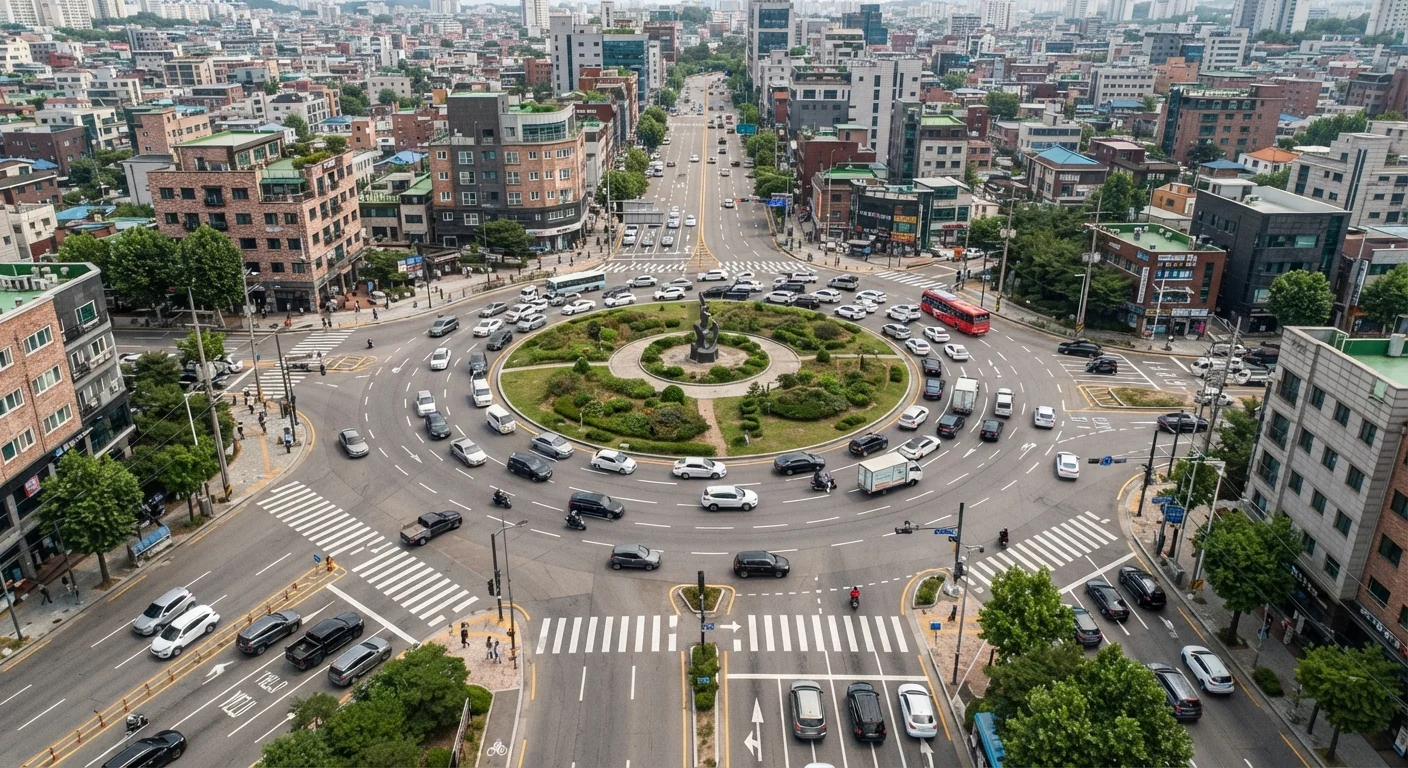
Photo credit: PrimeReads.net | Discover Insightful And Creative Blogs
In this article
Certain manoeuvres account for a disproportionate share of road incidents. This reference covers what makes each one risky and what careful drivers do differently.
Why Certain Maneuvers Carry Disproportionate Risk
Not all driving situations are created equal. While most miles pass without incident, a handful of recurring maneuvers - roundabouts, highway merges, and lane changes - account for a substantial share of crashes reported each year. According to the Federal Highway Administration, intersection-related crashes (which include roundabout entries and yield-point conflicts) make up roughly 40% of all reported collisions in the US.
What these maneuvers share is a demand for simultaneous tasks: assessing speed and gap, signaling intent, adjusting position, and monitoring multiple traffic streams - all at once. When any one of those tasks receives incomplete attention, the margin for error collapses quickly.
For drivers looking to build stronger situational awareness, this reference breaks down the specific mechanics of each high-risk maneuver and what separates careful execution from the habits that lead to collisions. See also the full safe driving resource for a broader look at defensive habits.
| Intersection crash share | ~40% of all US crashes (Federal Highway Administration) |
| Roundabout injury reduction vs. signals | Up to 75% fewer injury crashes (Insurance Institute for Highway Safety (IIHS)) |
| Primary roundabout collision point | Entry yield line |
| Lane change contributing factor | Blind spot neglect and late signaling (NHTSA crash factor data) |
| Correct lane-change sequence | Signal → mirrors → shoulder check → move |
| Merge ramp best practice | Reach near-freeway speed before the merge point |
Roundabouts: The Yield Point Nobody Respects
Modern roundabouts are generally safer than traditional signalized intersections - they eliminate the high-speed T-bone crash almost entirely. But they concentrate conflict at a single point: the entry yield line. Drivers failing to yield at entry, misjudging circulating vehicle speed, or attempting to change lanes mid-circle are the primary collision sources.
What Goes Wrong
- Rolling entries: Treating the yield as advisory rather than mandatory, especially when the roundabout appears clear but isn't.
- Speed mismatch: Circulating traffic moves faster than many drivers anticipate, compressing the available gap.
- Multi-lane confusion: In two-lane roundabouts, lane selection before entry determines exit lane - drivers who choose incorrectly often brake suddenly mid-circle.
What Careful Drivers Do
They slow before the yield line, not at it. They identify a gap in circulating traffic - not just the nearest vehicle - before committing to entry. In multi-lane roundabouts, they select the correct lane before the entry splitter island, not during the approach.
Highway Merges: The Gap Judgment Problem
Merging onto a highway or freeway compresses a fundamental challenge into a short distance: match the speed of fast-moving traffic, find a gap, and occupy it - without forcing other drivers to brake hard. Research from the Insurance Institute for Highway Safety (IIHS) consistently links late merging decisions to rear-end and sideswipe collisions near on-ramps.
What Goes Wrong
- Insufficient acceleration: Merging well below freeway speed forces highway traffic to adjust around you rather than alongside you.
- Late mirror checks: Committing to a lane without verifying the blind spot is clear.
- Stopping on the ramp: Treating a yield-at-merge as a full stop when gaps are available creates rear-end risk from vehicles behind on the ramp.
What Careful Drivers Do
They use the full acceleration lane to reach near-freeway speed before the merge point. They signal early to communicate intent, not just confirm it. They check mirrors and the blind spot in sequence - not simultaneously - and select a gap, not just a space. For high-speed environment nuances, motorway-specific risks are worth reviewing separately.
Lane Changes: Small Moves, Serious Consequences
Lane changes feel routine because they're frequent. That familiarity is part of the problem. The National Highway Traffic Safety Administration (NHTSA) has identified improper lane changes as a contributing factor in a significant portion of sideswipe and merge-type crashes, particularly on urban highways and multi-lane arterials.
What Goes Wrong
- Blind spot neglect: Mirrors alone don't cover the zone roughly alongside and slightly behind your vehicle. A head-check is required every time.
- Rapid multi-lane changes: Crossing two or more lanes in a single move eliminates the ability to react to vehicles in the intermediate lane.
- Signal timing: Signaling simultaneously with turning the wheel gives no lead time for adjacent drivers to react.
What Careful Drivers Do
They signal first, check mirrors, perform a shoulder check, then move - in that order, every time. They change one lane at a time. They also maintain adequate following distance before initiating a change, because a lane change is also a merge. For foundational scanning technique, road awareness fundamentals applies regardless of experience level. And remember: following distance matters just as much after a lane change as before one.
Building the Habit of Predictable, Deliberate Movement
The thread connecting roundabouts, merges, and lane changes is predictability. Crashes at these points rarely result from a single catastrophic error - they result from small misjudgments compounding: a late signal, a misread gap, an unchecked blind spot. Other drivers can compensate for one mistake; three mistakes at once leave no margin.
Defensive driving at these moments isn't about slowing down for its own sake. It's about making your intentions visible early, matching your speed to the environment, and verifying clearance before committing. These habits reduce the likelihood that another driver's error becomes your crash as well.
Conditions that reduce visibility - rain, glare, or darkness - amplify all of these risks. Night driving demands extra caution at precisely these high-conflict maneuver points. Drivers who adapt their approach by environment, as covered in urban vs. rural driving habits, consistently make better split-second decisions because the correct response is already practiced.

Author
Cars Editorial Team
Cars Editorial Team is the collective byline for our editorial team and contributor network. Articles published under this byline or an editorial pen name are researched, written, and reviewed according to our editorial standards for clarity, consistency, and independence before publication.
View all articles →