
Urban Roads vs. Rural Highways: How Safe Driving Changes by Environment
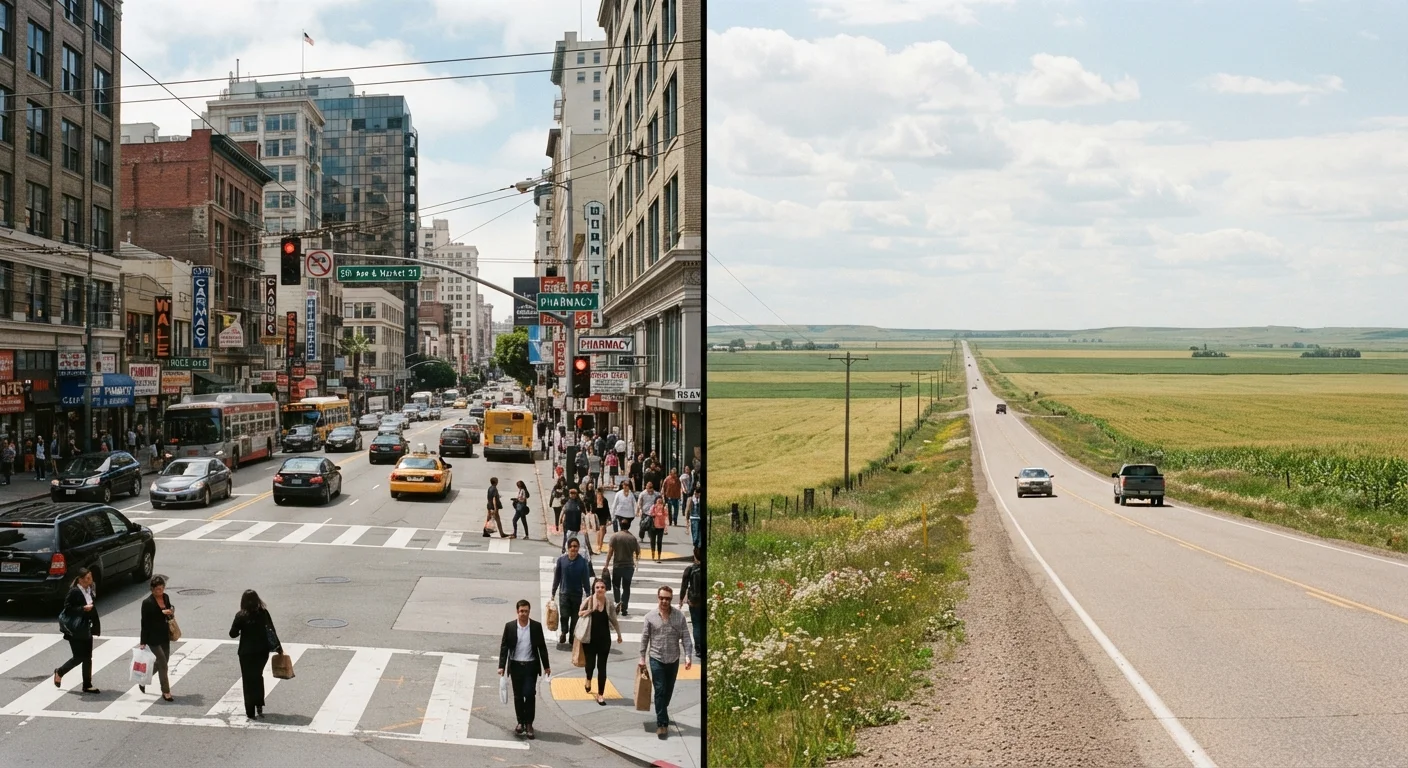
Photo credit: PrimeReads.net | Discover Insightful And Creative Blogs
In this article
Busy city streets and open rural roads each carry distinct risks. Understand how to adjust your driving habits depending on the environment you're in.
Key Takeaways
- Rural roads account for a disproportionately high share of fatal crashes despite lower traffic volumes.
- Urban driving demands constant attention to pedestrians, cyclists, and unpredictable stop-and-go traffic.
- Speed is the dominant risk factor on rural highways, where crashes are more likely to be fatal.
- Emergency response times are significantly longer in rural areas, making crash prevention even more critical.
- Effective safe driving means adapting your habits to the specific environment - not applying one-size-fits-all rules.
- Fatigue is a greater concern on long rural stretches where monotony can dull driver alertness.
Why Environment Shapes Risk More Than Speed Limits Do
Most drivers assume that slower city speeds mean safer driving. The data complicates that assumption. According to the National Highway Traffic Safety Administration (NHTSA), rural roads consistently account for roughly half of all traffic fatalities in the United States, despite carrying significantly less traffic than urban areas. The reason isn't simply speed - it's the combination of speed, road design, limited lighting, and delayed emergency response.
Urban roads are dense and demanding. Rural highways are deceptively open. Both environments carry serious risks, but those risks look very different. Safe driving means reading the environment you're actually in - not the one you'd prefer to be in. As this breakdown of speed limits vs. safe speed explains, the posted limit is often the starting point for judgment, not the end of it.
| Criterion | Urban Roads | Rural Highways |
|---|---|---|
| Typical speed range | 15-45 mph | 55-70 mph |
| Primary crash type | Intersection, rear-end, pedestrian | Run-off-road, head-on, animal strike |
| Fatality rate per mile driven | Lower | Significantly higher |
| Emergency response time | Typically faster (minutes) | Often slower (10-30+ minutes) |
| Key driver risk factor | Distraction and complexity | Speed, fatigue, and isolation |
| Road design hazards | Intersections, cyclists, pedestrians | Curves, narrow lanes, no shoulders |
| Lighting | Generally well-lit | Often unlit after dark |
| Wildlife crossing risk | Low | Moderate to high |
Urban Roads: Managing Complexity at Close Range
City and suburban driving is defined by density. More vehicles, more pedestrians, more cyclists, more signage, more decisions per mile. The cognitive load is high even at 25 mph. The primary risks in urban environments include:
- Intersection conflicts: A large share of urban crashes happen at or near intersections. Cross-traffic, turning vehicles, and pedestrians crossing against signals all require active scanning - not passive assumption that a green light means the path is clear. Merges and lane changes are among the most collision-prone maneuvers in urban settings.
- Vulnerable road users: Pedestrians - especially children and older adults - and cyclists share city streets and don't always behave predictably. Defensive driving here means assuming someone may step off the curb or pull out from a parking lane.
- Stop-and-go fatigue: Frequent braking and accelerating isn't just inefficient - it increases rear-end collision risk and reduces the attention buffer between vehicles. Maintaining a cushion ahead matters even at low speeds.
- Distraction density: Urban environments bombard drivers with competing stimuli: storefronts, digital signage, GPS prompts, delivery vehicles double-parking. Keeping attention on the road surface and immediate traffic - not the phone or the scene on the sidewalk - is a constant discipline.
New drivers especially tend to underestimate urban complexity, fixating on one hazard while missing another in the periphery.
Rural Highways: Where Open Road Creates False Confidence
Wide lanes, light traffic, and long sight lines can make rural driving feel relaxed - even routine. That sense of ease is part of what makes it dangerous. The key risk factors shift considerably once you leave the city grid:
- Higher speed, longer stopping distances: At 60-70 mph, the margin for error collapses. A deer in the road, a slow-moving farm vehicle, or an unexpected curve requires reaction and braking distance that many drivers don't account for until it's too late.
- Road geometry and surface variation: Rural roads are more likely to have uneven shoulders, unmarked curves, narrow bridges, and surface changes - gravel edges, frost heaves, or erosion - that don't appear on GPS and aren't always signed.
- Head-on collision risk: Two-lane rural roads with opposing traffic and no physical barrier are among the most unforgiving roadway types. Passing decisions must be conservative, and lane discipline matters more when there's no median between you and oncoming traffic.
- Delayed emergency response: A serious crash on an interstate near a city might see emergency services within minutes. On a remote rural road, that window can stretch to 20 minutes or more - a critical difference in outcomes.
- Driver fatigue: Long, monotonous stretches reduce arousal and slow reaction time. The relative quiet of rural driving doesn't mean the body is more alert - often the opposite. Highway-style fatigue is a documented and underappreciated hazard.
Adjusting Your Habits When the Environment Changes
The drivers who handle both environments well tend to share one habit: deliberate mental recalibration at the transition point. Moving from a city to an interstate on-ramp, or from a rural highway into a small-town main street, signals a shift in risk profile - and good drivers acknowledge that shift rather than defaulting to autopilot.
Practical adjustments worth building into your routine:
- Entering urban areas from a highway: Consciously reduce speed before the limit forces you to. Re-engage your scanning habit - check mirrors more frequently, watch the sidewalks and parking lanes, and extend your following distance in anticipation of sudden stops.
- Leaving the city for open roads: Resist the urge to relax attention just because traffic thins. Increase following distance for the higher speeds, plan rest stops on long drives before fatigue sets in, and be especially alert at dawn and dusk when wildlife crossings are most common.
- Weather as a compounding factor: Both environments become significantly more hazardous in adverse weather, but in different ways. Urban roads become friction nightmares with standing water; rural roads lose their shoulder definition and curve visibility in fog or snow. Adapting to adverse weather is a separate layer of skill that stacks on top of environmental awareness.
Safe driving isn't a fixed set of behaviors - it's a continuously updated response to what the road is actually presenting. Understanding that urban and rural environments each carry their own distinct hazards is the first step toward handling both more confidently.
This article is for general informational and educational purposes only. Always follow applicable traffic laws and exercise judgment appropriate to your specific road conditions.
~50%
Rural share of US traffic fatalities
According to NHTSA data, rural roads account for roughly half of all traffic deaths despite carrying far less traffic than urban areas.
2x
Rural fatality rate vs. urban per mile
The fatality rate per vehicle mile traveled on rural roads is approximately twice that of urban roads, reflecting the severity of higher-speed crashes.
~40%
Urban crashes involving intersections
Federal Highway Administration research indicates a large proportion of urban crashes occur at or near intersections, underscoring the need for active scanning in city driving.

Author
Cars Editorial Team
Cars Editorial Team is the collective byline for our editorial team and contributor network. Articles published under this byline or an editorial pen name are researched, written, and reviewed according to our editorial standards for clarity, consistency, and independence before publication.
View all articles →