
A Complete Guide to Managing the Household 'Mental Load'
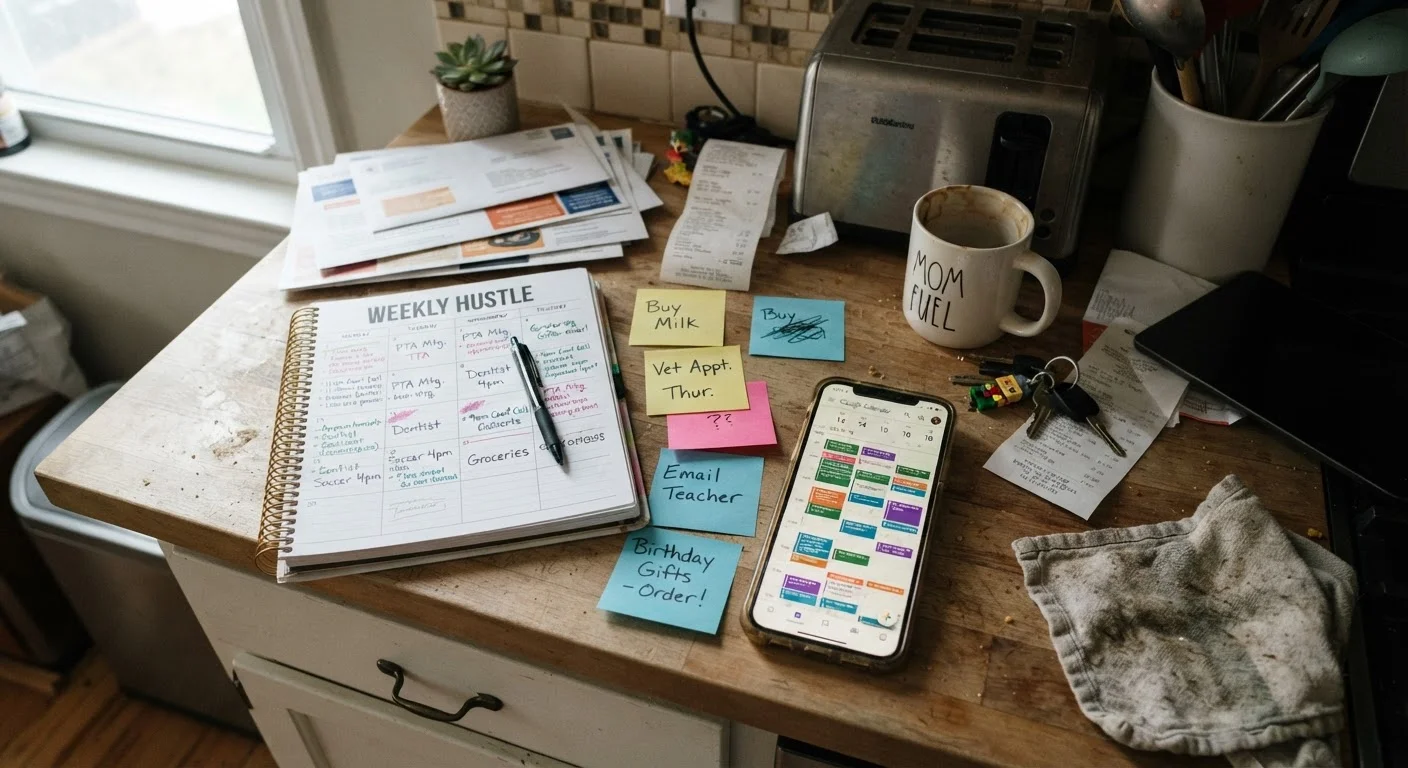
Photo credit: PrimeReads.net | Discover Insightful And Creative Blogs
In this article
The mental load of running a home is often invisible but exhausting. This guide explains what it is and how to distribute it more fairly.
Key Takeaways
- The mental load is the invisible cognitive work of managing a household - anticipating, planning, and delegating.
- It tends to fall disproportionately on one person, often regardless of who does physical chores.
- Naming and externalizing tasks is the first step toward distributing them more fairly.
- Clear ownership - not just assistance - is what actually reduces cognitive burden.
- Shared systems and regular household check-ins make the redistribution sustainable long-term.
What Is the Mental Load?
The mental load - sometimes called cognitive labor - refers to the invisible, ongoing work of keeping a household running. It's not the act of doing the dishes; it's remembering that dish soap is almost out, adding it to the shopping list, noticing the dishwasher filter needs cleaning, and realizing the kids' school lunches need reshuffling next week. It is the constant background processing that happens whether you're at work, trying to sleep, or in the middle of a conversation.
French cartoonist Emma popularized the term in a widely shared 2017 comic, but the concept has been documented in sociological research for decades under terms like "invisible labor" and "household management work." Unlike physical chores, the mental load has no clear start or finish. It is perpetual, layered, and almost always unacknowledged.
The mental load encompasses three distinct types of cognitive work:
- Anticipating - foreseeing needs before they become problems (scheduling the car service before a long trip)
- Identifying - recognizing that a task needs to happen at all (noticing the pantry is disorganized)
- Delegating - assigning, explaining, and following up on tasks given to others
That last point is key: delegating is itself part of the mental load. Asking a partner to handle something and then tracking whether it happened doesn't meaningfully reduce the burden - it just adds a step.
Why It Falls Unevenly
Research consistently shows that the mental load is not distributed equally in most households. Studies in the US and across comparable countries find that women, regardless of employment status, shoulder a disproportionate share of household cognitive labor. But this is not solely a gender issue - in any household with an unequal dynamic, the pattern tends to replicate itself based on who steps in, who asks, and whose standards the home is organized around.
Several factors drive the imbalance:
- Default manager syndrome - one person becomes the household's de facto project manager, simply because they started doing it and were never relieved
- Unequal visibility - household tasks that have always been done by one person remain invisible to others who've never had to notice them
- "Helping" framing - when a partner or housemate sees themselves as "helping" rather than owning a domain, the planner role remains with the same person
- Different thresholds - when one person tolerates disorder longer, the other ends up acting first - and eventually always
This can intersect with broader organizing myths - including the idea that one person is simply "better" at managing the home, which is often just a reflection of who has practiced it more.
Delegation Still Leaves the Load With You
Handing someone a task and then monitoring whether they completed it - or explaining how to do it every time - means the cognitive overhead stays with the delegator. Genuine redistribution requires transferring full ownership of a domain: the responsibility to notice, plan, and execute without prompting. Anything short of that is task assistance, not load sharing.
The Real Cost of Carrying It Alone
Carrying the bulk of a household's mental load has documented consequences. Research published in peer-reviewed journals links chronic cognitive overload to elevated stress hormones, disrupted sleep, reduced relationship satisfaction, and lower productivity in professional life. It is not simply tiring - it occupies working memory in a way that crowds out other thinking.
People managing most of the household cognitive labor often describe a persistent sense that they cannot fully relax, because the list never stops. Vacations still involve pre-trip logistics. Weekends still involve meal planning, appointment tracking, and anticipating the week ahead. For mental wellness, this chronic low-grade vigilance is significant.
Importantly, the person carrying less load often doesn't recognize the gap. This is not usually malicious - it reflects genuine unawareness. Making the invisible visible is therefore the essential first move.
How to Redistribute the Mental Load
Redistribution requires more than dividing a chore list. The goal is transferring full ownership of domains, not just tasks. Here's how to approach it:
Step 1: Externalize everything
Start by writing out every recurring responsibility in your household - not just chores, but planning tasks, scheduling tasks, and monitoring tasks. Most people are surprised by the volume. This exercise alone tends to shift awareness significantly. See also: organizing your home from scratch for how to approach this kind of audit methodically.
Step 2: Assign full ownership, not task assistance
Instead of asking a partner to "help with meals," transfer complete ownership of meal planning for the week - from deciding the menu to buying the groceries to knowing what's in the fridge. The mental load doesn't reduce until the cognitive work transfers, not just the physical execution.
Step 3: Schedule a household meeting
A regular 20-30 minute weekly check-in - sometimes called a household meeting or "admin hour" - allows both people to surface issues, update shared calendars, and flag upcoming responsibilities before they fall through the cracks. This is not a complaint session; it's operational.
When handing off ownership of a household domain, have one dedicated handover conversation - walk through every task in that domain, not just the obvious ones. Invisible tasks are what fall through the cracks.
Most handover failures happen because the new owner wasn't aware of all the sub-tasks involved. A structured walkthrough prevents the original owner from having to step back in.
Resist the urge to follow up on tasks you've delegated unless a deadline is genuinely at risk. Checking in repeatedly signals that you haven't really handed off ownership - and the cognitive load stays with you.
Research on task delegation shows that the act of monitoring is itself a form of cognitive labor. True transfer means trusting the new owner to track and complete the work independently.
Systems That Reduce the Load for Everyone
Good household systems are the best long-term investment in reducing mental load - for everyone in the home. The goal is to move recurring decisions out of anyone's head and into a shared structure.
- A shared household calendar - one visible, centralized calendar that everyone can access and contribute to. When appointments, school events, bill due dates, and car services live in one place, no single person has to hold that information in their head.
- A running shared shopping list - updated by anyone who notices a shortage, rather than one person monitoring stock
- A household task board - a simple visual (physical or digital) showing what needs to happen, who owns it, and its status
- Default routines - recurring tasks that happen on a set day without anyone having to decide or remind (e.g., trash always goes out Sunday night, laundry always happens Thursday)
When multiple people share a living space, these systems become even more critical. The guide on organizing shared spaces covers how to design systems that work for a group rather than just defaulting to one person's habits.
Reducing paper-based household admin - bills, school notices, medical records - can also cut down on the mental overhead of tracking physical documents. Going paper-free is one option worth evaluating, though it comes with its own trade-offs.
Sustaining the Balance Over Time
Redistribution tends to slip without intentional maintenance. Life events - a new job, a baby, a health issue - often cause one person to absorb more, and without a reset mechanism, that imbalance calcifies. A few practices help keep the balance:
- Revisit domain ownership quarterly - what made sense six months ago may not fit now
- Resist the urge to reclaim - if you've handed off a task, let the new owner handle it their way, even if the method differs from yours
- Name the load when it shifts - if circumstances temporarily increase one person's cognitive burden, acknowledge it explicitly and plan to rebalance
For those interested in building more sustainable productivity routines into daily life, the mental load conversation is a natural starting point - because no routine works well when one person is carrying invisible overhead the rest of the household doesn't see.
The mental load is real, measurable, and manageable - but only when it's acknowledged. The most important step is simply making it visible, because you can't redistribute what you haven't named.
This article is for general informational and educational purposes only. It does not constitute professional counseling, psychological, or legal advice. If household dynamics are significantly affecting your mental health or relationships, consider speaking with a qualified therapist or counselor.

Author
Living Editorial Team
Living Editorial Team is the collective byline for our editorial team and contributor network. Articles published under this byline or an editorial pen name are researched, written, and reviewed according to our editorial standards for clarity, consistency, and independence before publication.
View all articles →