
Vegetable Intake Across Different Eating Patterns: A Practical Comparison
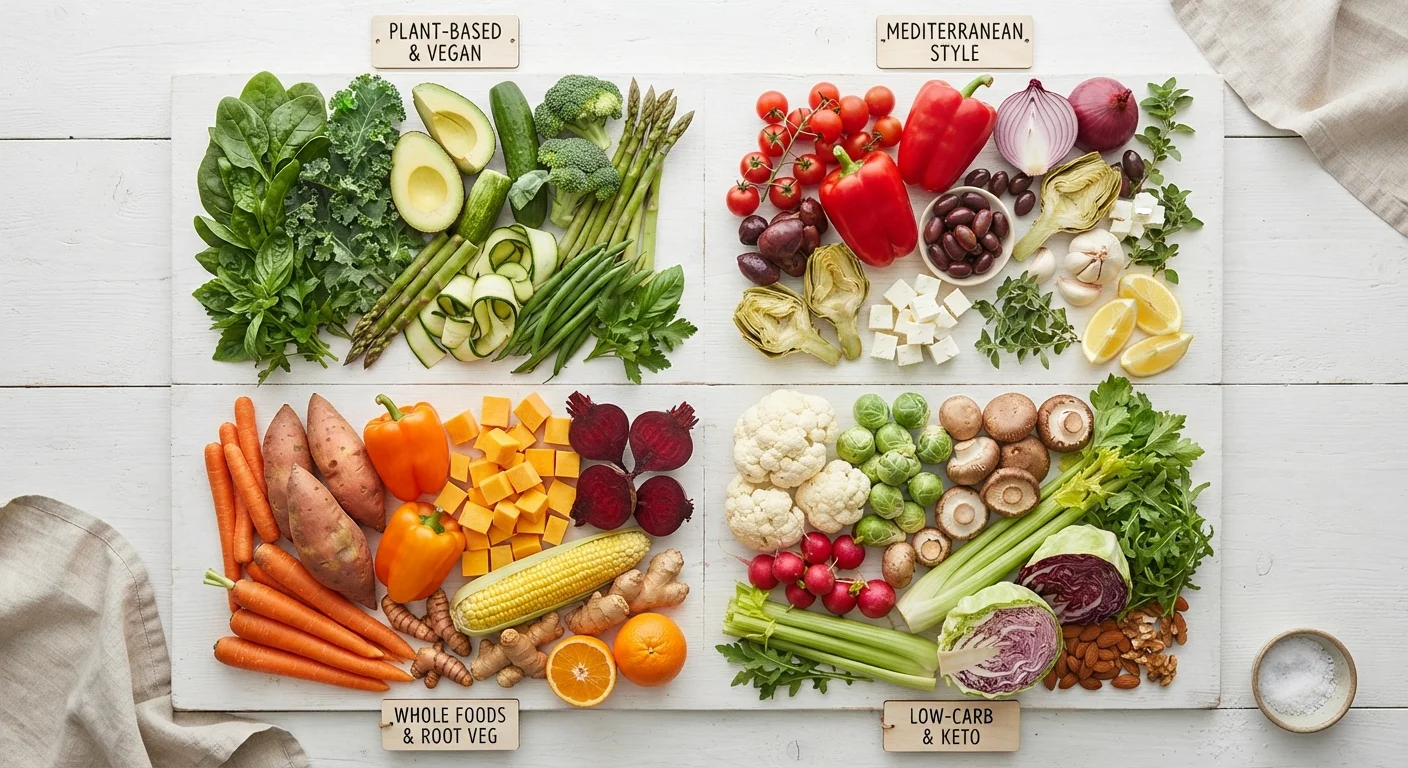
Photo credit: PrimeReads.net | Discover Insightful And Creative Blogs
In this article
Whether you eat omnivore, plant-based, or somewhere in between, getting enough vegetables looks different. This comparison breaks down the key considerations.
Key Takeaways
- The USDA recommends adults consume 2.5-3 cups of vegetables daily, yet most Americans fall short of this target.
- Plant-based and vegan patterns tend to meet or exceed vegetable targets naturally, while omnivore and keto patterns often require more intentional planning.
- Vegetable variety - not just quantity - matters for covering the full spectrum of micronutrients and phytocompounds.
- Every eating pattern can support adequate vegetable intake with the right structural habits and meal planning.
- Context such as food access, budget, and cooking skill shapes vegetable intake as much as dietary philosophy does.
Why Vegetable Intake Varies by Eating Pattern
Getting enough vegetables is a near-universal nutritional recommendation - the USDA's Dietary Guidelines for Americans advise adults to aim for roughly 2.5 to 3 cup-equivalents of vegetables per day, emphasizing variety across subgroups including dark leafy greens, legumes, and cruciferous vegetables. Yet national intake data consistently shows most American adults fall well short of those targets, regardless of how they eat.
What differs significantly across eating patterns is how vegetables are positioned in the diet - whether they're structural staples or supplemental sides - and which types are prioritized. Understanding these differences can help anyone, regardless of their dietary framework, make more intentional choices. For a broader look at how different dietary approaches are organized, the Diet Patterns hub offers objective overviews of major frameworks.
| Omnivore | Mediterranean | Flexitarian | Vegan / WFPB | Low-Carb / Keto | |
|---|---|---|---|---|---|
| Typical vegetable volume | Often below USDA targets | Meets or exceeds targets | Moderate to high | High to very high | Moderate, varies by food choices |
| Vegetable variety | Narrow without planning | High - seasonal and diverse | Moderate to high | High across subgroups | Narrowed by starch restriction |
| Vegetables as meal centerpiece | Rarely by default | Frequently | Often | Almost always | Partial - non-starchy only |
| Planning required to hit targets | High | Low to moderate | Moderate | Low | Moderate to high |
| Legumes included | Sometimes | Regularly | Regularly | Core staple | Generally excluded |
| Fiber intake from vegetables | Often low | High | Moderate to high | Very high | Moderate |
Plant-Based and Vegan Patterns: High Volume, High Variety
Vegan and whole-food plant-based (WFPB) eating patterns tend to produce the highest vegetable intakes by volume and diversity. When animal products are removed entirely, vegetables, legumes, whole grains, and fruits must do the nutritional heavy lifting - making them central rather than peripheral. Research consistently shows that well-planned vegan diets are associated with higher intakes of fiber, folate, vitamin C, and various phytonutrients, many of which are delivered primarily through vegetables.
The WFPB framework goes a step further by also minimizing processed plant foods, which tends to push intake toward intact vegetables even more explicitly. The practical upside is that vegetables become the default; the challenge is ensuring adequate intake of nutrients like vitamin B12, iron, and zinc that animal foods would otherwise provide. For clarity on terminology, plant-based and vegan describe meaningfully different things in practice.
Mediterranean and Flexitarian Patterns: Structured Flexibility
The Mediterranean dietary pattern is widely cited in longevity and cardiovascular research, and vegetables are a core reason why. Meals are built around seasonal produce, legumes, and olive oil, with animal foods - particularly red meat - playing a smaller, less frequent role. This structure creates consistent vegetable exposure across breakfast, lunch, and dinner in ways that omnivore patterns often don't. What the Mediterranean diet actually looks like on a plate is often more vegetable-forward than popular depictions suggest.
The flexitarian approach shares similar principles: animal foods are reduced rather than eliminated, and plant foods - including vegetables - expand to fill the gap. This makes it a practical transition for people eating a standard Western diet who want to increase vegetable intake incrementally. Flexitarianism in practice tends to support meaningful vegetable gains without requiring wholesale dietary change. Both patterns also appear frequently in global longevity research.
Omnivore and Low-Carb Patterns: Intentionality Required
A standard omnivore diet in the US context doesn't inherently prioritize vegetables - meat and processed foods often dominate plate real estate, and vegetables can easily become an afterthought. That said, there's nothing structurally incompatible between omnivore eating and high vegetable intake. The difference is that it typically requires deliberate planning rather than emerging organically from the pattern's logic.
Low-carb and ketogenic frameworks present a more nuanced picture. Starchy vegetables - potatoes, corn, peas, winter squash - are largely restricted due to carbohydrate content. Non-starchy vegetables like leafy greens, broccoli, zucchini, cauliflower, and peppers remain fully compatible and are generally encouraged. The risk is that overall vegetable variety narrows, potentially limiting intake of certain fiber types and phytocompounds. For those following these patterns, a deliberate focus on non-starchy vegetable diversity becomes especially important. For a parallel look at how these frameworks handle another major nutrient, see how major diet frameworks handle protein.
One Simple Rule for Any Pattern
Regardless of which dietary framework you follow, a practical habit is to fill at least half your plate with non-starchy vegetables at most main meals. This single structural shift tends to increase vegetable intake substantially without requiring you to overhaul your entire approach. Variety across colors and types - not just volume - helps ensure a broader range of vitamins, minerals, and protective plant compounds.
This article is for general informational and educational purposes only and is not a substitute for personalized dietary or medical advice. Consult a registered dietitian or qualified healthcare professional for guidance specific to your health needs.

Author
Food Editorial Team
Food Editorial Team is the collective byline for our editorial team and contributor network. Articles published under this byline or an editorial pen name are researched, written, and reviewed according to our editorial standards for clarity, consistency, and independence before publication.
View all articles →