
Common Ingredient Label Terms and What They Actually Mean
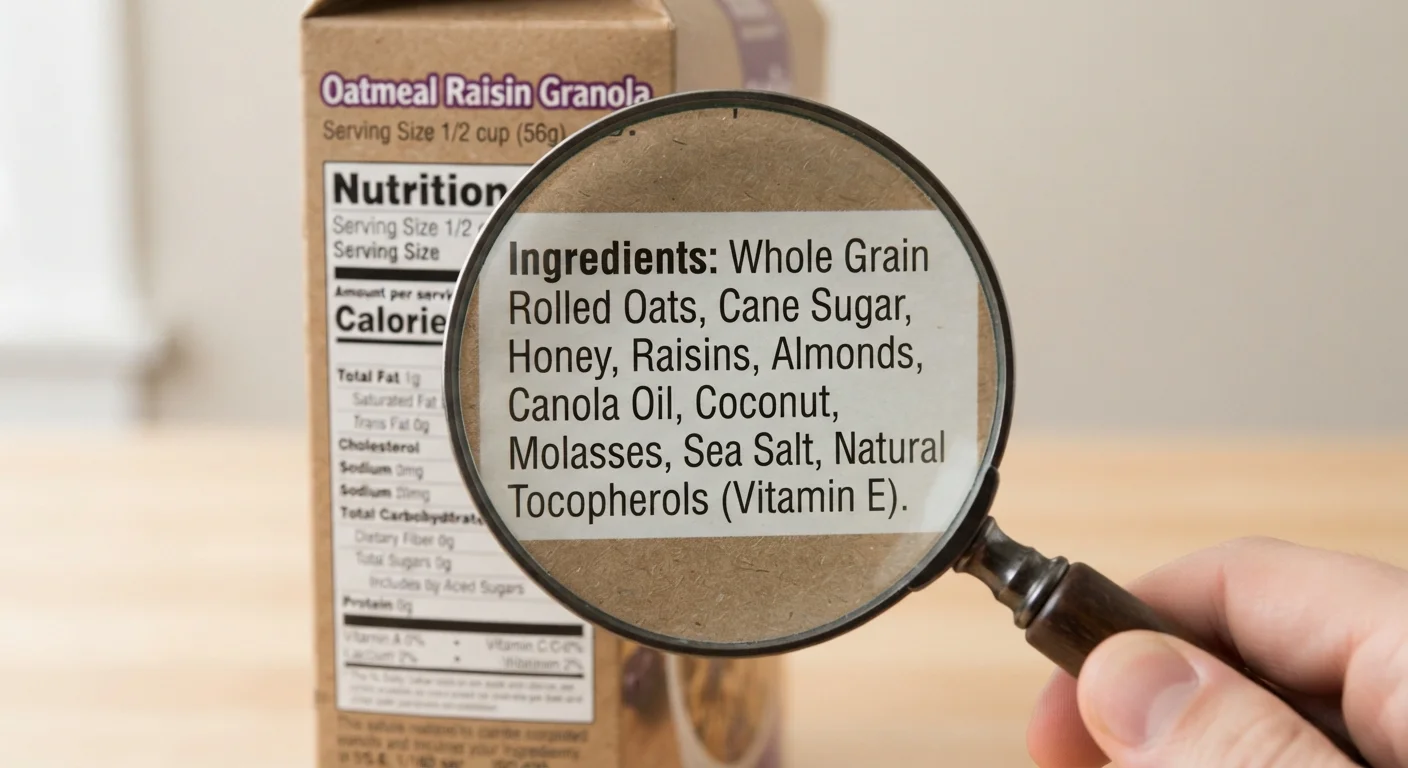
Photo credit: PrimeReads.net | Discover Insightful And Creative Blogs
In this article
From "natural flavouring" to "modified starch" — a straightforward glossary of food label language that often confuses shoppers.
Why Ingredient Label Language Matters
The ingredient list on a food package is one of the most information-dense sections of any label - and one of the most misread. Terms like "natural flavoring," "enriched," or "modified" carry specific regulatory meanings that often differ from how a general reader might interpret them. Confusion isn't accidental: the language is technical, abbreviation-heavy, and occasionally designed to sound reassuring without communicating much.
This glossary cuts through the ambiguity. Each term below reflects how it is used under U.S. food labeling law or established food science convention - not marketing interpretation. For a broader look at how the full nutrition panel fits together, see Nutrition Labels Decoded.
Ingredient Lists Are Ordered by Weight
FDA regulations require that ingredients be listed in descending order by weight - so the first ingredient is present in the greatest amount. This means if sugar appears within the first three items, it is one of the dominant components by weight. Manufacturers sometimes use multiple forms of sugar (e.g., cane sugar, corn syrup, dextrose) which, if combined, might rank higher on the list. For a full walkthrough of nutrition label structure, see Reading a Nutrition Label Without Getting Lost.
Glossary of Common Ingredient Label Terms
The terms below appear frequently across packaged food categories. Understanding them helps you evaluate ingredient lists with more accuracy and less guesswork.
Natural Flavoring
A flavoring substance derived from a plant or animal source - such as fruit, bark, or meat - through processes like roasting or fermentation. The FDA definition is broad, so 'natural' does not automatically mean minimally processed or additive-free.
Modified Starch
Starch that has been chemically or physically treated to alter its thickening, stability, or texture properties. It is widely used in processed foods and is generally recognized as safe, though 'modified' refers to processing, not genetic modification.
Enriched Flour
Refined flour to which specific B vitamins (niacin, thiamine, riboflavin, folic acid) and iron have been added back after milling removes the bran and germ. Enrichment replaces some - but not all - of the nutrients lost during processing.
Emulsifier
An ingredient that helps oil and water stay blended in a product, preventing separation. Common examples include lecithin (often from soy or sunflower) and mono- and diglycerides.
Ascorbic Acid
The chemical name for vitamin C. On ingredient labels it typically functions as a preservative or antioxidant rather than a nutrient supplement, though the body uses it the same way regardless of source.
Carrageenan
A thickening and gelling agent extracted from red seaweed, used in dairy alternatives, deli meats, and infant formula. It is FDA-approved, though some researchers have raised questions about high-dose effects in animal studies.
Tocopherols
A family of compounds that includes vitamin E. On labels, they typically appear as preservatives that slow fat oxidation and rancidity rather than as a nutritional supplement.
Xanthan Gum
A polysaccharide produced by bacterial fermentation, used as a thickener and stabilizer in gluten-free products, sauces, and dressings. It is considered safe for most people at amounts used in food.
Maltodextrin
A mildly sweet carbohydrate derived from starch (often corn, wheat, or potato) used as a filler, thickener, or carrier for other ingredients. It has a high glycemic index despite not tasting strongly sweet.
Sodium Benzoate
A preservative that inhibits microbial growth in acidic foods and beverages such as salad dressings and soft drinks. When combined with ascorbic acid, it can form benzene under certain conditions, which is why some manufacturers have reformulated products.
Hydrolyzed Vegetable Protein
A flavor enhancer made by breaking down plant protein (often soy, corn, or wheat) into amino acids. It naturally contains glutamate, which contributes savory umami taste, and is used similarly to monosodium glutamate (MSG).
Invert Sugar
A mixture of glucose and fructose created by breaking down sucrose. It appears sweeter than table sugar, resists crystallization, and is commonly used in confections, baked goods, and soft drinks.
For context on how sugar aliases work specifically - including terms like invert sugar, dextrose, and corn syrup - Hidden Sources of Added Sugar in Everyday Foods provides a practical breakdown. And if you want to understand how processing changes grain nutrition, Whole Grains vs. Refined Grains is a useful companion read.
Quick Reference: Label Facts and Regulations
Before reviewing individual terms, a few structural facts about ingredient labeling help frame what you're looking at. U.S. regulations govern both what must appear on a label and how it must be presented.
| Number of FDA-recognized GRAS substances | Over 1,000 (FDA GRAS Substances (SCOGS) Database) |
| Ingredients must be listed in order of | Descending weight (FDA 21 CFR § 101.4) |
| Minimum ingredients requiring declaration | All ingredients present (FDA food labeling regulations) |
| Major food allergens requiring label disclosure | 9 (including milk, eggs, peanuts, tree nuts, wheat, soy, fish, shellfish, sesame) (FASTER Act, 2023 - sesame added) |
| "Natural" - FDA formal definition | Not formally defined; guidance-based only (FDA, 2015 public comment period) |
| "Organic" certification governed by | USDA National Organic Program (NOP) (USDA AMS) |
One implication worth noting: because "natural" lacks a formal FDA definition, foods marketed as natural may still contain highly processed components or additives that qualify under loose guidance-based criteria. This is a meaningful gap between consumer expectation and regulatory reality. The distinction between natural, minimally processed, and whole food is explored further in Whole Foods vs. Minimally Processed Foods.
This article is for general informational and educational purposes only. If you have questions about specific dietary needs or food sensitivities, consult a qualified healthcare professional or registered dietitian.

Author
Food Editorial Team
Food Editorial Team is the collective byline for our editorial team and contributor network. Articles published under this byline or an editorial pen name are researched, written, and reviewed according to our editorial standards for clarity, consistency, and independence before publication.
View all articles →