
Whole Foods vs. Minimally Processed Foods: Understanding the Difference
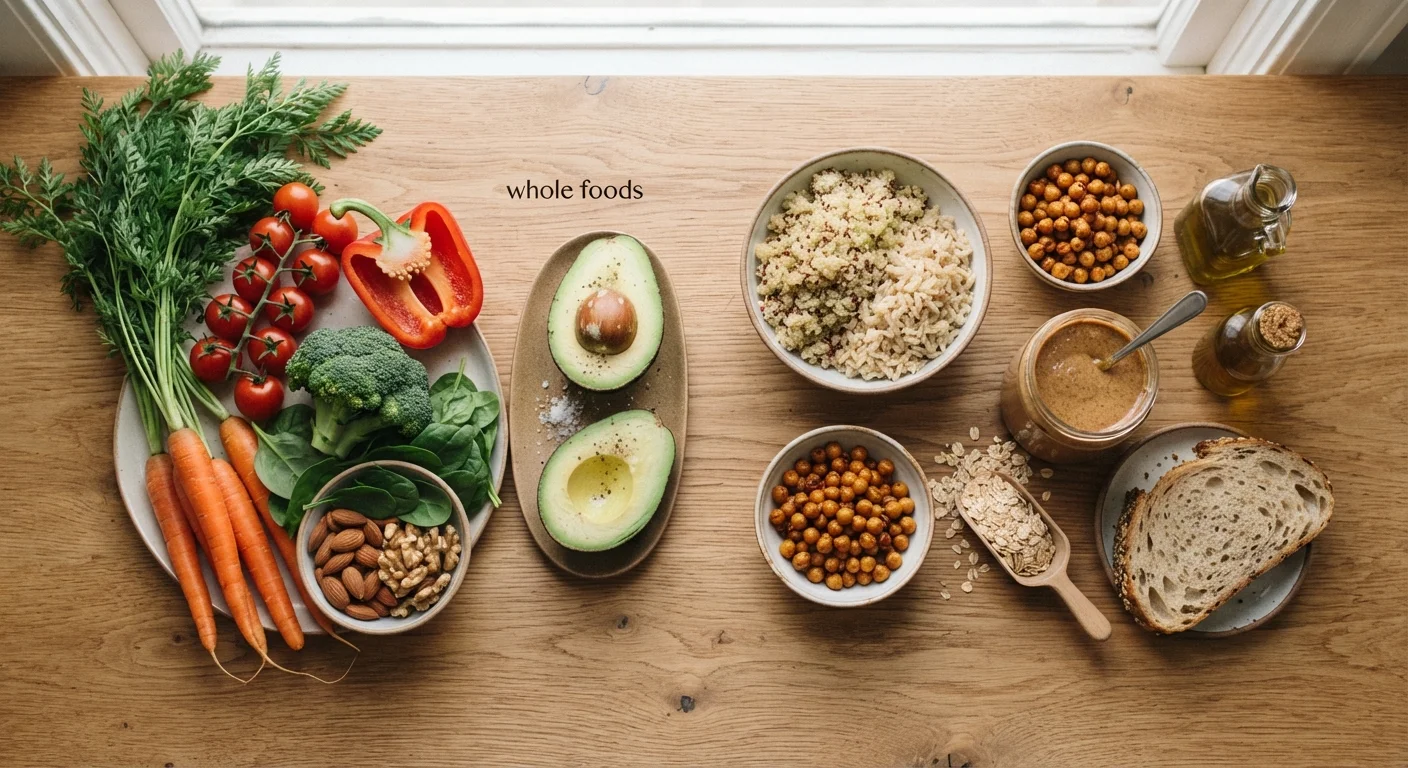
Photo credit: PrimeReads.net | Discover Insightful And Creative Blogs
In this article
These two terms are often used interchangeably, but they mean different things. Here's how to tell them apart and why it matters for your diet.
Key Takeaways
- Whole foods are single-ingredient foods in their natural state - think fresh produce, raw nuts, and uncooked grains.
- Minimally processed foods have undergone basic preparation - like freezing or roasting - without significantly altering nutrition.
- Both categories are meaningfully different from ultra-processed foods, which contain additives not found in home kitchens.
- The NOVA classification system is the most widely used scientific framework for categorizing food processing levels.
- Choosing either whole or minimally processed foods over ultra-processed options supports better dietary quality overall.
How Scientists Define Food Processing
The words "whole" and "minimally processed" appear constantly in nutrition conversations, often used as if they mean the same thing. They don't - and the distinction carries real dietary weight.
The most established scientific tool for sorting foods by processing level is the NOVA classification system, developed by researchers at the University of São Paulo. NOVA divides foods into four groups based on the extent and purpose of their processing, not their nutrient content. Understanding where foods fall in this framework is genuinely useful for navigating everyday food choices.
Whole foods occupy NOVA Group 1: unprocessed or minimally processed foods. Minimally processed foods also sit within this group - they've undergone preservation or preparation steps (drying, freezing, pasteurizing, roasting) but haven't had substances added to them. The key principle is that these steps don't fundamentally alter the food's original nutritional character.
| Criterion | Whole Foods | Minimally Processed Foods |
|---|---|---|
| Definition | Completely unaltered from natural state | Lightly prepared; no substances meaningfully added |
| Examples | Fresh apple, raw oats, dried lentils | Frozen peas, plain yogurt, roasted nuts |
| Preparation steps | None or near-zero | Freezing, drying, pasteurizing, roasting |
| Added ingredients | None | Minimal (e.g., trace salt in some canned goods) |
| Nutrient integrity | Fully intact | Largely intact; minor changes possible |
| NOVA classification | Group 1 (unprocessed) | Group 1 (minimally processed) |
| Practical convenience | Variable; shorter shelf life | Higher; longer shelf life |
At the other end of NOVA's spectrum sit ultra-processed foods (Group 4), which contain industrial formulations - emulsifiers, flavor enhancers, colorings, and preservatives - not typically used in home cooking. For more on how ingredient labels reflect these differences, see common ingredient label terms explained.
What Counts as a Whole Food?
A whole food is a food that hasn't been substantially changed from its natural form. There are no added ingredients, no industrial processes, and nothing removed. Examples include:
- Fresh, frozen (without sauces), or plain dried fruits and vegetables
- Whole, uncooked grains like oats, brown rice, and farro
- Raw or unsalted nuts and seeds
- Fresh meat, poultry, seafood, and eggs
- Plain legumes - dried or soaked, without additives
Whole grains are a useful illustration here: an oat groat (the whole oat kernel) is a whole food; plain rolled oats, which are steamed and flattened, qualify as minimally processed. Both are nutritionally valuable, but they're not identical in classification. The difference between whole and refined grains shows just how much processing can strip away.
It's worth noting that "whole food" doesn't automatically mean "superior in every situation." Cooking - itself a form of processing - actually increases the bioavailability of some nutrients, such as lycopene in tomatoes. Context always matters in nutrition.
What Makes a Food 'Minimally Processed'?
Minimally processed foods have been cleaned, sorted, ground, dried, fermented, pasteurized, frozen, or otherwise prepared in ways that extend shelf life or improve safety and usability - without adding sugar, salt, fat, or other substances in significant quantities.
Common examples include:
- Frozen vegetables and fruits (plain, without sauces)
- Pasteurized milk and plain yogurt
- Canned legumes (with water and minimal salt)
- Roasted, unsalted nuts
- Rolled oats and plain nut butters (with no added oil or sugar)
- Cold-pressed olive oil and other plant oils
The Salt Question in Canned and Packaged Foods
Canned legumes and vegetables with small amounts of added salt are still generally classified as minimally processed, not ultra-processed. The NOVA framework focuses on the type and purpose of added ingredients, not their mere presence. Rinsing canned beans, for example, can reduce sodium content by up to 40%, according to research published in nutrition literature - making them an even closer match to their whole-food counterparts.
One frequent source of confusion: plain frozen vegetables are nutritionally equivalent - and sometimes superior - to fresh produce that has traveled long distances. Freezing shortly after harvest locks in nutrients effectively. This makes frozen options a genuinely practical, evidence-backed choice, not a nutritional compromise.
For a broader look at how processing affects nutrient content specifically in grains, the whole grains vs. refined grains breakdown is worth reading alongside this article.
Why the Distinction Matters for Daily Eating
Research consistently links diets rich in whole and minimally processed foods with better health outcomes - including reduced risk of cardiovascular disease, type 2 diabetes, and certain cancers - compared with diets high in ultra-processed foods. These associations are noted in dietary guidance from institutions including the USDA and the American Heart Association.
57%
Share of US calories from ultra-processed foods
A study published in BMJ Open estimated that ultra-processed foods account for approximately 57% of total caloric intake among US adults.
~10%
Increased risk associated with ultra-processed intake
A 2019 study in The BMJ found a 10% increase in ultra-processed food consumption was associated with a 12% higher risk of cardiovascular disease.
Practically speaking, you don't need to eat exclusively whole foods to eat well. Most registered dietitians and nutrition researchers recognize that a realistic, sustainable diet includes minimally processed foods - plain canned tomatoes, bagged salad greens, plain Greek yogurt - alongside whole-food staples. Rigid all-or-nothing thinking around food processing rarely reflects either the science or real-world eating patterns.
Where the distinction genuinely matters is in recognizing the gap between minimally processed and ultra-processed. Foods often marketed as "healthy" - certain granolas, flavored yogurts, plant-based meat alternatives - may cross into heavily processed territory. Our guide to foods labelled healthy that nutritionists view more cautiously covers specific examples worth knowing.
Understanding what "whole" and "minimally processed" actually mean gives you a more grounded lens for reading labels, planning meals, and making decisions that hold up beyond any single food trend. For a broader framework on how nutrients fit together, explore the Ingredients & Nutrients hub.
This article is for general informational and educational purposes only and does not constitute medical or dietary advice. Consult a qualified healthcare professional or registered dietitian for guidance tailored to your individual health needs.

Author
Food Editorial Team
Food Editorial Team is the collective byline for our editorial team and contributor network. Articles published under this byline or an editorial pen name are researched, written, and reviewed according to our editorial standards for clarity, consistency, and independence before publication.
View all articles →