
Whole Grains vs Refined Grains: What Changes During Processing
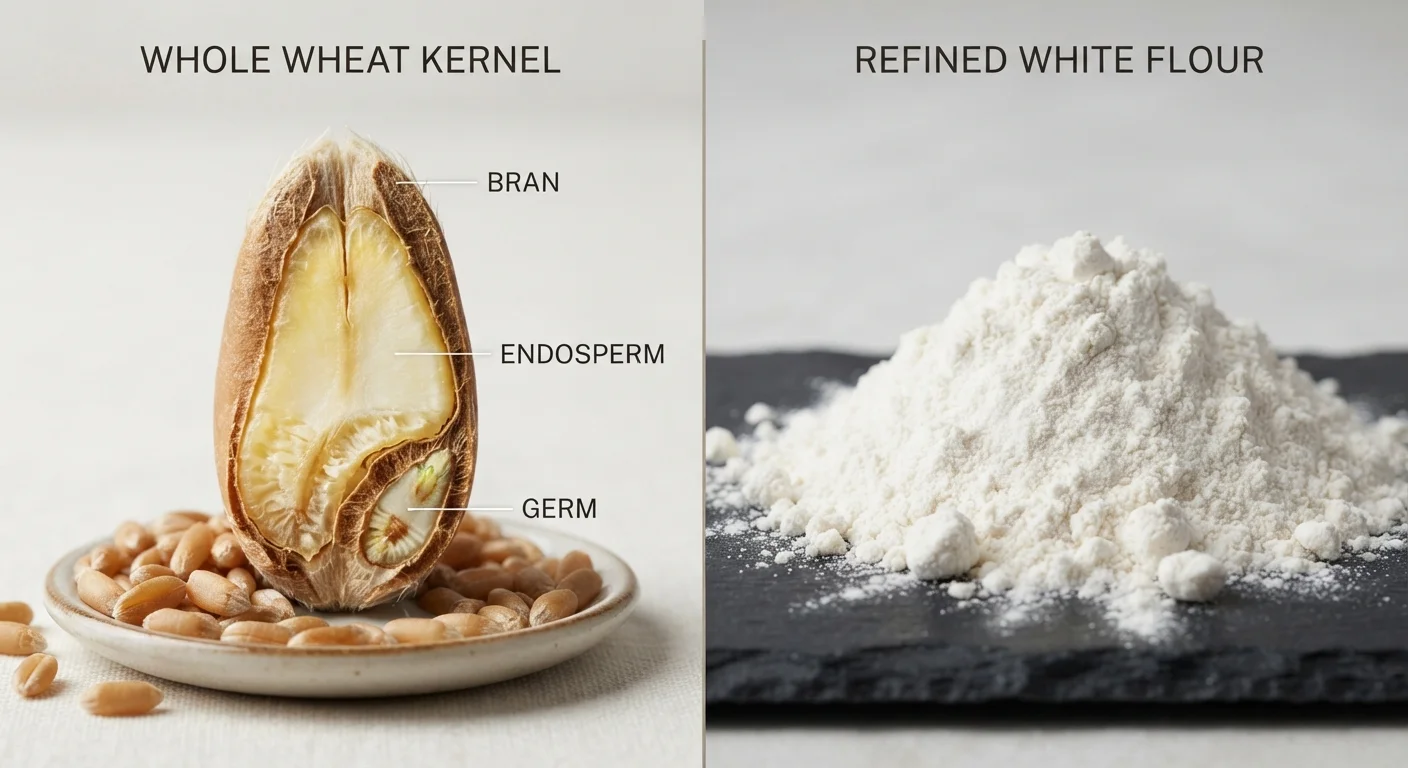
Photo credit: PrimeReads.net | Discover Insightful And Creative Blogs
In this article
Processing strips more than just texture. Here's what actually happens to grains nutritionally between the field and the supermarket shelf.
Key Takeaways
- Refining removes the bran and germ, stripping fiber, B vitamins, iron, and beneficial plant compounds.
- Enrichment adds back select nutrients but cannot fully replicate the complexity of whole grains.
- Whole grains are associated with lower risks of heart disease, type 2 diabetes, and digestive issues.
- Not all foods labeled 'whole grain' are nutritionally equivalent - label reading matters.
- Refined grains are not inherently harmful but deliver less nutritional value per calorie.
- USDA Dietary Guidelines recommend making at least half of daily grain servings whole grains.
The Anatomy of a Grain: What Processing Actually Removes
Every grain kernel - whether wheat, rice, oat, or barley - is made up of three distinct layers: the bran, the germ, and the endosperm. Whole grains retain all three. Refined grains, by definition, do not.
The bran is the fibrous outer shell. It contains the majority of the kernel's dietary fiber, along with B vitamins such as thiamine, niacin, and riboflavin, and trace minerals including iron and zinc. The germ is the embryo of the seed - rich in vitamin E, healthy fats, antioxidants, and additional B vitamins. The endosperm, which makes up the bulk of the kernel, is composed primarily of starch and a modest amount of protein.
When grains are milled into white flour or polished into white rice, the bran and germ are mechanically separated and discarded. What remains is almost entirely endosperm - high in carbohydrates, lower in virtually everything else. To understand why this matters for overall diet quality, it helps to first understand how carbohydrates work and why their source matters.
| Criterion | Whole Grains | Refined Grains |
|---|---|---|
| Kernel layers retained | Bran, germ, endosperm | Endosperm only |
| Dietary fiber | High | Low |
| B vitamins (natural) | Present across all layers | Mostly removed; some re-added via enrichment |
| Vitamin E | Present (from germ) | Largely absent |
| Glycemic response | Lower / more gradual | Higher / faster |
| Phytochemicals & antioxidants | Present | Significantly reduced |
| Shelf life | Shorter (oils in germ can go rancid) | Longer |
| Texture / palatability | Denser, earthier | Lighter, more neutral |
Enrichment: A Partial Fix, Not a Full Restoration
Because refining strips so many nutrients, the U.S. government has long required that certain refined grain products be enriched - meaning select nutrients are added back after milling. The FDA's enrichment standards require the addition of thiamine, riboflavin, niacin, folic acid, and iron to refined wheat flour and some other products.
Enrichment is meaningful: folic acid fortification of refined grains beginning in 1998 is credited with a measurable reduction in neural tube defect rates in the U.S., according to the CDC. But enrichment is not restoration. It replaces a handful of nutrients while leaving out dozens of others - including fiber, magnesium, zinc, vitamin E, potassium, and a range of phytochemicals and antioxidants that occur naturally in the bran and germ.
The terms on packages can also mislead. Words like "multigrain," "stone-ground," or "wheat bread" don't guarantee whole grain content. Consumers looking for genuine whole grain products should check that a whole grain - such as "whole wheat flour" or "whole oat flour" - appears as the first ingredient. Our guide to common ingredient label terms breaks down the language food manufacturers use and what it actually signals.
Health Implications: What the Evidence Suggests
Decades of nutritional research consistently link higher whole grain intake with measurable health benefits. According to the American Heart Association and USDA Dietary Guidelines, diets rich in whole grains are associated with reduced risk of cardiovascular disease, type 2 diabetes, and certain digestive conditions, including constipation and diverticular disease.
Much of this benefit is attributed to dietary fiber - specifically, the soluble fiber found in oats and barley (beta-glucan), which has been shown to support healthy cholesterol levels, and insoluble fiber from wheat bran, which promotes digestive regularity. Whole grains also have a lower glycemic impact than their refined counterparts, meaning they produce a more gradual rise in blood glucose after eating - a factor relevant to energy management and metabolic health.
25%
Reduction in cardiovascular disease risk
A 2016 meta-analysis in the BMJ found that three servings of whole grains daily was associated with approximately a 25% lower risk of cardiovascular disease.
~28g
Daily fiber recommended for adults
The USDA Dietary Guidelines for Americans recommend 28 grams of dietary fiber per day based on a 2,000-calorie diet - most Americans fall well short of this target.
50%+
Of daily grain servings should be whole grains
The USDA Dietary Guidelines recommend that at least half of all grains consumed come from whole grain sources each day.
Refined grains are not inherently dangerous, particularly within a broadly varied and balanced diet. However, because they deliver fewer nutrients per calorie, relying heavily on them - especially in ultra-processed food products - leaves less room for nutritional density overall. This intersects with broader questions about the difference between whole and minimally processed foods and how processing level shapes diet quality.
This article is for general informational and educational purposes only and is not a substitute for personalized medical or dietary advice. Consult a qualified healthcare provider or registered dietitian for guidance specific to your health needs.

Author
Food Editorial Team
Food Editorial Team is the collective byline for our editorial team and contributor network. Articles published under this byline or an editorial pen name are researched, written, and reviewed according to our editorial standards for clarity, consistency, and independence before publication.
View all articles →