
Rain, Ice, Fog: Adapting Your Driving to Adverse Weather Conditions
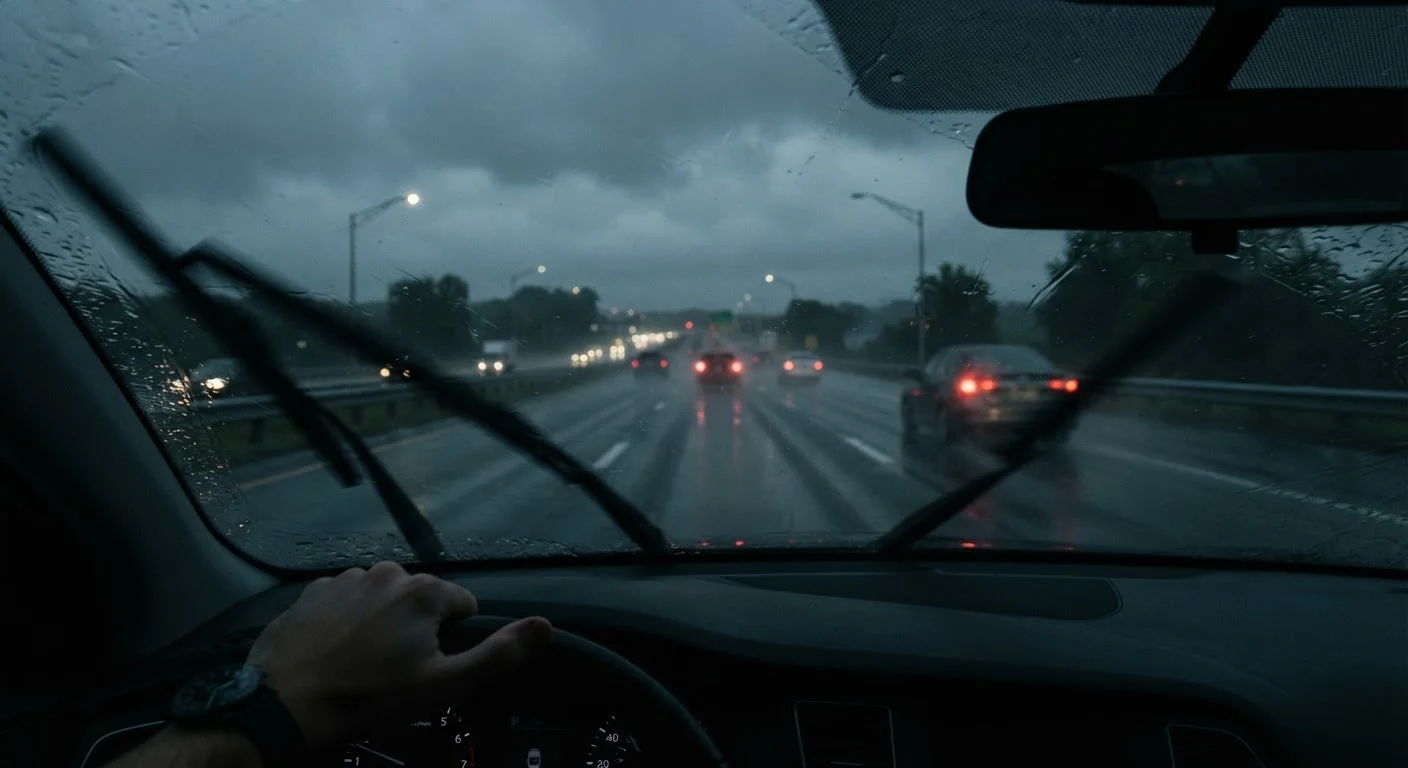
Photo credit: PrimeReads.net | Discover Insightful And Creative Blogs
In this article
Weather changes the physics of driving. Learn how rain, ice, and fog affect stopping distances and visibility, and how to respond to each one safely.
Key Takeaways
- Rain, ice, and fog each require distinct adjustments to speed, following distance, and headlight use.
- Stopping distances increase dramatically on wet or icy roads - sometimes by 200% or more on ice.
- Low-beam headlights, not high beams, are the correct choice in fog to avoid glare bounce-back.
- Black ice is nearly invisible; bridges, overpasses, and shaded spots are the highest-risk locations.
- Smooth, gradual inputs on the steering wheel, brakes, and accelerator are critical on slippery surfaces.
- Vehicle condition - tires, brakes, wipers - directly affects how well you can respond in bad weather.
Why Weather Changes the Physics of Driving
Most drivers understand that bad weather is dangerous, but fewer appreciate why - and that gap matters when conditions change suddenly. Adverse weather doesn't just reduce visibility; it alters the physical relationship between your tires and the road surface. Traction drops, stopping distances lengthen, and the margin for error shrinks. The adjustments you need to make aren't just instinctive - they're rooted in physics.
On dry pavement, a well-maintained vehicle traveling at 60 mph typically needs roughly 300 feet to stop. In heavy rain, that distance can increase by 50%. On ice, stopping distances can be four to ten times longer than on dry roads. Understanding these numbers helps frame every decision you make behind the wheel in poor conditions.
Vehicle condition plays a direct role. Worn tires reduce wet-road grip significantly, and degraded brake fluid can soften pedal response under hard braking. See our seasonal vehicle preparation guide for what to inspect before winter arrives.
Build good habits before conditions are bad
Adverse weather is not the time to learn new techniques - it's the time to apply ones already practiced. If you're newer to driving, building foundational awareness habits in normal conditions makes them far more automatic when weather makes things harder. Even experienced drivers benefit from occasionally refreshing their knowledge of skid recovery and wet-road physics.
Driving in Rain: Slick Roads and Hydroplaning
Rain presents two overlapping hazards: reduced visibility and reduced traction. The first few minutes of rainfall are often the most dangerous - water mixes with accumulated road oil to create a particularly slick film before it washes away.
Hydroplaning occurs when your tires ride up on a thin layer of water faster than they can displace it. It typically happens above 35 mph on standing water, and you'll notice steering going light or unresponsive. If it happens: ease off the accelerator smoothly, keep the wheel straight, and avoid hard braking until traction returns.
Key rain adjustments include reducing speed by at least 10-15 mph below posted limits in moderate rain, doubling your following distance from the standard three-second rule to at least five or six seconds, and turning on headlights - most states require it when wipers are in use. Avoid cruise control in wet conditions; it can apply throttle at the wrong moment and delay your response to a slide.
Ice and Snow: When Grip Nearly Disappears
Ice is the most unforgiving driving surface most US drivers encounter. Black ice - a thin, transparent glaze that forms on pavement - is particularly dangerous because it's nearly invisible. Bridges, overpasses, shaded road sections, and on-ramps freeze first and stay frozen longest.
On snow or ice, the fundamental principle is smooth inputs. Sudden steering movements, hard braking, or sharp acceleration all break traction. If your vehicle starts to slide, understanding what's physically happening to your car helps you respond correctly rather than overcorrect in panic.
If your vehicle has ABS (anti-lock braking system), apply firm, steady pressure - don't pump the pedal. Without ABS, threshold braking (pressing just to the point of lockup then easing slightly) is the technique. In either case, leave far more following distance than feels comfortable: ten seconds is not excessive at highway speeds on ice.
All-season tires lose significant grip below about 45°F. Dedicated winter tires use a different rubber compound that stays pliable in cold weather and grip ice and packed snow more effectively. Whether or not you use winter tires, adjust your speed expectations, not just your technique.
Fog: Managing Visibility You Can't Control
Fog demands a mindset shift: you must slow down to match your sight distance, not the speed limit. If you can see 200 feet ahead, you need to be traveling at a speed that allows you to stop within those 200 feet. Driving faster than your visibility allows is sometimes called overdriving your headlights - in fog, it means overdriving your sight line entirely.
Use low-beam headlights in fog, not high beams. High beams project light upward into the fog droplets and reflect back toward you, reducing visibility further. If your vehicle has dedicated fog lights mounted low on the front bumper, use those as well - their angle cuts under the fog layer more effectively. Rear fog lights, standard on many vehicles, help following drivers see you.
Hazard lights are generally not appropriate while moving in fog - they can confuse other drivers about your direction and speed. Keep them off unless you're stationary.
In dense fog, if conditions make driving genuinely unsafe, the correct decision is to pull completely off the road at a safe location - a rest area or parking lot - turn off your headlights, and keep your hazard lights on until conditions improve. This is a legitimate and sometimes necessary choice. See also our coverage of night driving skills for related visibility management techniques.
Step-by-Step: Adapting When Conditions Change
The steps below apply any time weather deteriorates while you're on the road. Following a consistent process helps prevent reactive, panic-driven decisions.
Assess conditions before you move
Before pulling into traffic in deteriorating weather, take 30 seconds to assess: What surface are you dealing with - wet, icy, slushy? What's your visibility range? Is the precipitation steady or worsening? Your speed and following distance decisions should be based on real conditions, not the posted limit.
Reduce speed before you enter the hazard
Slow down while you still have traction to spare - not after you're already in the thick of it. Braking on dry pavement before entering a wet or icy patch gives you more control. A gradual reduction is far safer than a panicked last-second brake application on a slick surface.
Increase your following distance significantly
Double or triple your normal following distance in rain; on ice, use a minimum of eight to ten seconds of separation. Count the seconds between when the vehicle ahead passes a fixed point and when you reach that same point. If you can't maintain that gap safely, you're traveling too fast for conditions.
Set your lights correctly for the condition
Rain: headlights on (low beam). Fog: low beams plus fog lights if equipped. Ice or snow at night: low beams. Avoid high beams in any precipitation - they worsen visibility by bouncing light off water droplets. Make sure your taillights are functioning so following drivers can see you clearly.
Use smooth, deliberate inputs throughout
On any slippery surface, steer, brake, and accelerate gradually. Abrupt inputs - even a sudden steering correction - can break the tire's grip on ice or wet pavement and trigger a slide. Think of every control input as something you execute over two to three seconds, not instantly.
Know when to stop and wait
If conditions deteriorate to the point that visibility is near zero or the road surface is genuinely unnavigable, pulling off the road entirely is a valid and sometimes correct decision. Find a parking lot, rest area, or safe shoulder well away from traffic lanes, turn off your headlights to avoid being mistaken for a moving vehicle, and activate hazard lights until conditions improve.
For broader defensive driving context that applies across all environments, the full safe driving resource covers hazard awareness, emergency response, and more in one place.

Author
Cars Editorial Team
Cars Editorial Team is the collective byline for our editorial team and contributor network. Articles published under this byline or an editorial pen name are researched, written, and reviewed according to our editorial standards for clarity, consistency, and independence before publication.
View all articles →