
Speed Limits vs. Safe Speed: They're Not Always the Same Thing
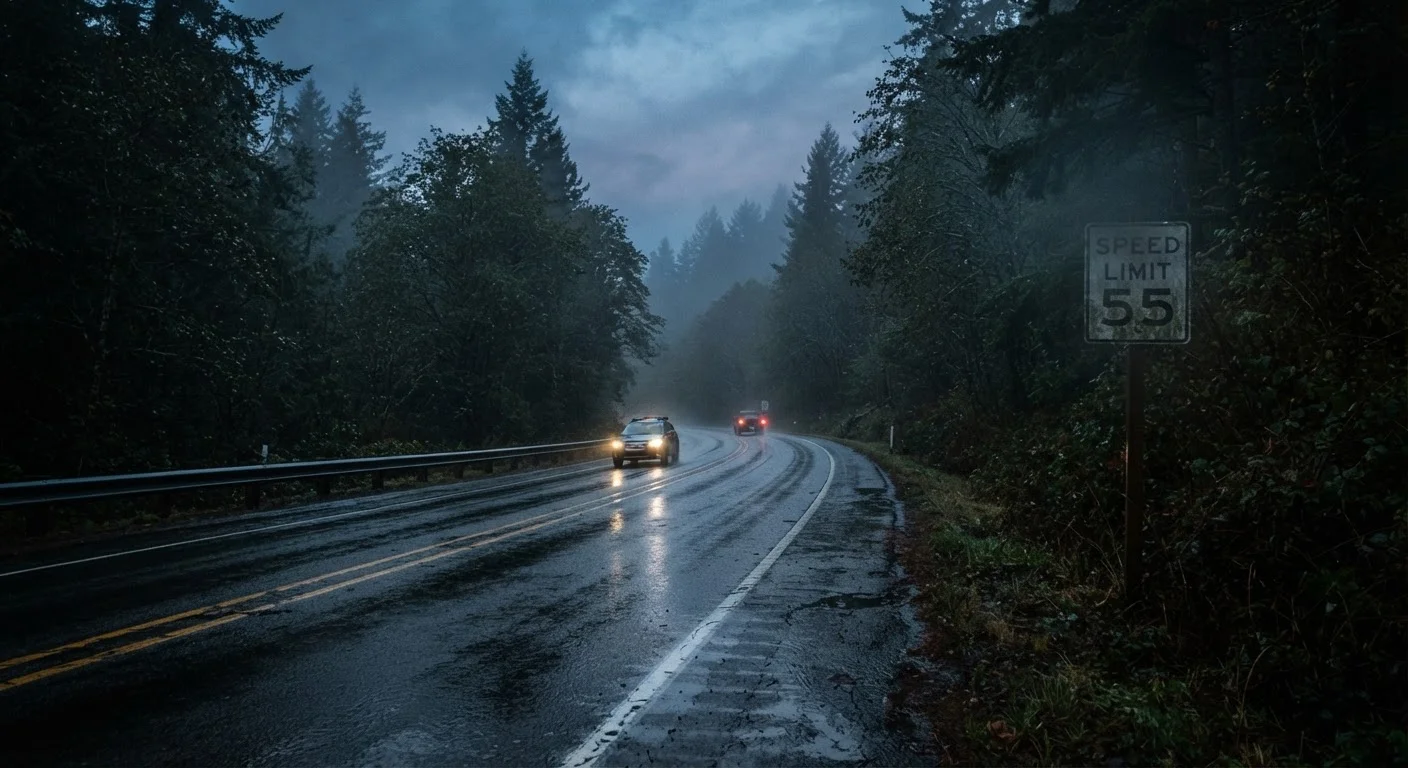
Photo credit: PrimeReads.net | Discover Insightful And Creative Blogs
In this article
Driving at the posted limit doesn't always mean driving safely. Learn why context, conditions, and hazard awareness matter more than the number on the sign.
Key Takeaways
- Speed limits are legal maximums, not recommendations for every road condition.
- Wet, icy, foggy, or congested roads often demand speeds well below the posted limit.
- Stopping distance increases dramatically as speed rises, especially on slick surfaces.
- Driving too slowly for conditions can also create hazards, particularly on highways.
- Safe speed requires continuous judgment, not a one-time glance at a sign.
What Speed Limits Are Actually Designed to Do
Speed limits exist to establish a shared legal framework on public roads. They define the maximum speed at which a vehicle may legally travel under normal, favorable conditions. What they are not designed to do is account for fog rolling in at 6 a.m., a wet road after three days of drought, or a school that just let out.
Most posted limits in the U.S. are derived from traffic engineering studies that identify the speed at or below which the majority of drivers travel naturally on a given road. This creates a workable baseline. But a baseline set on a clear, dry afternoon doesn't automatically apply on a January morning with black ice.
Understanding this distinction is foundational to defensive driving - the recognition that following rules is the floor, not the ceiling, of responsible driving behavior.
Why Conditions Override the Number on the Sign
Physics doesn't adjust for posted limits. A vehicle traveling at 55 mph on a dry road in good condition requires roughly 300 feet to stop - and that number climbs sharply on wet or icy pavement, with worn tires, or in low-visibility conditions. The speed limit doesn't change that equation; your speed does.
~300 ft
Stopping distance at 55 mph on dry pavement
The Federal Highway Administration notes that total stopping distance includes both reaction distance and braking distance, which together span roughly 300 feet at highway speeds under ideal conditions.
2x+
Increase in stopping distance on wet roads
Research from transportation safety organizations indicates that wet pavement can more than double braking distances compared to dry conditions, depending on tire tread depth and vehicle type.
~31%
Of traffic fatalities attributed to speeding
According to the National Highway Traffic Safety Administration (NHTSA), speeding - including driving too fast for conditions - is a factor in roughly one-third of U.S. traffic deaths annually.
Several factors should prompt a driver to reduce speed below the legal maximum:
- Reduced visibility - fog, heavy rain, glare, or darkness all shrink the distance at which hazards become visible
- Slippery surfaces - rain, ice, snow, gravel, or road debris compromise traction and extend stopping distances
- Heavy or unpredictable traffic - dense urban congestion or erratic merging behavior requires a shorter reaction buffer
- Road geometry - sharp curves, narrow lanes, or unmarked intersections call for extra caution
- Vulnerable road users - cyclists, pedestrians, or children near the roadway demand significantly reduced speed
The environment itself shapes the risk, often more than the posted number ever will.
The Danger of Using the Limit as a Target
There's a well-documented tendency among drivers to treat the speed limit as the expected speed rather than the maximum allowed speed. This mindset leads to driving at 65 mph during a downpour on the interstate simply because the sign says 65 - while stopping distance may have effectively doubled.
This is compounded by what researchers sometimes call "speed adaptation" - after sustained time at a given speed, drivers tend to underestimate how fast they're actually traveling. Long stretches of highway driving can dull awareness of how quickly the environment is changing. This is one of the hidden risks of motorway driving that structured driver education rarely addresses directly.
The practical question to ask isn't "Am I at or under the limit?" but rather "If something unexpected appeared right now, could I stop in time?" If the honest answer is no, the appropriate response is to slow down - regardless of what the sign reads.
Speed, Following Distance, and the Full Safety Picture
Safe speed doesn't exist in isolation. It works in tandem with following distance, lane position, and hazard scanning. A driver traveling below the speed limit but tailgating the car ahead has not actually improved their safety profile - they've just shifted where the risk sits.
The two-second following rule is a related principle that most drivers misapply. At higher speeds or in adverse conditions, two seconds may not be enough - and the math changes fast. Treating speed adjustment and following distance as a combined habit, rather than separate checkboxes, is the more effective approach.
For a broader framework covering these interconnected habits, the full picture on safe driving brings together road awareness, hazard recognition, and emergency response into a single reference.
Adjust Your Speed Before You Need To
Don't wait until you're already in poor conditions to reduce speed. If rain is falling, visibility is dropping, or traffic is thickening ahead, ease off the accelerator proactively. Reacting after a hazard appears is always slower - and costlier - than adjusting before it does.
This article provides general educational information about driving habits and road safety. It is not legal advice. Traffic laws vary by state; consult your state's driving regulations or a qualified professional for guidance specific to your situation.
Frequently Asked Questions

Author
Cars Editorial Team
Cars Editorial Team is the collective byline for our editorial team and contributor network. Articles published under this byline or an editorial pen name are researched, written, and reviewed according to our editorial standards for clarity, consistency, and independence before publication.
View all articles →