
Hands-Free Doesn't Mean Risk-Free: Phone Use and Cognitive Distraction
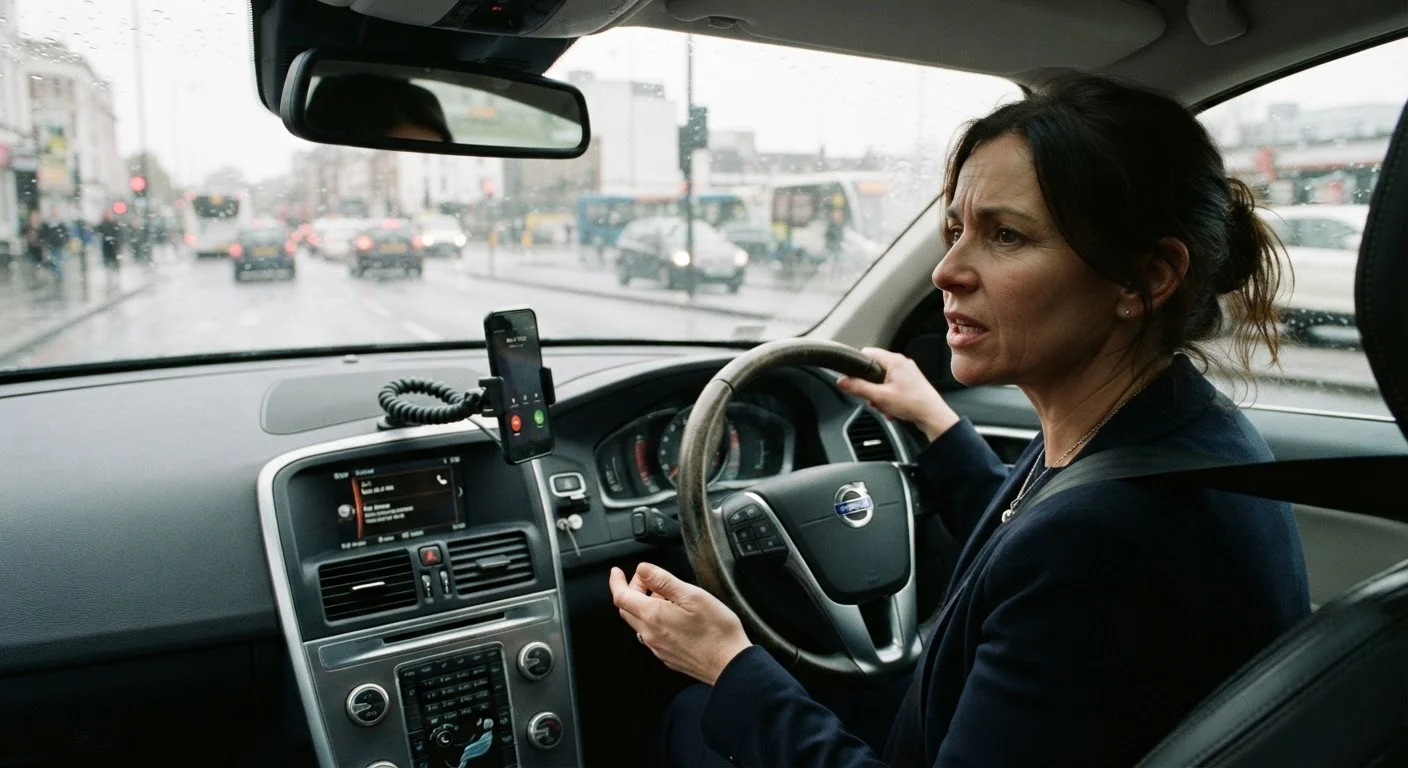
Photo credit: PrimeReads.net | Discover Insightful And Creative Blogs
In this article
Research suggests that hands-free calls still divert mental attention from the road. Here's what cognitive distraction actually means for drivers.
Key Takeaways
- Hands-free phone calls still create significant cognitive distraction, even without manual phone handling.
- Research indicates drivers on hands-free calls can miss a meaningful portion of what's in their visual field.
- Conversation with a passenger differs from a phone call in ways that may affect driver attention differently.
- Legal hands-free use does not mean safe; reduced crash risk still requires active, focused driving.
- Brief, unavoidable calls are lower-risk than sustained, complex conversations while driving.
Why 'Hands-Free' Became Confused With 'Safe'
When lawmakers began restricting handheld phone use behind the wheel, the public reasonably concluded that the danger was primarily physical - a hand off the wheel, eyes glancing at a screen. Hands-free technology seemed to solve that problem neatly. Both hands stay on the wheel; eyes stay on the road. Problem solved.
The issue is that this framing left out a third category of distraction entirely: cognitive distraction, the mental load of a conversation itself. Neuroscience has since made clear that the brain's attentional capacity is finite. When a meaningful portion of that capacity is occupied by a phone call, less is available for the complex, continuous task of driving.
This doesn't mean hands-free technology has no value - removing manual and visual distraction is still a genuine improvement over handheld use. But treating hands-free as equivalent to no phone use at all is a misconception with real consequences on the road.
Myth
As long as I'm not holding the phone, I'm driving just as safely as if I weren't on a call at all.
Fact
Hands-free calls still impose a cognitive load that reduces situational awareness and slows reaction times.
The assumption that removing the phone from your hand eliminates the distraction is understandable - after all, manual distraction (fumbling with a device) is removed. But research in cognitive psychology distinguishes between manual, visual, and cognitive distraction. Hands-free calls address only the first two. The mental effort of listening, processing, and constructing a response occupies working memory that the brain would otherwise dedicate to scanning traffic, reading signs, and anticipating hazards.
Studies from institutions such as the University of Utah have found measurable increases in driver reaction time during hands-free conversations compared to driving in silence. The cognitive tunnel narrows what drivers actually register from their visual environment, even when their eyes are pointed at the road.
Myth
Talking to a passenger is just as distracting as talking on a hands-free phone, so there's no difference.
Fact
Passenger conversations and phone conversations appear to affect driver attention differently, with phone calls often being more disruptive in demanding traffic situations.
This comparison sounds intuitive, but research suggests an important distinction. A passenger is in the vehicle and can observe the driving environment. Studies indicate that passengers tend to naturally pause or simplify conversation when traffic becomes complex - they sense the demand on the driver. A caller on the phone has no such awareness and may continue to press for responses during critical moments.
That said, passengers are not without risk. Emotional conversations, loud or distracting passengers, and arguments can all impair driver focus. For a deeper look at how cabin dynamics affect concentration, see how passengers influence driver attention.
Myth
If I feel fully aware of the road, cognitive distraction isn't affecting me.
Fact
Cognitive distraction often operates below conscious awareness - drivers frequently cannot accurately self-assess their own attentional deficits while distracted.
This is one of the most dangerous aspects of cognitive distraction: it doesn't always feel like distraction. Drivers often report feeling fully present while simultaneously failing to notice hazards that their eyes technically scanned. This phenomenon is sometimes called inattentional blindness - the eyes are open, but the brain fails to process what it sees because attentional resources are committed elsewhere.
Overconfidence in one's own multitasking ability is itself a known risk factor. Research suggests that people who rate themselves as excellent multitaskers are often among those most impaired when tested objectively. The subjective sense of control is not a reliable measure of actual driving performance under cognitive load.
Myth
Short calls lasting only a minute or two pose no meaningful risk.
Fact
Even brief phone conversations can produce cognitive distraction for longer than the call itself, and short calls can coincide with high-demand traffic moments.
Duration alone doesn't determine risk - timing matters enormously. A 60-second call that begins just as a driver enters a complex interchange, encounters a pedestrian crossing, or faces a merging truck presents real hazard regardless of brevity. Additionally, some research on attention suggests that refocusing fully after a cognitively demanding interruption takes several seconds, meaning the effects of distraction can outlast the call itself.
Drivers who believe short calls are categorically safe may underestimate risk in exactly the moments that demand full attention. Understanding these dynamics is part of broader safe driving awareness that goes beyond just obeying traffic laws.
Myth
Voice-activated controls eliminate distraction because you don't have to look at the screen.
Fact
Voice-activated systems still require cognitive engagement that can reduce situational awareness, particularly when commands fail or require correction.
Voice interfaces reduce visual and manual demands, but they are not cognitively neutral. Formulating commands, listening to synthesized responses, and troubleshooting when the system misunderstands all draw on working memory. Research from the AAA Foundation for Traffic Safety found that some voice-based tasks created higher mental workload than simpler radio adjustments - and that error correction sequences were among the most demanding interactions.
The practical takeaway: use voice controls for simple, one-step commands when possible, and avoid initiating complex voice interactions in high-demand driving environments such as highway merges or urban intersections. Motorway driving in particular warrants heightened caution around any in-cabin technology use.
What the Research Actually Shows - and What to Do About It
The practical upshot of the research is not that drivers must never use hands-free devices. It's that drivers should treat phone conversations while driving the way they treat other elevated-risk conditions: with deliberate caution, not complacency.
A few principles that align with the research:
- Prioritize silence in high-demand situations. Merging onto a busy highway, navigating an unfamiliar intersection, or driving in poor weather are poor moments to begin or continue a call.
- Keep conversations simple and brief. Emotionally charged, complex, or fast-paced conversations create more cognitive load than neutral, low-stakes exchanges.
- Tell callers when you're driving. It allows them to pace the conversation and reduces pressure to respond immediately to complex questions.
- Use parking pull-offs for longer calls. If a call requires your sustained attention, the safest option is to stop driving.
Distraction behind the wheel isn't limited to phones. Everyday habits that fragment attention can compound the cognitive load drivers carry before they even get in the car. Understanding the full picture of attention - not just the legal rules around device use - is what genuinely defensive driving looks like.

Author
Cars Editorial Team
Cars Editorial Team is the collective byline for our editorial team and contributor network. Articles published under this byline or an editorial pen name are researched, written, and reviewed according to our editorial standards for clarity, consistency, and independence before publication.
View all articles →