
The Anatomy of a Personal Budget: Key Terms and What They Mean
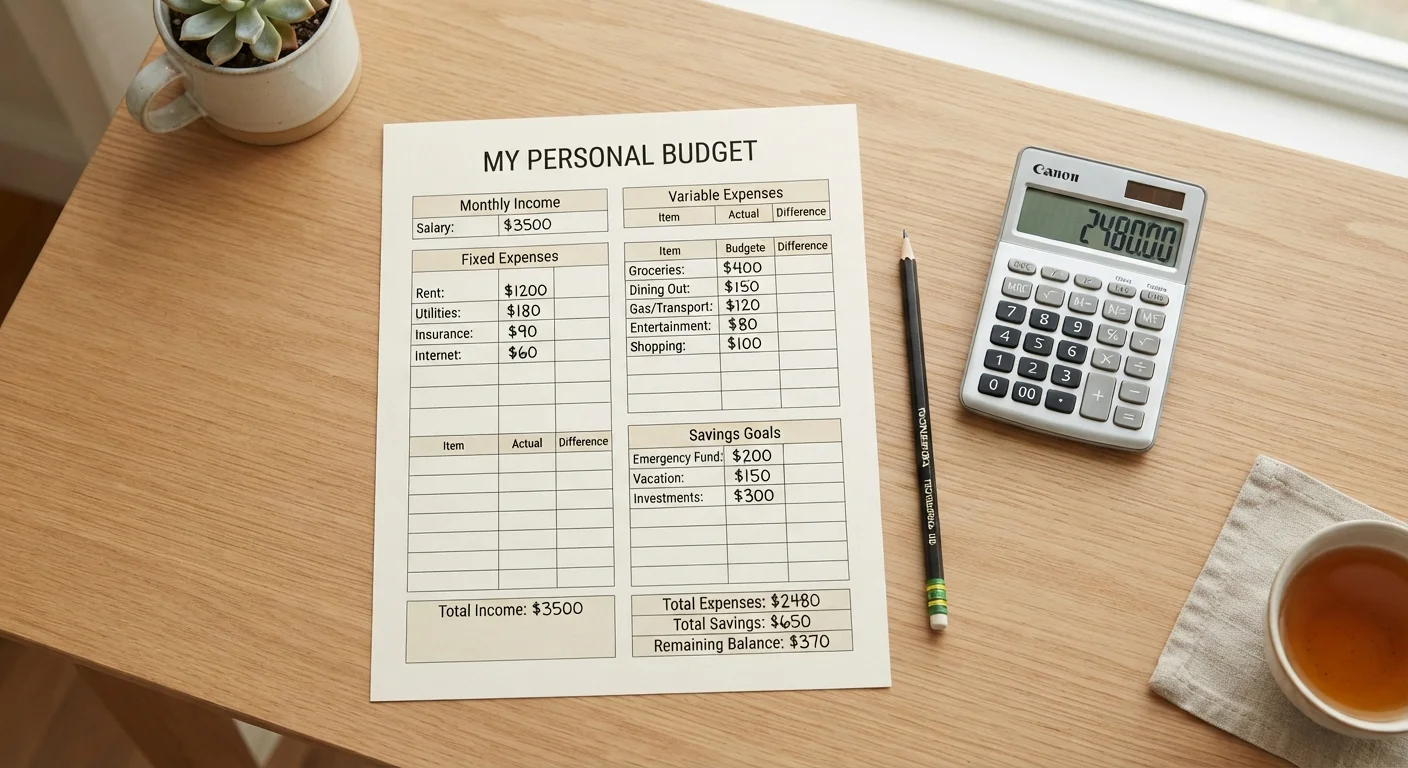
Photo credit: PrimeReads.net | Discover Insightful And Creative Blogs
In this article
A quick-reference glossary of budgeting and savings terminology—from net income to discretionary spending—explained clearly for everyday readers.
Why Budget Vocabulary Matters
Budgeting guides are full of terms that get tossed around as if everyone already knows what they mean. Net income. Discretionary spending. Liquidity. If any of those feel fuzzy, you're not alone - and that fuzziness can quietly undermine even the most motivated budgeter. When you understand the language of personal finance, you can follow any budgeting method with confidence and make decisions grounded in real clarity.
This reference breaks down the core terms you'll encounter when building or refining a personal budget. Bookmark it, return to it often, and use it alongside our comprehensive introduction to budgeting when you're ready to put these concepts into practice.
Net income
Your take-home pay after all taxes and payroll deductions. This is the figure you should use as the foundation of any personal budget.
Discretionary spending
Money spent on wants rather than needs - dining, entertainment, hobbies. These expenses are the most flexible category in any budget.
Emergency fund
A dedicated savings reserve held in a liquid account for unexpected necessary expenses. It acts as a financial buffer against income disruption or sudden large costs.
Sinking fund
A savings pool built gradually for a planned future expense. Unlike an emergency fund, the expense is anticipated and the savings target is defined in advance.
Fixed expense
A cost that remains the same each billing cycle, such as rent or a fixed-rate loan payment. Fixed expenses are the easiest to account for in a budget.
Variable expense
A cost that changes in amount from month to month, such as groceries or utility bills. Budgeting for variable expenses typically involves estimating an average or upper-bound figure.
Liquidity
The ease with which an asset can be converted to cash without significant loss of value. Savings accounts and checking accounts are considered highly liquid.
Debt-to-income ratio
Total monthly debt payments divided by gross monthly income, expressed as a percentage. It is a key metric lenders use to assess creditworthiness.
Cash flow
The net movement of money into and out of your accounts over a defined period. Positive cash flow means income exceeds expenses; negative cash flow means the reverse.
Savings rate
The share of net income saved each month, expressed as a percentage. Monitoring your savings rate over time is a straightforward way to gauge financial progress.
Income Terms: What's Coming In
Every budget starts with income - but which number you use matters enormously.
- Gross income is your total earnings before any deductions: taxes, health insurance premiums, or retirement contributions. It's the number on your offer letter, not your paycheck.
- Net income (often called take-home pay) is what actually lands in your bank account after all deductions. This is the only number you should build a budget around.
- Variable income refers to earnings that change month to month - freelance payments, commissions, or gig work. Budgeting on variable income requires using a conservative baseline, typically an average of your lowest recent months.
Confusing gross for net is one of the most common budgeting mistakes. For a deeper look at how income categories interact with spending, see our guide to spending categories every personal budget should include.
Expense Terms: Where the Money Goes
Expenses fall into a few distinct categories, and knowing the difference between them shapes how you allocate your dollars.
- Fixed expenses are costs that stay the same each month: rent, a car loan payment, or a fixed-rate insurance premium. These are the easiest to plan for.
- Variable expenses fluctuate - groceries, utilities, and gas are classic examples. They're predictable in category but not in exact amount.
- Discretionary expenses are wants rather than needs: dining out, streaming subscriptions, or hobbies. Cutting here is usually the first lever people pull when a budget is tight.
- Non-discretionary expenses are the essentials you can't reasonably eliminate - housing, food, medicine, and transportation to work.
For clear definitions and real-life examples of each type, our fixed vs. variable expenses reference is a useful companion to this glossary.
Savings and Emergency Fund Terms
Saving is more than putting money aside - the purpose and structure of savings accounts shape how useful they actually are.
- Emergency fund: A dedicated pool of liquid savings set aside exclusively for unexpected, necessary expenses - job loss, a medical bill, or a major car repair. A common general guideline suggests covering three to six months of essential expenses, though the right amount depends on your individual situation. For a fuller picture, read what an emergency fund actually is.
- Sinking fund: Money set aside gradually for a known future expense - a vacation, annual insurance premium, or new appliance. Unlike an emergency fund, sinking funds are planned and purposeful.
- Liquidity: How quickly and easily an asset can be converted to cash without losing value. A savings account is highly liquid; a house is not. Emergency funds should always be held in liquid accounts.
- Savings rate: The percentage of your net income you save each month. Tracking this number over time reveals whether your financial habits are moving in the right direction.
Budget Structure and Strategy Terms
Once you understand income and expenses, these terms describe how a budget is organized and evaluated.
- Budget surplus: When income exceeds expenses for a given period. A surplus gives you room to save, invest, or pay down debt.
- Budget deficit: When expenses exceed income. Persistent deficits signal that spending, income, or both need to change.
- Cash flow: The movement of money in and out over time. Positive cash flow means more is coming in than going out. Tracking cash flow is especially important for people with irregular income.
- Debt-to-income ratio (DTI): Your total monthly debt payments divided by your gross monthly income, expressed as a percentage. Lenders use this figure to evaluate loan applications; lower is generally better. Learn more about how debt interacts with your finances at our Debt & Credit hub.
With these terms in hand, you're well positioned to compare actual budgeting methods. Our comparison of budgeting approaches explains the trade-offs between zero-based budgeting, pay-yourself-first, and other popular frameworks - all of which rely on the vocabulary covered here.
This article is for general informational and educational purposes only and does not constitute personalized financial advice. Consider consulting a qualified financial professional for guidance tailored to your individual circumstances.

Author
Money Editorial Team
Money Editorial Team is the collective byline for our editorial team and contributor network. Articles published under this byline or an editorial pen name are researched, written, and reviewed according to our editorial standards for clarity, consistency, and independence before publication.
View all articles →