
Fixed vs. Variable Expenses: A Budgeter's Reference
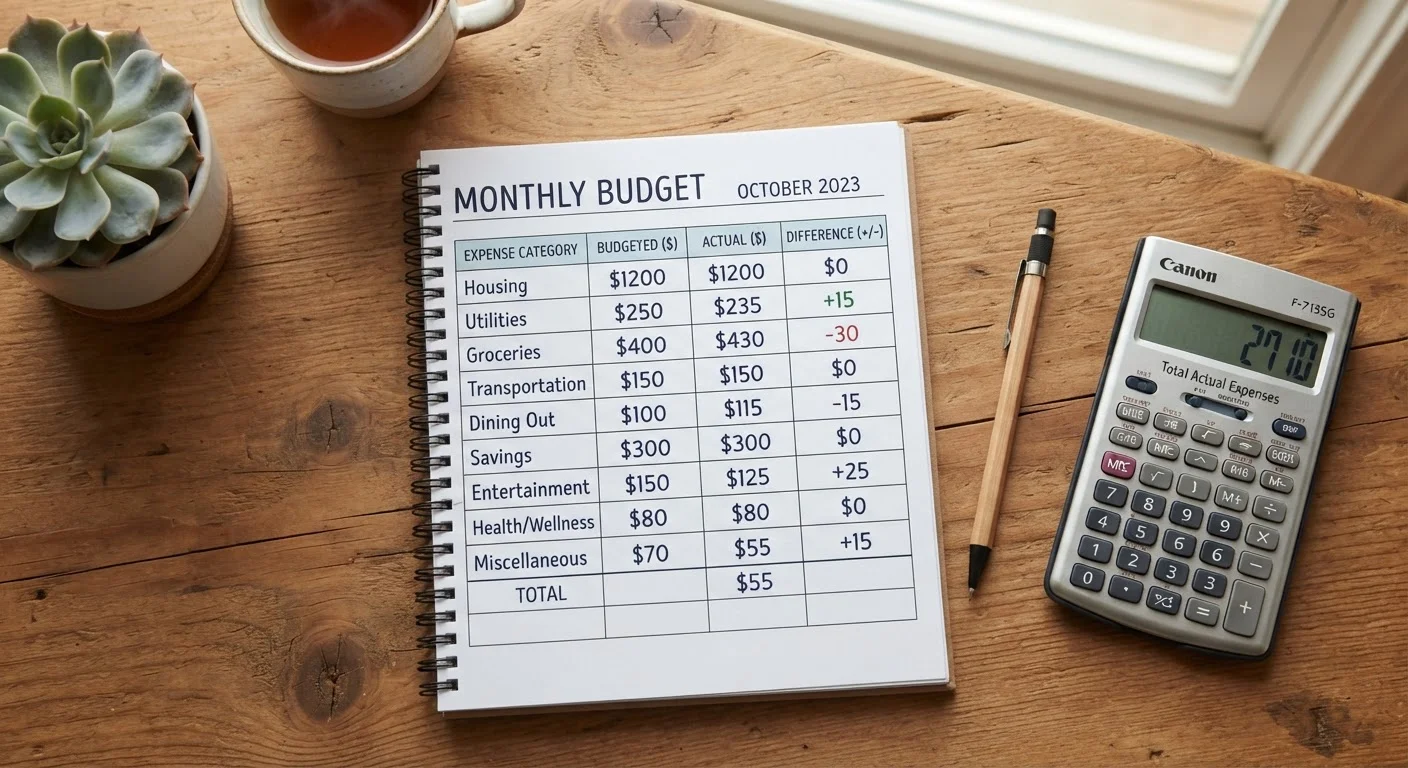
Photo credit: PrimeReads.net | Discover Insightful And Creative Blogs
In this article
Quick definitions and examples of fixed, variable, and discretionary expenses — the essential vocabulary for anyone building a personal budget.
Why Expense Categories Matter
Before you can build a budget that holds up month after month, you need a shared vocabulary for the money leaving your account. The three categories - fixed, variable, and discretionary - are not accounting jargon. They are practical labels that tell you how much control you have over each dollar you spend.
When you understand how an expense behaves, you know exactly what to do with it. Fixed costs get scheduled. Variable necessities get estimated and monitored. Discretionary spending gets a deliberate cap. That simple sorting exercise is the foundation of every budgeting method, from the 50/30/20 rule to zero-based budgeting. See our overview of popular budgeting methods for a side-by-side look at how each approach handles these categories.
Fixed expense
A recurring cost that remains the same amount each billing cycle, regardless of usage. Examples include rent, mortgage payments, and flat-rate insurance premiums.
Variable expense
A necessary cost whose amount changes from month to month based on consumption or circumstance. Groceries, utilities, and gasoline are typical examples.
Discretionary expense
Optional spending on wants rather than needs. These costs can be reduced or eliminated without affecting basic living requirements.
Budget surplus
The amount remaining after all expenses - fixed, variable, and discretionary - are subtracted from total income. A surplus can be directed toward savings or debt repayment.
Non-discretionary expense
Any cost that cannot reasonably be skipped, covering both fixed expenses (like rent) and variable necessities (like food and utilities).
Spending cap
A self-imposed maximum dollar amount assigned to a budget category for a given period, used to prevent overspending in flexible categories.
Fixed Expenses: The Predictable Layer
A fixed expense is any cost that stays the same amount every billing period. Because the number does not change, it is the easiest category to plan for - you enter it once and treat it as a given.
| Definition | Same dollar amount every billing cycle |
| Predictability | High - amount known in advance |
| Common examples | Rent, car loan, insurance premium |
| Budget approach | Enter once; treat as non-negotiable |
| Can you reduce it short-term? | Rarely - changes require renegotiation or cancellation |
Common examples include rent or mortgage payments, car loan installments, insurance premiums, and subscription services billed at a flat monthly rate. None of these fluctuate based on how much you use them in a given month.
The practical implication: add up all your fixed expenses first. Whatever is left after those costs - and after any savings contributions you treat as non-negotiable - is the spending power available for everything else. This approach is sometimes called "paying fixed costs and savings first," and it is central to the ground-up budgeting process many financial educators recommend for beginners.
Variable Expenses: Necessary but Flexible
A variable expense is a cost you cannot eliminate - it covers a genuine need - but the amount changes from month to month based on usage or circumstance.
Groceries are the clearest example. You must eat, but the total at checkout shifts depending on prices, household size, and what you buy. Utilities (electricity, gas, water), gasoline, and out-of-pocket medical costs all behave the same way: required, but not fixed.
Because these costs move around, budgeting for them requires estimation. A common approach is to review three to six months of past spending, calculate an average, and use that figure as your monthly target. If the actual amount comes in lower, the surplus rolls into savings or a buffer fund. If it runs higher, you adjust other flexible spending to compensate. The monthly budget setup checklist walks through exactly how to set those estimates in practice.
Discretionary Expenses: Wants, Not Needs
Discretionary expenses are optional spending - costs that enhance quality of life but are not required for basic functioning. Dining out, streaming services beyond a basic tier, gym memberships, hobbies, and travel all fall here.
This category is where most budgets either succeed or unravel, because discretionary spending is both the most flexible and the most psychologically loaded. Cutting it entirely is rarely sustainable; allowing it to run unchecked is how budgets fail.
A useful approach is to assign a firm monthly ceiling for discretionary spending as a whole, then allocate within that ceiling according to your own priorities. That ceiling should be set only after fixed expenses, variable necessities, and savings goals are accounted for. For broader context on how these three expense types fit into a complete financial picture, see the anatomy of a personal budget.
This article is for general informational and educational purposes only and does not constitute personalized financial advice. Consider speaking with a qualified financial professional about decisions specific to your situation.

Author
Money Editorial Team
Money Editorial Team is the collective byline for our editorial team and contributor network. Articles published under this byline or an editorial pen name are researched, written, and reviewed according to our editorial standards for clarity, consistency, and independence before publication.
View all articles →