
Good Debt and Bad Debt: A Distinction Worth Understanding
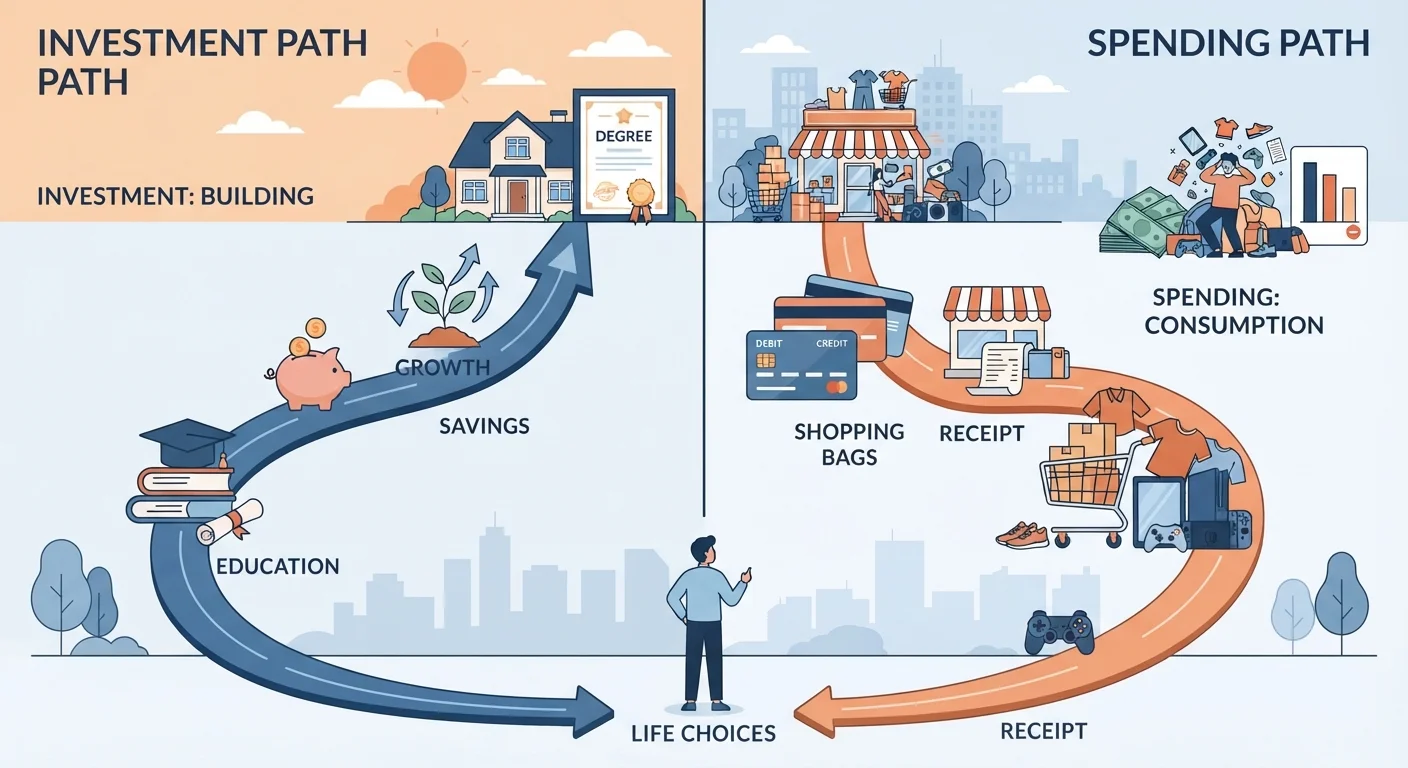
Photo credit: PrimeReads.net | Discover Insightful And Creative Blogs
In this article
Not all debt is harmful. Explore how financial educators distinguish between debt that may build value and debt that typically costs more than it's worth.
Key Takeaways
- Good debt is broadly defined as borrowing that may build long-term value or earning capacity.
- Bad debt typically finances short-lived purchases at high interest, costing more than the item is worth.
- Interest rate is one of the most important factors separating productive debt from costly debt.
- No debt is automatically "good" - your income stability, loan terms, and repayment ability always matter.
- Understanding this distinction helps you borrow more intentionally rather than avoiding all debt entirely.
Why the "Good" vs. "Bad" Label Exists
Debt has a reputation problem. Many people are taught to avoid it entirely, while others use it without much thought. Financial educators introduced the good-debt/bad-debt framework to offer a more nuanced view: borrowing is a tool, and like most tools, its usefulness depends on how it is used.
The core idea is straightforward. When borrowed money funds something that may increase your net worth or earning power over time - and comes at a manageable interest rate - it can be a rational financial decision. When debt finances consumption that depreciates quickly and carries a steep interest rate, the total cost often far exceeds the value received.
This framework is part of a broader understanding of how credit and borrowing work. For a foundational overview, the Debt & Credit reference guide covers the mechanics of loans, credit reports, and repayment structures in one place.
Characteristics of Debt That May Build Value
Financial educators typically cite a few common features when describing debt that functions productively:
- Lower interest rates - Federal student loans, mortgages, and some business loans tend to carry rates well below those of revolving consumer credit.
- Investment in appreciating or income-generating assets - Real estate can gain value over time; education can raise lifetime earnings; a business loan can fund revenue growth.
- Tax considerations - In some cases, interest paid on certain loans (such as mortgage interest or student loan interest) may be deductible, though tax rules are complex and individual results vary. Consult a tax professional for guidance specific to your situation.
None of these characteristics guarantee a positive outcome. A degree in a field with limited job prospects, or a home purchased at the peak of an overheated market, may not deliver the expected return. "Good debt" is a tendency, not a certainty.
~$1.77T
Total U.S. student loan debt outstanding
According to Federal Reserve data, student loan debt is one of the largest categories of household debt in the United States, illustrating how broadly 'good debt' financing is used.
20%+
Average credit card APR in recent years
The Federal Reserve has reported average credit card interest rates exceeding 20% annually, reinforcing why revolving balances are commonly cited as costly consumer debt.
$12T+
Total U.S. mortgage debt outstanding
Federal Reserve consumer credit data consistently shows mortgage debt as the single largest category of household debt, reflecting how widely real estate financing is used as a long-term investment vehicle.
Characteristics of Debt That Typically Costs More Than It Gives
Debt earns the "bad" label when its costs clearly outpace any lasting benefit. Common examples include:
- High-interest credit card balances - When balances carry over month to month, interest compounds quickly. A $1,000 balance at a high annual percentage rate can cost significantly more by the time it is paid off.
- Payday and predatory loans - These short-term products often carry extremely high effective interest rates and can trap borrowers in cycles of refinancing and fees.
- Financing rapidly depreciating goods - Taking out a personal loan for a vacation, luxury electronics, or other items that lose value immediately means you are paying interest long after the item has lost most of its worth.
It's worth noting that the loan type - secured or unsecured - also shapes the risk you carry as a borrower. Understanding how these structures differ is covered in depth in our article on secured vs. unsecured debt.
Using This Framework Practically
The good-debt/bad-debt lens is most useful as a prompt for reflection before borrowing, not a rigid rule. Before taking on any debt, consider asking:
- What will this money actually purchase, and will that thing retain or grow in value?
- What is the interest rate, and what will I pay in total over the life of the loan?
- Is my income stable enough to service this debt reliably?
- Am I borrowing because it is financially strategic, or because it feels convenient in the moment?
If you already carry debt and want to reduce it strategically, exploring structured repayment approaches can help. Our guide on debt repayment strategies explains two widely used methods side by side. And if you're concerned about how borrowing habits may be affecting your credit health, the article on habits that quietly damage your credit identifies common patterns worth knowing.
This article is for general informational and educational purposes only and does not constitute personalized financial, tax, or legal advice. Please consult a qualified financial adviser or other licensed professional for guidance specific to your circumstances.
Frequently Asked Questions

Author
Money Editorial Team
Money Editorial Team is the collective byline for our editorial team and contributor network. Articles published under this byline or an editorial pen name are researched, written, and reviewed according to our editorial standards for clarity, consistency, and independence before publication.
View all articles →