
Travelling With Children: Planning Considerations Parents Often Overlook
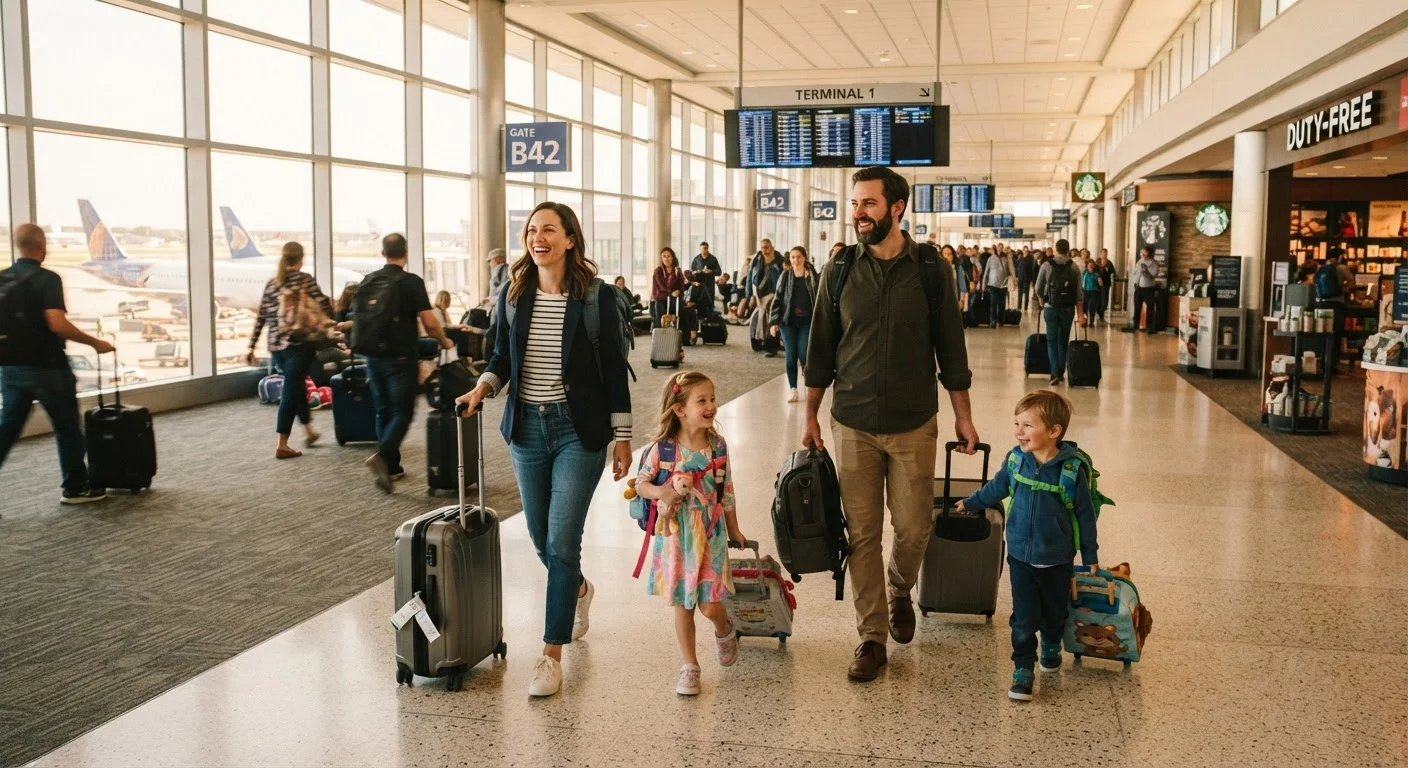
Photo credit: PrimeReads.net | Discover Insightful And Creative Blogs
In this article
A practical look at what changes when children are in the group — from pacing and accommodation to documents and contingency plans.
Key Takeaways
- Children's travel documents, including passports, require planning well ahead of any international departure.
- Pacing matters more than itinerary density - build genuine downtime into every travel day.
- Accommodation choices significantly affect family comfort, flexibility, and overall trip success.
- A written medical and emergency plan reduces stress when something goes wrong far from home.
- Children's routines don't disappear on vacation - working with them makes travel smoother for everyone.
Why Family Travel Demands a Different Planning Approach
Travelling with children transforms the logistics of a trip in ways that are easy to underestimate until you're standing in a foreign airport with an overtired five-year-old and a missed connection. The fundamentals of trip planning still apply - see our guide to the anatomy of a well-planned trip for a solid foundation - but layering children into the equation introduces constraints, contingencies, and considerations that standard travel advice rarely covers in depth.
The issues parents most often encounter aren't dramatic disasters. They're quieter friction points: a hotel room that doesn't work for a family of four, a packed itinerary that leaves no room for a child's afternoon crash, or a passport application that wasn't started early enough. The list below addresses the overlooked details that experienced family travellers learn the hard way.
Passport and document timelines for minors
Children's passports in the US are valid for only five years (for those under 16), compared to ten years for adults. Both parents or legal guardians are typically required to appear in person when applying for a child's passport, or one parent must provide notarized consent from the other. This process takes time - and during peak seasons, processing times can extend significantly.
For international travel, also verify the entry requirements of your destination regarding unaccompanied minors, custody documentation, or consent letters, especially if a child is travelling with only one parent. Requirements vary by country, and officials may request documentation at border crossings without advance notice. Always verify current requirements through official government sources before travel.
Children's passports expire faster and require both parents' involvement - start the process early.
Pacing the itinerary realistically
An itinerary that would work well for adults often becomes a source of conflict when children are involved. Young children need more transition time, are prone to fatigue after high-stimulation activities, and frequently need unscheduled breaks. Trying to move through three or four attractions in a single day - even short ones - can push children past their threshold in ways that affect the whole group.
A practical adjustment is to plan for roughly half the activities you think you could fit, and treat any extras as bonuses rather than obligations. Build in a predictable rest period each afternoon if you're travelling with children under ten. Counterintuitively, a slower pace often results in better memories and fewer meltdowns.
Half your planned activities, done well, will outperform a packed schedule that exhausts everyone.
Choosing accommodation designed for families
A single standard hotel room is rarely adequate for a family, yet many parents book based on price alone only to find that the space, configuration, or location creates daily friction. Key factors to evaluate include: whether the room layout allows children to sleep while adults remain awake, whether kitchen or kitchenette access is available (which dramatically reduces food costs and manages dietary needs), and whether the property has outdoor space or a pool that gives children somewhere to decompress.
Vacation rentals, extended-stay hotels, and family suites are worth comparing carefully. Also consider the property's location relative to where you'll spend time - a slightly more expensive option closer to your main destinations may save significant stress in daily logistics, especially with strollers or young children.
Accommodation layout and location affect daily family logistics more than almost any other single factor.
Preparing a medical and emergency plan
Most parents travel with a basic first-aid kit, but fewer prepare a written plan for what to do if a child becomes ill or injured while away from home. Before departure, identify the nearest urgent care or pediatric facilities at your destination, understand how your health insurance applies when travelling (including whether it covers out-of-network or international care), and carry printed copies of any relevant prescriptions or medical information.
Travel insurance with medical evacuation coverage is worth understanding for international trips, particularly with young children or those with chronic conditions. Consult your child's pediatrician before travel for destination-specific health guidance - this is especially important for international destinations with different disease risks or altitude considerations. For general preventive health framing, preventive care resources can provide useful context.
A written medical plan - not just a first-aid kit - is the preparation most parents skip.
Working with children's routines, not against them
Travel disrupts sleep schedules, mealtimes, and the environmental cues children rely on to feel regulated. Parents who try to override these routines entirely tend to encounter the most difficulty. A more effective approach is to identify which elements of your child's routine are most stabilizing - bedtime rituals, a predictable meal structure, a comfort object - and preserve those deliberately, even in transit.
This also applies to food. Unfamiliar cuisines and irregular meal timing can create friction that compounds fatigue. Packing familiar snacks, identifying destinations with accessible grocery options, and maintaining rough meal timing helps keep children regulated. Packing decisions that overlook children's comfort items are a common regret among family travellers.
Preserving even a few elements of a child's daily routine can significantly stabilize the whole trip.
Planning for the gaps between activities
Airports, transit connections, and transfer days are often the hardest parts of family travel - not the destinations themselves. These unstructured periods, which adults may find merely tedious, can feel interminable to children and create behavioral challenges that spill into the rest of the day.
Preparing for these gaps specifically - with a small bag of quiet activities, downloaded content for devices, or familiar games - is disproportionately valuable. It's also worth researching airport amenities in advance: some international terminals have dedicated children's play areas or family lounges that make long layovers significantly more manageable. Check official airport websites before your trip for current facilities.
Transit time is when family trips most often go sideways - prepare for it as deliberately as any activity.
Building a Trip That Works for Everyone
No trip with children will go exactly to plan - and that's not a failure of preparation, it's just the reality of travelling with people whose needs shift by the hour. The goal of thorough planning isn't to eliminate the unexpected; it's to give your family enough structural flexibility to absorb it without the whole trip unravelling.
Review your pre-trip planning checklist and international preparation checklist alongside the considerations above, and adapt each item through the lens of your children's ages and needs. The families who report the most successful trips are rarely those who planned the most activities - they're the ones who planned the most thoughtfully.
Involve children in age-appropriate planning
Children who have some stake in the trip - choosing one activity, picking a restaurant for one meal, or helping pack their own bag - often engage more positively throughout the journey. This doesn't mean handing over the itinerary; it means building in moments of agency that make the trip feel collaborative rather than something happening to them.

Author
Travel Editorial Team
Travel Editorial Team is the collective byline for our editorial team and contributor network. Articles published under this byline or an editorial pen name are researched, written, and reviewed according to our editorial standards for clarity, consistency, and independence before publication.
View all articles →