
Carry-On Only Travel: What It Takes to Pull It Off
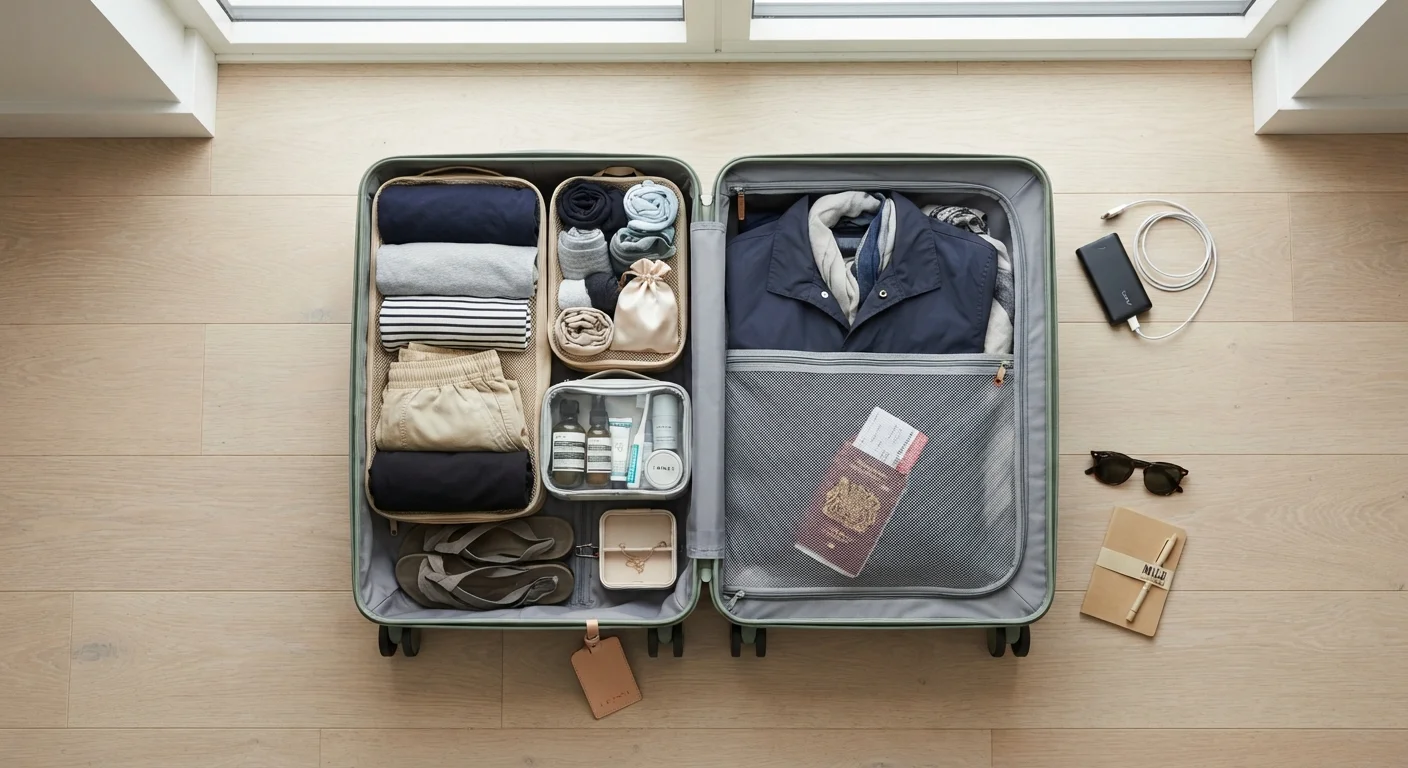
Photo credit: PrimeReads.net | Discover Insightful And Creative Blogs
In this article
Ditching checked luggage saves time and hassle. Here's how to pack light for any trip length without sacrificing what you actually need.
Key Takeaways
- Airline carry-on size rules vary significantly - always check your specific carrier before packing.
- Packing cubes and the bundle or roll method dramatically increase usable bag space.
- The TSA 3-1-1 liquids rule applies to all carry-on bags on US domestic and international flights.
- Carry-on only travel works for most trip lengths when clothing choices prioritize versatility.
- Some routes - especially inter-island or small regional flights - may force bag checks regardless of intent.
- Skipping checked luggage saves time at both departure and arrival, reducing overall travel stress.
Why Carry-On Only Is Worth the Effort
The appeal of carry-on only travel is straightforward: you move faster, spend less time at the airport, and eliminate the anxiety of waiting at a baggage carousel wondering whether your bag made the connection. For travelers who take multiple trips a year, or anyone navigating a tight itinerary, cutting checked luggage out of the equation can meaningfully improve the experience from start to finish.
There are financial considerations too. Many airlines charge checked bag fees that add up quickly, particularly on budget carriers. While fee structures change frequently and vary by route and fare class, the savings over several trips can be substantial - and avoiding that cost entirely is one of the clearest benefits of traveling light.
If you've ever wondered whether checking a bag makes more sense for your specific trip type, our comparison piece on carry-on vs. checked luggage trade-offs walks through the situations where each approach genuinely wins.
Build your carry-on wardrobe around a single color palette so every piece mixes and matches without thought. Three bottoms, five tops, and two layers can cover most week-long trips when every combination works together.
Seasoned carry-on travelers consistently identify clothing incompatibility - items that only work with one specific outfit - as the primary driver of overpacking.
Weigh your packed bag at home before you leave. A luggage scale costs very little and prevents the stress of discovering your bag is overweight at the gate, where your options are limited and costly.
Airline weight enforcement at the gate is inconsistent but real, and the cost of checking a bag at the gate is typically higher than at standard check-in.
Understanding Airline Size and Weight Rules
Before anything else, look up the carry-on policy for every airline on your itinerary - not just the primary one. Carry-on dimensions and weight limits vary considerably between carriers. A bag that fits comfortably in a full-size overhead bin on a major US carrier may be gate-checked on a regional connection or a low-cost international airline.
Most US major carriers allow a carry-on in the range of 22 x 14 x 9 inches, but this is not universal. Budget airlines in Europe, Latin America, and Asia often impose stricter limits, and some charge extra for bags that go in the overhead bin at all. When booking multi-leg itineraries, the most restrictive policy on any single segment applies to your entire trip.
Weight limits matter too. Even if your bag fits the size requirement, airlines in many countries enforce strict weight caps - sometimes as low as 15 pounds - on carry-on items. A lightweight bag itself is therefore a practical investment, not a luxury.
The Packing System That Makes It Work
The difference between a chaotic, overstuffed carry-on and a well-organized one usually comes down to system, not bag size. Packing cubes - fabric compression organizers that segment your bag into zones - are widely credited by frequent travelers with increasing usable space and making repacking on the road faster.
Two main folding methods dominate the carry-on community: rolling and bundling. Rolling individual garments reduces wrinkles and works well for casual fabrics. The bundle method - wrapping clothes around a core object like a packing cube - is particularly effective for blazers and dress shirts. Many travelers combine both approaches within the same bag.
The clothing choices themselves matter most. A carry-on wardrobe should be built around versatile, neutral pieces that work across multiple occasions. Aim for outfits that share components: a single pair of pants that works for both a day of walking and a dinner out eliminates the need to carry duplicates. For longer trips, plan to do laundry - most hotels and many hostels offer laundry access, and sink-washing fast-drying fabrics is a practical option.
See our guide on packing decisions that travelers tend to regret for a candid look at what consistently causes problems once you're actually on the road.
Toiletries and Liquids: Navigating the 3-1-1 Rule
The TSA's 3-1-1 rule governs liquids in carry-on bags on flights departing from or connecting through the United States: each liquid must be in a container of 3.4 ounces (100 ml) or less, all containers must fit in a single quart-sized clear plastic bag, and each passenger is allowed one such bag. This rule is also standard in most international airports under ICAO guidance, though enforcement details can vary.
The practical challenge is fitting a week's worth of toiletries into a single quart bag. Solid alternatives - shampoo bars, solid conditioner, solid sunscreen sticks, and toothpaste tablets - eliminate the liquid issue entirely for those products. Decanting products into travel-size containers is effective for the remainder.
One frequently overlooked detail: products like aerosol dry shampoo, liquid foundation, and even some medications count as liquids. Prescription medications in their original labeled containers are generally permitted in larger quantities with documentation, but always verify current TSA and destination-country rules before travel, as policies can change. For a full pre-departure rundown, our pre-flight checklist covers documents, packing, and security prep in one place.
When Carry-On Only Gets Complicated
Carry-on only travel has genuine limitations that are worth acknowledging honestly. Cold-weather trips are the most obvious challenge - bulky coats, thermal layers, and heavy boots eat through bag space quickly. The standard workaround is wearing the heaviest items on travel days rather than packing them, though this has limits in extreme climates.
Destination-specific activities create similar constraints. Hiking gear, formal attire for multiple events, or specialized sports equipment rarely fit within a single carry-on alongside everyday essentials. In these cases, either narrowing the activity scope or accepting a checked bag is a more realistic approach than forcing an ill-fitting system.
Regional and inter-island routes present a structural problem regardless of bag size. Many small aircraft used on these routes have no overhead storage, meaning all carry-on items are gate-checked at no charge - but you lose access to your bag during the flight. If you're traveling somewhere like the Caribbean or on small domestic hops, factor this into your packing logic. Our piece on Caribbean island hopping logistics covers this in detail.
For international travel, it's also worth reviewing entry requirements, customs rules, and any restrictions on what can be brought into a destination. Our international trip preparation guide is a useful companion before any overseas trip.
Airport and Transit Benefits You'll Notice Immediately
The operational advantages of carry-on only travel show up from the moment you arrive at the airport. Without a bag to check, you can use self-service kiosks or mobile check-in and go directly to security - a meaningful time saving on busy travel days. On the return leg, walking off the plane and straight to ground transportation instead of waiting at baggage claim is one of the more underappreciated benefits of the approach.
The gains extend beyond the airport itself. Travelers navigating dense transit networks - crowded metro systems, narrow train corridors, cobblestone streets - move more easily with a compact bag. In cities where luggage storage is limited or expensive, being able to carry everything with you provides real flexibility.
For tips on moving through security more efficiently once you're at the airport, our guide on getting through airport security faster outlines the habits and program options that make a consistent difference. And if your itinerary includes a long layover, making the most of airport layovers is worth a read before you fly.
Carry-on only travel isn't a universal solution, but for the majority of trips - weekend getaways, one- to two-week international itineraries, and business travel - it's an achievable and genuinely rewarding approach once you develop a reliable system.

Author
Travel Editorial Team
Travel Editorial Team is the collective byline for our editorial team and contributor network. Articles published under this byline or an editorial pen name are researched, written, and reviewed according to our editorial standards for clarity, consistency, and independence before publication.
View all articles →