
London or Edinburgh: Choosing Your First UK Trip
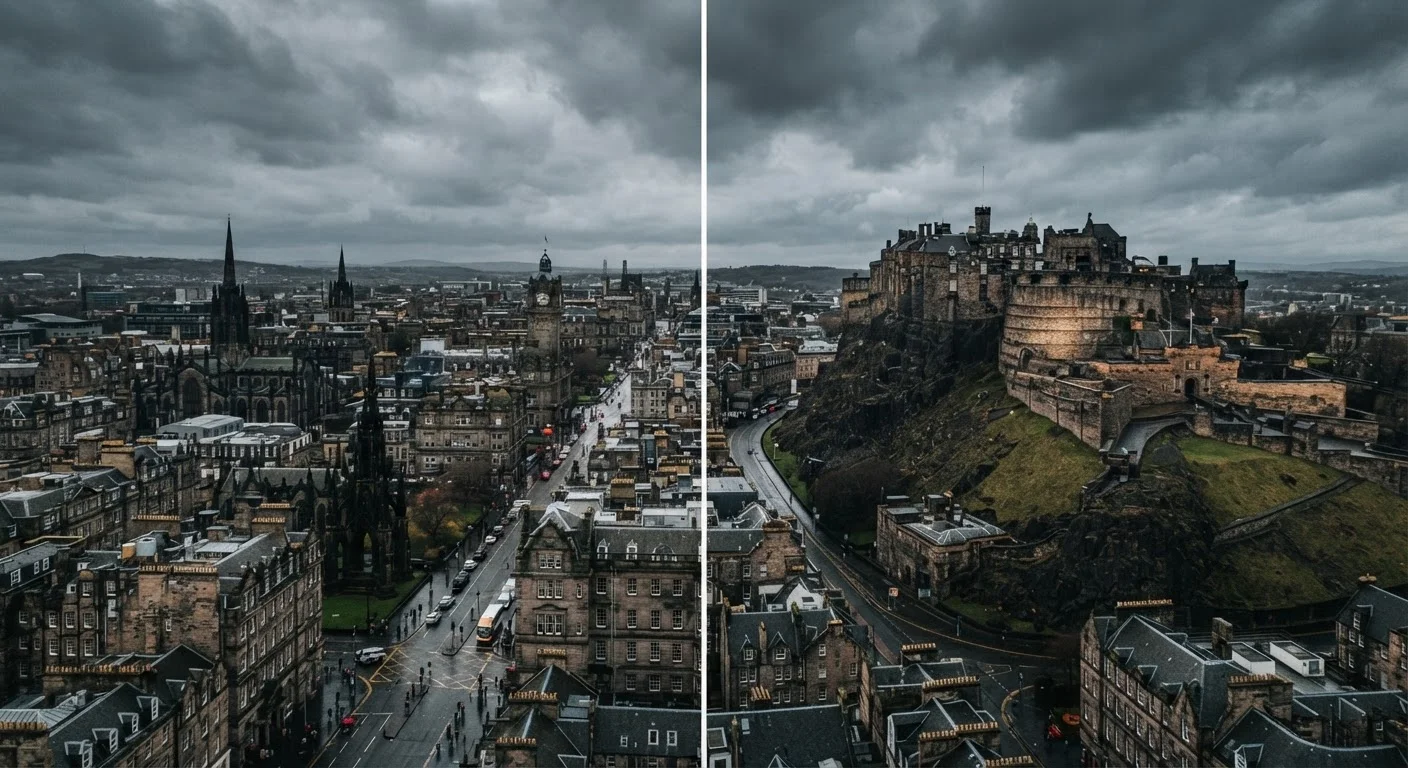
Photo credit: PrimeReads.net | Discover Insightful And Creative Blogs
In this article
Scale, culture, cost, and character differ sharply between London and Edinburgh. Here's what each city genuinely offers.
Key Takeaways
- London is significantly larger and more expensive, requiring more time and budget to explore meaningfully.
- Edinburgh is walkable from its Old Town to New Town, making navigation straightforward for first-timers.
- Both cities offer world-class free museums, though London has a greater volume of them.
- Edinburgh's compact scale makes it easier to feel oriented, while London's size can be overwhelming at first.
- Season matters in Edinburgh more acutely - the August Festival transforms the city entirely.
- Neither city is objectively better; the right choice depends on your travel pace and interests.
Scale and Navigation
London is one of the largest cities in Europe, covering roughly 600 square miles across 33 boroughs. For a first-time visitor, this scale can feel disorienting. Getting between major attractions - say, from the Tower of London to the Natural History Museum - involves either a multi-stop Underground journey or a significant bus ride. Factor in travel time when building any London itinerary; it disappears faster than most people expect.
Edinburgh, by contrast, is organized around a compact core. The Royal Mile runs roughly a mile from Edinburgh Castle down to the Palace of Holyroodhouse. The New Town sits just to the north across Princes Street Gardens. Most first-time visitors can cover the essential areas on foot within a few days without needing to rely heavily on public transit. That walkability lowers both cost and cognitive load - a genuine advantage for anyone new to independent travel. If you're still building your travel confidence, our ground-up guide to first international trips covers the logistics of getting oriented in an unfamiliar city.
Culture, History, and What You'll Actually See
London's museum landscape is extraordinary, and most of the major institutions - the British Museum, the Victoria and Albert Museum, the National Gallery, the Natural History Museum - are free to enter. The city's neighborhoods each carry their own distinct character: the Georgian grandeur of Bloomsbury, the street art corridors of Shoreditch, the multicultural food markets of Borough. A week in London still leaves entire chapters unread.
Edinburgh offers something different: a sense of history that feels physically present rather than curated. The Old Town's medieval tenements, the volcanic rock formations beneath the castle, and Arthur's Seat - an ancient volcano accessible via a moderately demanding hike within city limits - give the city a dramatic, almost cinematic quality. The National Museum of Scotland is free and covers everything from Pictish carved stones to the original Dolly the sheep. The city rewards slower exploration.
| Criterion | London | Edinburgh |
|---|---|---|
| City size | ~600 sq miles, 33 boroughs | Compact core, walkable center |
| Navigation | Extensive Underground network needed | Mostly walkable Old and New Town |
| Free museums | Numerous world-class institutions | National Museum of Scotland, galleries |
| General cost level | Higher (accommodation, transit, dining) | Moderate outside August festival |
| Seasonal spike | Year-round high demand | August Festival causes sharp price rise |
| Outdoor access | Parks; day trips require travel | Arthur's Seat within city limits |
| International flight connections | Heathrow/Gatwick: extensive global links | Edinburgh Airport: good European links |
| Cultural character | Cosmopolitan, multicultural, global | Distinctly Scottish, historic, intimate |
For travelers who've already wrestled with the Paris versus Barcelona question, the London-Edinburgh choice follows a similar logic around scale and pace - see our look at Paris vs. Barcelona for a comparable framework.
Cost and Practical Realities
London is one of the more expensive cities in Western Europe for accommodation. Budget travelers will find options, but central hostels and guesthouses fill quickly and carry a premium. Dining out frequently in London adds up; cooking in accommodation or leaning on food markets helps manage costs. The Oyster card or contactless payment system makes transit straightforward, but those transit costs accumulate over a multi-day stay.
Edinburgh's accommodation costs are generally more moderate outside of the August festival period, when prices across the city spike sharply due to demand. Outside of festival season, a traveler can eat well in Edinburgh without significant expense, and the walkable core means many days require no transit spend at all.
~2.2M
Visitors to Edinburgh per year
VisitScotland estimates Edinburgh receives over two million overnight visitors annually, with numbers rising sharply during festival season.
7M+
Annual visitors to British Museum alone
The British Museum consistently ranks among the most visited attractions in the world, according to its published annual visitor figures.
3,500+
Shows during Edinburgh Fringe
The Edinburgh Festival Fringe, held each August, typically features thousands of individual performances across hundreds of venues throughout the city.
Weather in both cities is famously variable. Packing for rain regardless of season is simply practical. Edinburgh tends to be cooler and windier than London, particularly in autumn and winter, so layer accordingly.
Whatever city you choose, a pre-trip planning checklist can help you consolidate transport, accommodation, and packing essentials before you leave.

Author
Travel Editorial Team
Travel Editorial Team is the collective byline for our editorial team and contributor network. Articles published under this byline or an editorial pen name are researched, written, and reviewed according to our editorial standards for clarity, consistency, and independence before publication.
View all articles →