
Paris vs. Barcelona: Two Cities, Very Different Trips
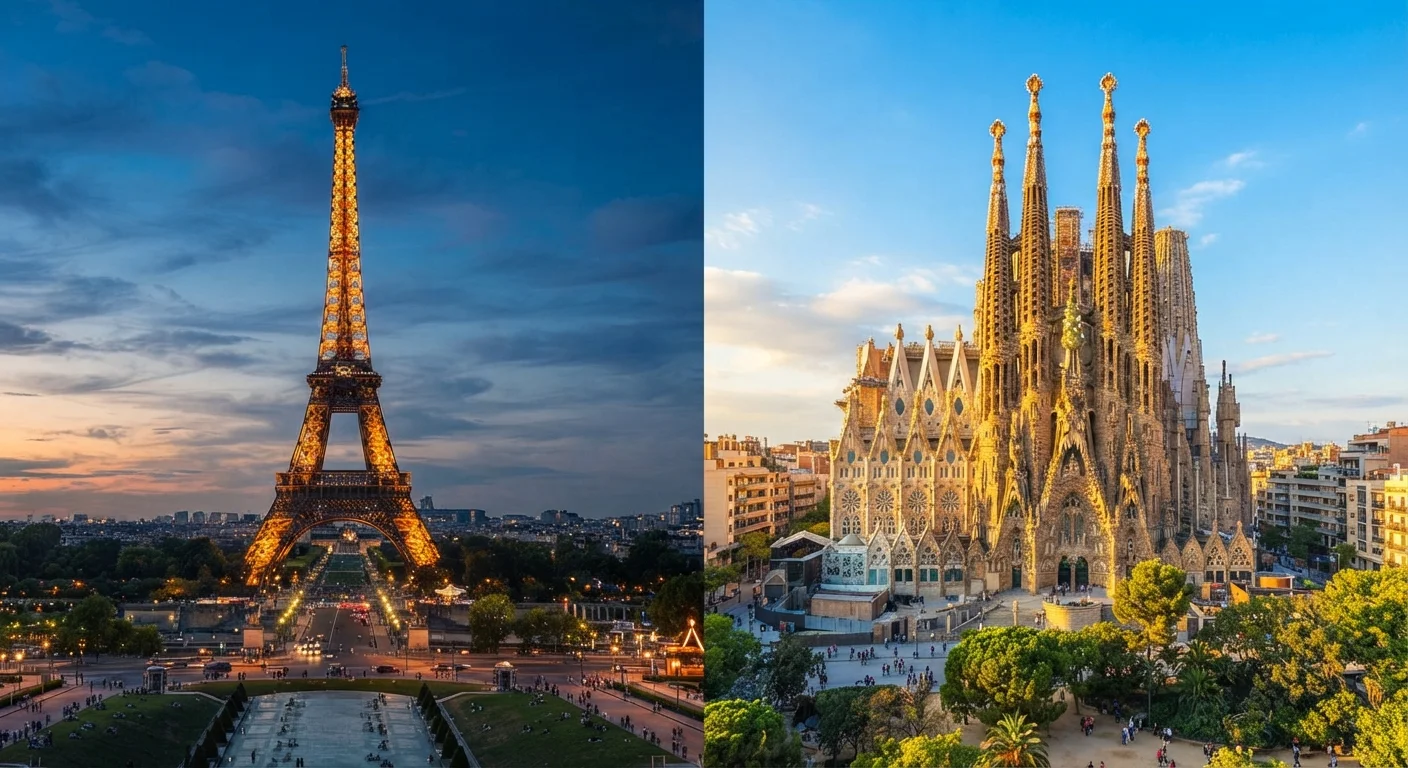
Photo credit: PrimeReads.net | Discover Insightful And Creative Blogs
In this article
Pacing, culture, food, cost, and atmosphere — how Paris and Barcelona stack up for first-time European travellers.
Key Takeaways
- Paris rewards slow, deliberate exploration; Barcelona suits those who want variety and spontaneity.
- Barcelona's daily schedule runs noticeably later than Paris, which affects dining and nightlife planning.
- Both cities have excellent public transit, but Barcelona's beach access adds a distinct leisure dimension.
- Paris generally has higher museum and dining costs; Barcelona's food scene offers more affordable casual options.
- First-time visitors to either city benefit from booking major attractions well in advance.
Atmosphere and Pace: What Each City Actually Feels Like
Paris presents itself seriously. The city's grand Haussmann boulevards, formal café culture, and reverence for its own history create an atmosphere that rewards patience. Visitors who slow down - lingering over a coffee, wandering between arrondissements without an agenda - often find it more rewarding than those racing between landmarks. The pace is deliberate, and that's part of the appeal.
Barcelona operates on a different rhythm entirely. The city is louder, more visually chaotic, and socially outward-facing in a way Paris isn't. Locals eat late, socialise outdoors, and treat public squares as extensions of their living rooms. For travellers who find Paris a little stiff, Barcelona's casual energy can feel like a relief. For those who find noise and density exhausting, it may feel like a lot.
Neither pace is objectively better - they serve different travel moods. If you're deciding between structured exploration and spontaneous wandering, that instinct alone will point you toward one city over the other.
Food, Drink, and Eating Habits
French cuisine in Paris is among the most codified in the world. Bistros, brasseries, and patisseries follow established formats - set menus, fixed hours, and an expectation that meals are events rather than fuel stops. Lunch is often the main meal. Arriving outside service hours at a traditional restaurant and expecting full service is a common tourist miscalculation.
Barcelona's food culture is more fluid. Tapas - small shared plates - are designed for grazing rather than formal dining. La Boqueria market and neighbourhood mercats offer affordable, high-quality ingredients and prepared food throughout the day. Dinner before 8:30 p.m. marks you immediately as a tourist; most locals don't sit down until 9 or 10 p.m.
On cost, Barcelona has a genuine edge for casual eating. A solid lunch menu del día (a fixed midday meal common across Spain) typically costs less than a comparable Paris prix-fixe. Wine and beer are also priced more accessibly in most Barcelona neighbourhoods.
| Criterion | Paris | Barcelona |
|---|---|---|
| Daily rhythm | Earlier dining, structured hours | Late dining, open-ended evenings |
| Beach access | None in the city | Multiple beaches, city-centre adjacent |
| Casual meal cost | Higher on average | More affordable daily options |
| Signature architecture | Haussmann, Gothic, Baroque | Modernisme (Gaudí), Gothic Quarter |
| Museum density | Exceptionally high | Strong, but more selective |
| Language barrier | French; English widely spoken in tourist areas | Catalan/Spanish; English common in tourist zones |
| Transit ease | Extensive Métro network | Good metro, plus walkable coastline |
Landmarks, Museums, and Getting Around
Paris holds an almost unfair concentration of major cultural institutions - the Louvre, Musée d'Orsay, Centre Pompidou, Versailles (a day trip), and Notre-Dame (currently under restoration) are all within reach. The city's Métro is frequent, legible, and covers nearly every point of interest. Walking between neighbourhoods is often the most rewarding option, as districts transition noticeably in character.
Barcelona's landmark list is anchored by Antoni Gaudí's work - the Sagrada Família, Park Güell, and Casa Batlló are unlike anything else in Europe. The Gothic Quarter offers dense medieval streetscapes, while Montjuïc hill provides panoramic views. The city's metro and bus network are reliable, but Barcelona's coastal geography also makes it walkable along the beachfront in a way Paris cannot replicate.
Booking major attractions in advance is strongly advisable in both cities. The Sagrada Família and the Louvre both operate timed-entry systems, and walk-up availability is often limited during peak travel periods. If you're weighing how structured your itinerary should be, our guide on self-planned versus package travel covers how much flexibility you realistically gain or lose with each approach.
Advance Booking Is Essential for Both Cities
Timed-entry reservations for the Sagrada Família, Louvre, and Park Güell regularly sell out days or weeks ahead during peak season. Showing up without a booking often means missing entry entirely or waiting in line for hours. Check official attraction websites for current booking requirements, as policies have shifted in recent years and vary by season.
Both cities also reward travellers who venture beyond the central tourist zones. In Paris, outer arrondissements like the 11th and 20th offer authentic neighbourhood life. In Barcelona, districts like Gràcia and Poblenou show a side of the city most visitors miss.
Which City Fits Your Trip?
The honest answer is that Paris and Barcelona aren't competing for the same traveller. Paris suits those who want Europe's cultural and historical depth delivered in a structured, walkable city with world-class dining and museums. Barcelona suits those who want sun, architectural drama, late nights, beach access, and a more casual social atmosphere.
Many travellers ultimately visit both on a longer European itinerary - and the two cities contrast well enough that doing so rarely feels repetitive. If you're deciding between them for a single trip, lean into what you actually want from the experience rather than what you feel you're supposed to see.
If you're building a broader European itinerary, choosing between London and Edinburgh involves a similarly distinct set of trade-offs worth working through. And for solo versus group travel considerations that affect how you'll experience either city, see our overview on solo versus group travel trade-offs.
This article provides general travel information. Prices, entry requirements, and attraction availability change over time - always verify current details through official sources before travel.

Author
Travel Editorial Team
Travel Editorial Team is the collective byline for our editorial team and contributor network. Articles published under this byline or an editorial pen name are researched, written, and reviewed according to our editorial standards for clarity, consistency, and independence before publication.
View all articles →