
Living Out of a Suitcase in Japan: Practical Notes on Getting Around
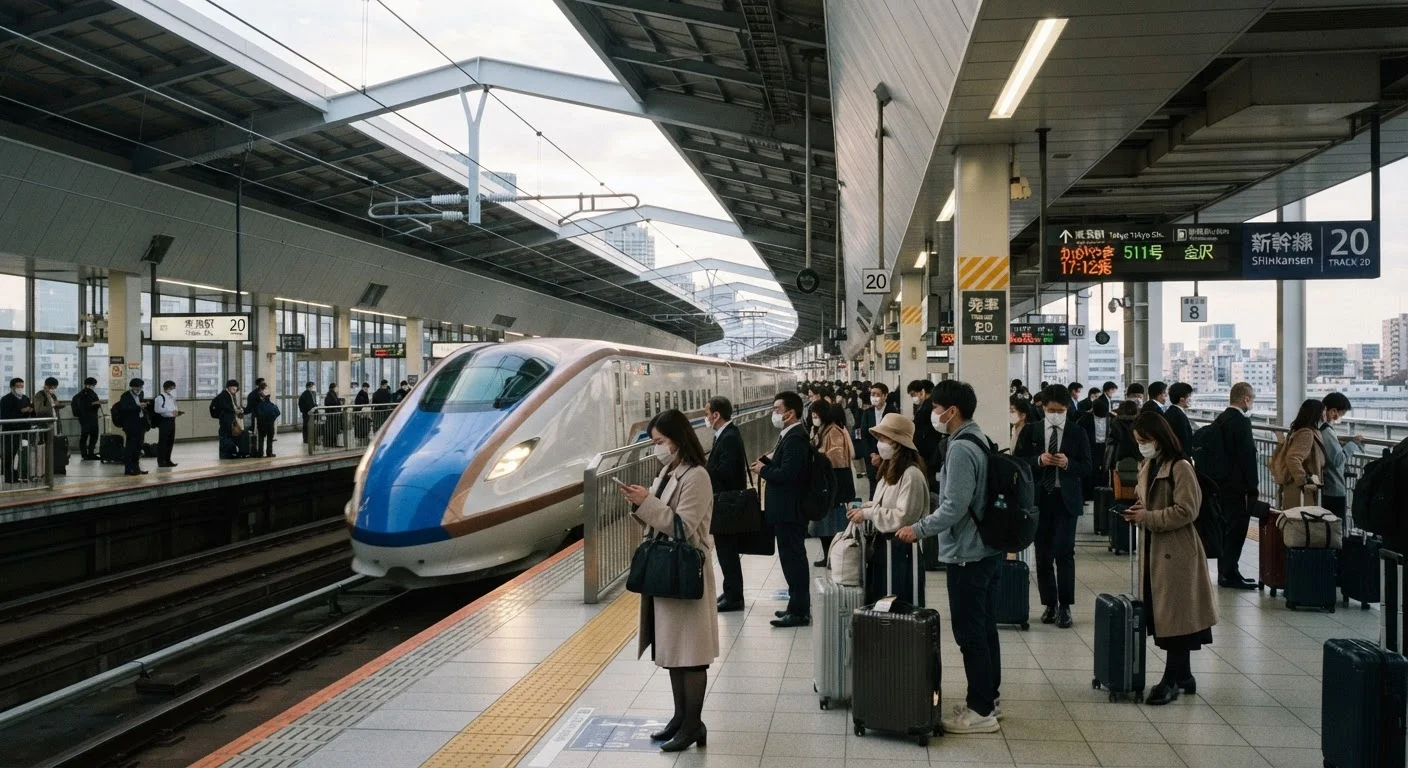
Photo credit: PrimeReads.net | Discover Insightful And Creative Blogs
In this article
IC cards, bullet trains, luggage forwarding, and walking — how Japan's transport ecosystem fits together for tourists.
Key Takeaways
- An IC card (like Suica or ICOCA) handles most local transit, buses, and even some convenience store purchases.
- Luggage forwarding (takuhaibin) lets you ship bags between hotels so you travel hands-free.
- The Japan Rail Pass pays off only on specific multi-city itineraries - do the math before buying.
- Shinkansen seats should be reserved in advance during peak travel seasons.
- Walking is often faster than driving in dense city centres like Tokyo and Kyoto.
Understanding Japan's Transit Ecosystem
Japan's public transportation network is genuinely world-class, but it can feel overwhelming at first glance. Multiple overlapping rail operators - JR lines, private railways, subways, and buses - serve the same cities, often with separate ticketing. Understanding the basic logic of the system before you arrive saves significant time and frustration on the ground.
The two pillars of daily movement are the IC card and the shinkansen (bullet train). IC cards - the most widely used being Suica and ICOCA - are rechargeable smart cards that work across virtually all local trains, subways, and many buses nationwide. They can also pay for purchases at convenience stores, vending machines, and some restaurants. You can obtain a Suica card at major JR stations or, in many cases, load a digital version onto a compatible smartphone before departure.
The shinkansen connects major cities at speeds up to roughly 200 mph. Lines run between Tokyo, Kyoto, Osaka, Hiroshima, and further into Kyushu and Hokkaido. For a multi-city trip, your intercity backbone will almost certainly be the shinkansen. See our long-haul trip planning guide for how to structure complex multi-destination itineraries around transit logistics.
Verify Entry Requirements Before You Go
Visa rules, entry conditions, and any health-related travel requirements for Japan can change. Always check the latest official guidance from the Japanese Embassy or Consulate in your country and the U.S. Department of State before finalising travel plans. Do not rely solely on third-party travel sites for entry requirements.
The Japan Rail Pass: When It Makes Sense
The Japan Rail Pass (JR Pass) grants unlimited travel on most JR-operated trains, including many shinkansen routes, for a set number of days. It sounds like an obvious purchase, but it is only cost-effective for travellers covering significant ground. A round trip between Tokyo and Kyoto on the shinkansen, for example, comes close to matching the cost of a 7-day pass on its own - if that is the bulk of your travel, the pass may break even but won't offer dramatic savings.
Before purchasing, list every intercity journey you plan to make, look up the individual ticket prices using the JR route search tool, and compare the total against pass prices. Passes must be purchased outside Japan (through authorised overseas vendors) and activated at a JR office on arrival. The pass does not cover the Nozomi or Mizuho shinkansen services - the fastest trains on the Tokaido/Sanyo lines - which is a meaningful restriction for Tokyo-Osaka travel.
For shorter stays concentrated in one region, individual tickets or IC card top-ups often work out cheaper and simpler. Building your itinerary first before committing to a pass purchase is strongly advisable.
Luggage Forwarding: Travel Like You Packed Light
One of Japan's most underused traveller tools is takuhaibin - a nationwide door-to-door luggage forwarding service operated by companies including Yamato Transport (identifiable by its black cat logo) and Sagawa Express. For a modest fee, you can send your suitcase from one hotel to another, or from the airport to your first hotel, and it typically arrives the next day.
This is particularly valuable when moving between cities on travel days. Navigating a crowded Tokyo subway platform with a large rolling suitcase during rush hour is stressful and, in some cases, physically impractical given narrow turnstiles and packed carriages. Forwarding your bag the evening before lets you travel comfortably - and means you are not paying for a coin locker at every stop.
Drop-off points include most hotel front desks and convenience stores (7-Eleven and FamilyMart locations commonly accept packages). Staff at hotel front desks are generally experienced in helping tourists initiate forwarding. Delivery time estimates and any restrictions on oversized bags vary, so confirm at drop-off. For packing strategies that make forwarding even easier, see our carry-on only travel guide.
Step-by-Step: Setting Up Your Transit Before and After Arrival
Following these steps in order minimises confusion and avoids common first-day mistakes.
Plan your city-to-city route before purchasing any rail pass
List all intercity journeys in your itinerary with approximate dates. Use the JR East or Hyperdia route search tools to price each journey individually. Only then compare the total against current JR Pass prices to determine whether a pass saves money.
Obtain or pre-load an IC card
At arrival airports (Narita, Haneda, Kansai), IC cards are available at JR ticket machines and service counters. A refundable deposit is held on the card. Alternatively, check whether your iPhone or Android device supports a mobile Suica wallet before departure - this eliminates the need for a physical card entirely.
Book shinkansen seats for peak travel periods
During Golden Week (late April-early May), Obon (mid-August), and New Year, trains fill quickly. Reserved seats can be booked at JR ticket offices, at major station machines with English interfaces, or via the JR app. If holding a JR Pass, seat reservations on most shinkansen are free but still required on busy routes.
Arrange luggage forwarding for travel days
The evening before each city move, ask your hotel front desk to initiate a takuhaibin forward to your next accommodation. You will need the destination hotel's name, address, and your check-in date. Most hotels have the necessary forms and packaging guidance. Drop-off before roughly 12:00 noon typically guarantees next-day delivery.
Download offline maps and a transit app
Google Maps works well for Japan transit with an active data connection. For offline use, download the relevant city or region map in advance. Apps such as Japan Official Travel App and Navitime for Japan Travel offer English-language transit routing including local buses. Confirm your mobile data plan covers Japan before departure.
On the Ground: Walking, Buses, and Local Rail
In Tokyo, Kyoto, and Osaka, your IC card covers nearly all local movement. Subways in Tokyo run frequently and reach most tourist areas. In Kyoto - where the subway is more limited - buses fill the gaps, and many visitors find that renting a bicycle or simply walking is the most practical option between temples and neighbourhoods.
Walking deserves specific emphasis. Japan's cities are exceptionally walkable: streets are safe, well-signed (often in English in major areas), and lined with enough konbini (convenience stores) to solve most mid-journey needs. Google Maps works reliably for pedestrian navigation and transit directions, including real-time train times. For a thorough grounding in navigating Tokyo specifically, our Tokyo for the Completely Unprepared Traveller guide covers transit, neighbourhoods, and etiquette in depth.
One practical note on cash: while IC cards and cards are accepted widely, some local buses and rural transport still require exact change or cash. Japan remains significantly more cash-reliant than many Western countries. See our guide to cash and cards abroad for how to prepare your wallet before departure.

Author
Travel Editorial Team
Travel Editorial Team is the collective byline for our editorial team and contributor network. Articles published under this byline or an editorial pen name are researched, written, and reviewed according to our editorial standards for clarity, consistency, and independence before publication.
View all articles →