
Organizing Myths That Are Actually Making Your Home Messier
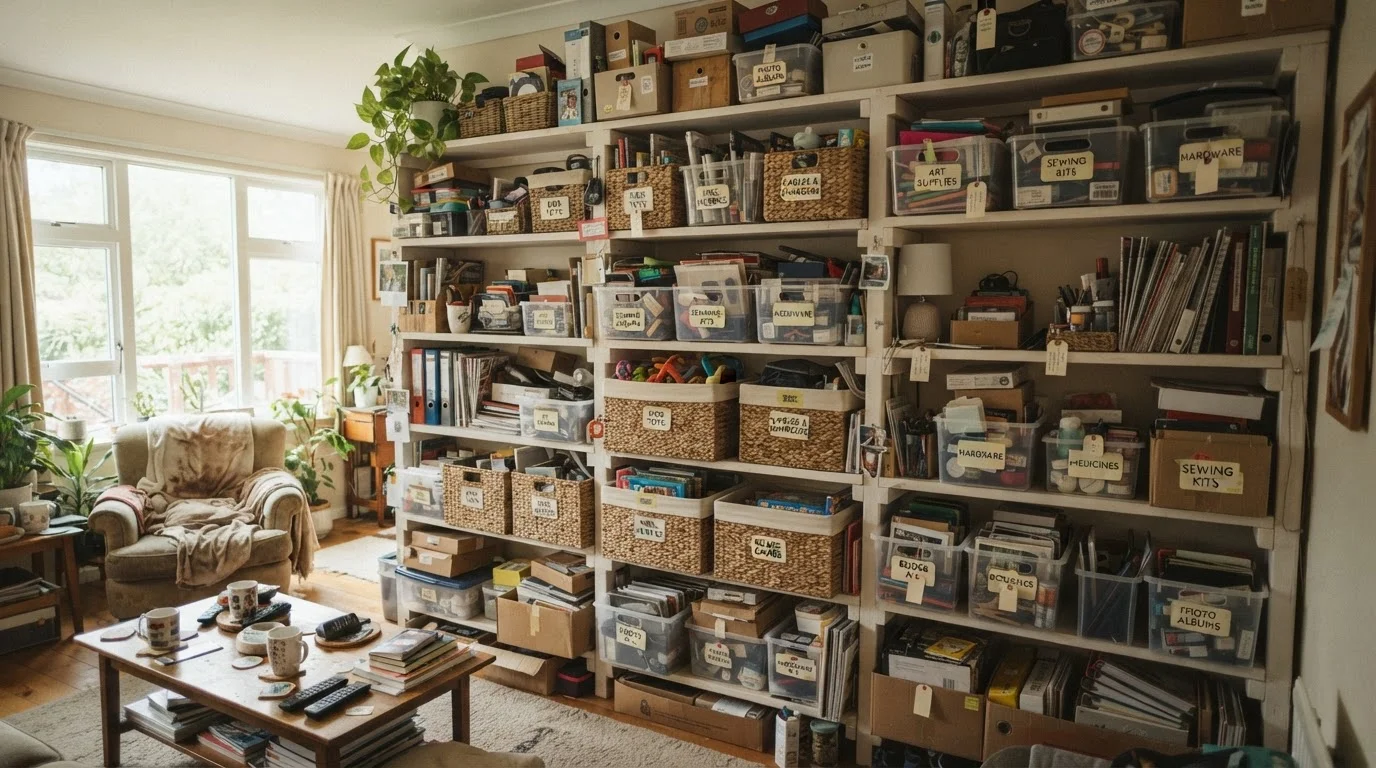
Photo credit: PrimeReads.net | Discover Insightful And Creative Blogs
In this article
Think more storage bins solve clutter? Or that tidying once is enough? These widespread beliefs are worth rethinking.
Key Takeaways
- Buying more storage bins before decluttering typically adds to the problem rather than solving it.
- A single tidying session is rarely enough - maintenance habits matter far more than one-time overhauls.
- Visible organization isn't the same as functional organization; aesthetics can mask underlying disorder.
- Perfection as a standard for organizing often leads to complete avoidance rather than steady progress.
- Effective organizing is about reducing volume first, then finding homes for what genuinely belongs.
Why These Myths Persist - and What They Cost You
Organizing advice is everywhere, but a surprising amount of it reinforces habits that actively work against a calmer home. These myths stick around because they feel intuitive, get amplified by aspirational content online, and tap into a genuine desire for a quick fix. The problem is that following flawed logic costs real time, money, and energy - and often leaves people more frustrated with their spaces than before.
The myths below aren't obscure edge cases. They're ideas that show up repeatedly in conversations about home organization, and each one has a measurable impact on whether a space actually functions. Understanding why they're wrong is the first step to replacing them with approaches that hold up in real life.
Myth
If I just had more storage bins and baskets, my home would finally be organized.
Fact
Adding storage before reducing volume almost always makes clutter worse, not better.
Storage products are a solution to a sorted home - not an unsorted one. When you buy bins before you've decided what to keep, you're essentially packaging your clutter and hiding it. Months later, those bins become unmarked mystery boxes that nobody opens. The first step is always to reduce: remove what doesn't belong, donate what isn't used, discard what is broken. Only after that does a container serve a real purpose. For a closer look at how well-intentioned purchases backfire, see organization approaches that frequently backfire.
Myth
I just need one big weekend declutter and my home will stay organized.
Fact
A one-time overhaul creates a starting point, but sustainable order comes from consistent daily habits.
A major decluttering session can feel transformative, but without ongoing routines to support it, the space will revert to its previous state - often within a month. Items accumulate through everyday decisions: mail left on counters, purchases without a designated spot, things set down rather than put away. What actually maintains order is a handful of low-effort repeated behaviors. The habits that keep a home organized long-term are almost always small and consistent, not dramatic and occasional.
Myth
If your home looks tidy, it is organized.
Fact
Visual tidiness and functional organization are different things - one can exist without the other.
A home can appear beautifully ordered while hiding dysfunction behind closed doors and inside opaque bins. Conversely, a workspace that looks lived-in to an outside observer might be perfectly legible to its user. True organization means you can find what you need quickly, return it easily, and the system doesn't require constant re-sorting. If tidying up means shoving things into a drawer before guests arrive, that's surface management - not organization. Aesthetics matter, but they should follow function, not substitute for it.
Myth
Everything should be labeled and categorized down to the smallest detail.
Fact
Over-labeling creates rigidity that most households can't sustain, leading to system collapse.
Highly granular organization systems look compelling on social media but frequently fail in real homes with multiple people, changing needs, and limited time. When a category is too narrow, items end up homeless the moment life doesn't match the label - and homeless items pile up fast. Broader, flexible categories tend to hold up better over time. Think "office supplies" rather than separate bins for tape, scissors, and staples. The goal is a system people actually use, not one they admire and then quietly abandon.
Myth
Clutter is just a sign of laziness or poor discipline.
Fact
Clutter is often rooted in cognitive and emotional factors that have nothing to do with laziness.
Research in environmental psychology suggests that clutter accumulation is tied to decision fatigue, emotional attachment, and stress responses - not personal failing. Overwhelmed people don't tidy less because they don't care; they often tidy less because the cognitive load of decision-making has become genuinely exhausting. Understanding the emotional underpinnings of clutter can reframe how you approach the problem. The article on why clutter feels so overwhelming explains the cognitive mechanisms in detail.
Myth
Organization has to be perfect before it can be useful.
Fact
Waiting for a perfect system is one of the most common reasons homes stay disorganized.
Perfectionism and organizing are genuinely at odds. When the standard is an Instagram-ready setup, most people feel paralyzed before they start - or abandon the project halfway through when it doesn't match their vision. A 70% organized space that you can actually maintain is far more valuable than a theoretically perfect system you never implement. Starting small, accepting imperfection, and iterating over time is how durable order is actually built. If you're not sure where to begin, starting from scratch walks through the fundamentals without requiring perfection upfront.
What Actually Works: Principles Over Products
The throughline across all six myths is the same: effective organizing is about reducing volume and building repeatable systems, not buying solutions or aiming for visual perfection. One principle that consistently underlies organized homes is that every item has a designated place - and that place makes sense for how the item is actually used. The 'everything has a home' rule sounds simple, but applying it thoughtfully restructures how an entire household operates.
It's also worth acknowledging what clutter does beyond the physical. Keeping too much has real costs in time, mental load, and daily decision-making - costs that often go unnoticed until they're removed. If your organizing efforts feel harder than they should, checking your assumptions against the myths above is a reasonable place to start.
Organization Is a System, Not an Event
Many people treat organizing as something you do once and then maintain effortlessly. In reality, it's an ongoing system that needs periodic review. Without habits to support it, even the most thoughtfully arranged space will return to chaos within weeks. If your current setup requires constant recovery, that's a signal the underlying system needs rethinking - not more willpower.
This article provides general home organization information for educational purposes. Individual circumstances vary; readers should adapt any guidance to their specific living situations and needs.

Author
Living Editorial Team
Living Editorial Team is the collective byline for our editorial team and contributor network. Articles published under this byline or an editorial pen name are researched, written, and reviewed according to our editorial standards for clarity, consistency, and independence before publication.
View all articles →