
The Hidden Cost of Keeping Too Much: What Excess Stuff Does to Your Time and Energy
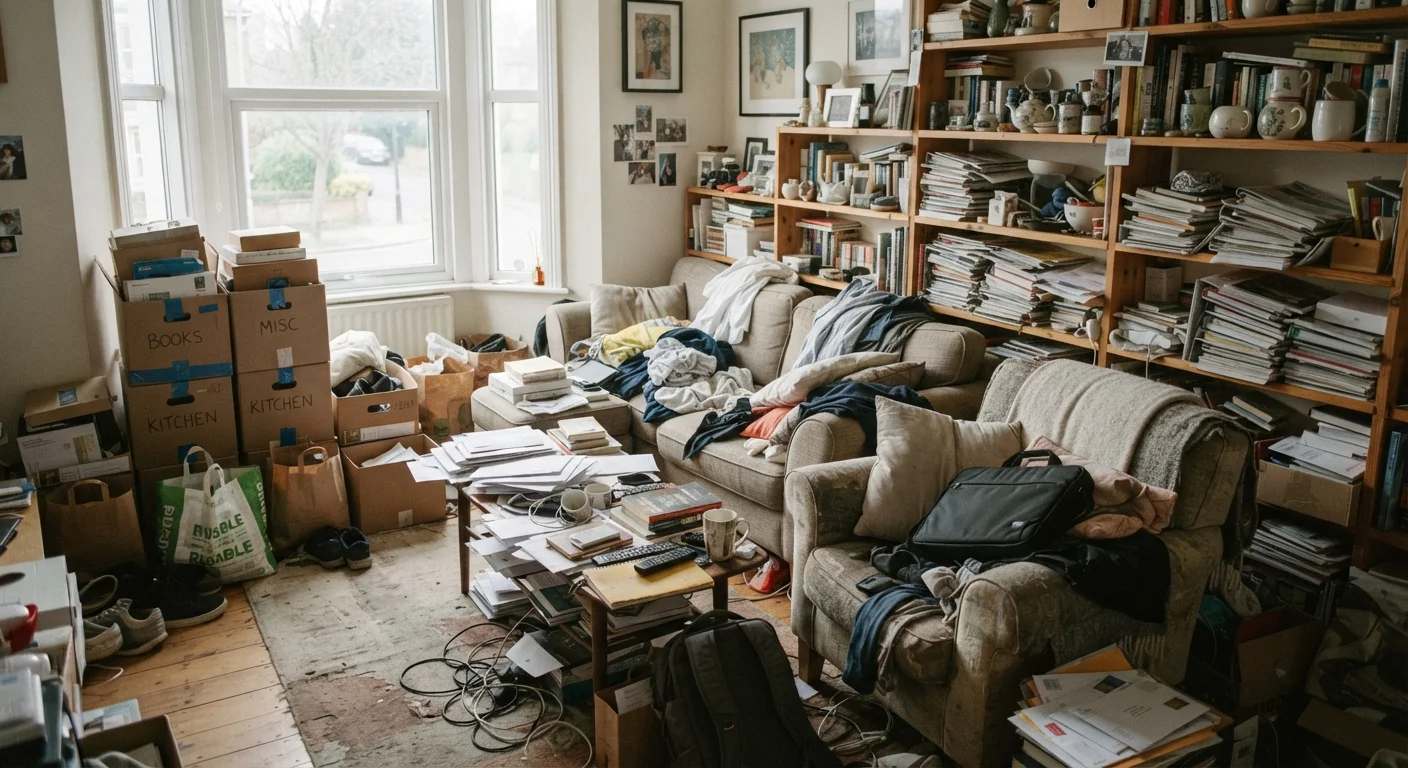
Photo credit: PrimeReads.net | Discover Insightful And Creative Blogs
In this article
Beyond the physical mess, holding onto too many possessions carries real costs in time, decision fatigue, and mental load.
Key Takeaways
- Clutter costs time - studies suggest people lose meaningful hours each week searching for misplaced items.
- Visual disorder increases cognitive load, making it harder to focus and harder to relax at home.
- Managing more possessions creates more decisions, contributing to daily decision fatigue.
- The mental load of tracking, cleaning, and organizing excess stuff is often invisible but exhausting.
- Reducing what you own is a practical strategy for reclaiming time and lowering stress.
Why Clutter Is Rarely Just a Tidiness Problem
Most people frame clutter as an aesthetic issue - a messy home that looks disorganized. But the real costs are functional. Every item you own requires a decision about where it lives, someone to clean around it, and mental bandwidth to track. When possessions accumulate beyond what you actively use and maintain, that overhead quietly consumes time and energy at every turn.
The problem isn't just volume. It's the ongoing management burden that excess stuff creates. Unlike a one-time purchase, clutter is a recurring tax. You pay it every time you search for something, every time you clean, and every time you walk through a space that feels just slightly too full to feel calm.
Understanding this reframes the decluttering conversation. It's not about tidiness or aesthetics. It's about recovering resources - time, attention, and energy - that are currently being consumed by things you don't need. For a deeper look at how common assumptions about organizing can backfire, see our guide to organizing myths that may be making things worse.
The Time Tax: Searching, Moving, and Managing
One of the most concrete costs of excess possessions is lost time. When items don't have a reliable home - or when there are simply too many items competing for limited space - finding what you need becomes a recurring chore. Surveys consistently find that people spend a surprising amount of weekly time searching for misplaced objects, from keys and tools to documents and clothing.
Beyond searching, more stuff means more maintenance. A home with fewer possessions is genuinely faster to clean. Surfaces with minimal objects take seconds to wipe down; surfaces covered with knick-knacks, mail piles, and miscellaneous items take much longer. That gap compounds over weeks and months into meaningful hours.
~30-60 min
Weekly time lost searching for misplaced items
Frequently cited in consumer behavior research and home organization surveys as a common time drain in average households.
25%
Of homeowners cite clutter as a top source of home stress
According to surveys on home environment and wellbeing conducted by organizations studying domestic quality of life.
80%
Of household items rarely or never used
A commonly cited organizing industry estimate suggesting the majority of what people own sees infrequent practical use.
There's also the time spent on what might be called inventory management - the subtle mental work of knowing what you have, remembering where it is, and deciding what to do with items that are out of place. This is largely invisible labor, but it's real. It's one reason why the mental load of running a home is so exhausting even when a home looks reasonably tidy on the surface.
Decision Fatigue and the Cognitive Cost of Too Many Choices
Every possession you own creates micro-decisions. Where does this go? Should I keep this here or move it? Do I need to deal with this now? These aren't dramatic choices - they're tiny, often unconscious - but they add up. Research on decision fatigue suggests that the brain's capacity for clear, deliberate thinking diminishes as the volume of daily choices increases.
A cluttered environment is, in effect, a high-decision environment. Walking through a room crowded with objects means constantly filtering visual information and suppressing impulses to act on it. This contributes to the well-documented difficulty of concentrating or relaxing in disorganized spaces.
Reducing what you own is a direct way to reduce the number of decisions your environment forces on you. This is part of why many people report that decluttering produces a sense of mental lightness that goes beyond the visual improvement. Fewer things means fewer decisions, and fewer decisions means more cognitive capacity left for what actually matters.
The Invisible Mental Load of Ownership
Ownership carries an ongoing mental overhead that rarely gets named. You don't just own an item once - you continue to track it, maintain it, store it, and periodically decide what to do with it. Multiply this across hundreds or thousands of objects in a home and the cumulative weight becomes significant.
This invisible burden is part of what makes decluttering feel so relieving even when the number of items removed seems small. Letting go of things you don't use doesn't just clear floor space - it removes items from your mental inventory. The brain no longer needs to account for them.
It's worth noting that well-intentioned organizing strategies can sometimes add to this load rather than reduce it. Elaborate storage systems, over-categorized bins, and complex labeling schemes can create new maintenance tasks while leaving the underlying volume problem unsolved. Our breakdown of organization approaches that frequently backfire covers this in more detail.
Start With One Surface, Not the Whole House
Choose a single high-traffic surface - a kitchen counter, an entryway table, or a bedroom dresser - and commit to keeping it clear for two weeks. This low-stakes experiment lets you experience the practical benefit of reduced visual clutter before tackling larger spaces. Most people find the immediate reduction in daily friction motivating enough to continue.
From Insight to Action: Reducing What You Own
Understanding the real cost of clutter changes the calculus around keeping things. The question shifts from "do I have room for this?" to "does the ongoing cost of owning this justify keeping it?" That reframe makes it easier to let go of items that felt worth holding onto simply because they were already there.
Start with high-friction zones - areas where clutter most directly disrupts your daily routines. Kitchen counters, entryways, home offices, and bedroom surfaces tend to generate the most daily friction. Clearing even one of these areas consistently tends to produce a disproportionate sense of relief and ease.
Decluttering once is valuable, but the larger opportunity is building habits that prevent accumulation from returning. Our guide to long-term home organization habits outlines the low-effort routines that help a decluttered home stay that way over time.
Frequently Asked Questions

Author
Living Editorial Team
Living Editorial Team is the collective byline for our editorial team and contributor network. Articles published under this byline or an editorial pen name are researched, written, and reviewed according to our editorial standards for clarity, consistency, and independence before publication.
View all articles →