
Why the 'Everything Has a Home' Rule Changes How You Maintain Order
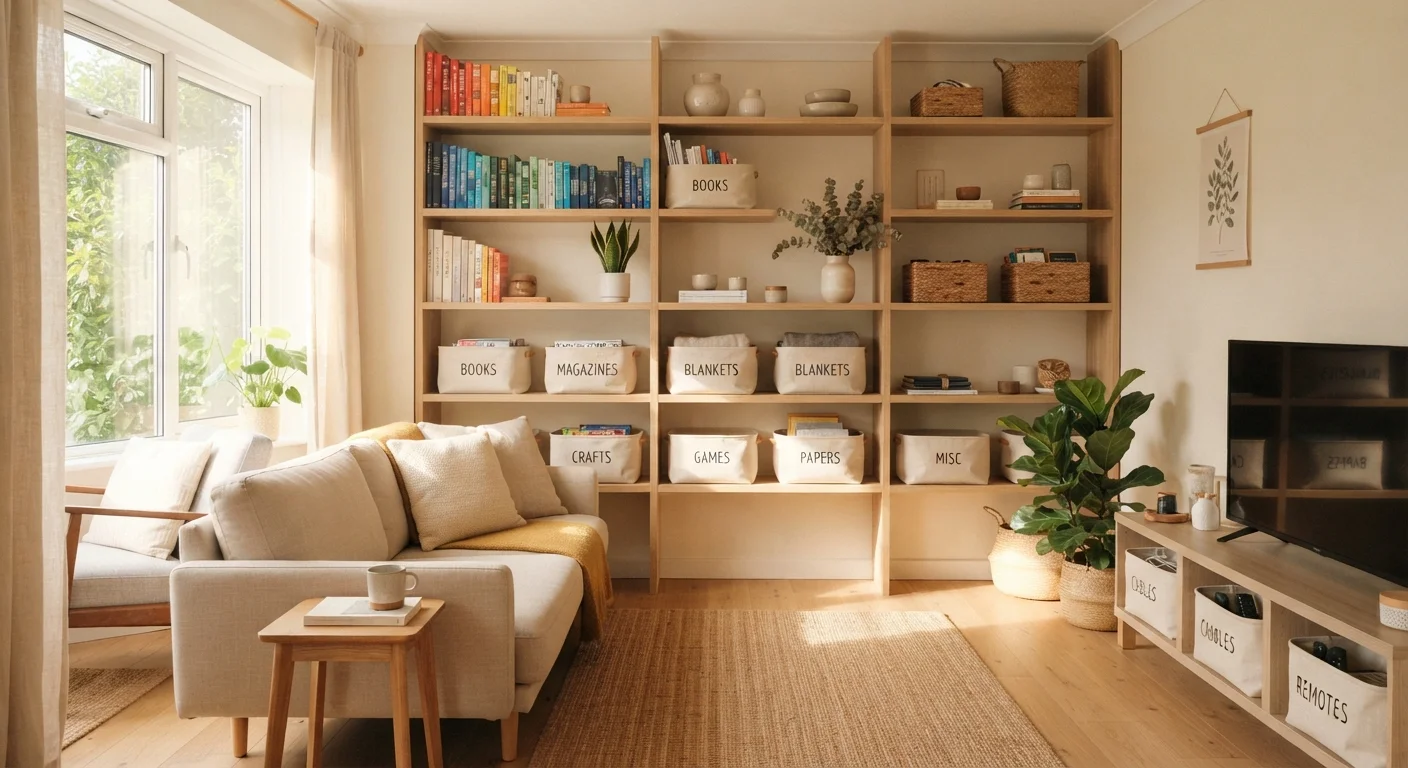
Photo credit: PrimeReads.net | Discover Insightful And Creative Blogs
In this article
One deceptively simple principle underlies most effective home organization systems. Here's what it means and how to apply it.
Key Takeaways
- Every item you own should have one consistent, designated place it lives when not in use.
- Clutter is often the result of deferred decisions, not lack of space or storage.
- Assigning homes eliminates the mental effort of deciding where things go each time you tidy.
- Items without a home are the primary driver of surfaces becoming cluttered catch-all zones.
- The rule works best when storage locations are chosen based on how and where you actually use items.
Why Most Organizing Efforts Don't Stick
Most people approach organizing as a periodic event - a Saturday afternoon purge, a drawer cleanout, a seasonal reset. The space looks great for a week, then gradually returns to chaos. The issue isn't willpower or follow-through. It's that the underlying system hasn't changed.
Clutter, in most cases, is the physical residue of deferred decisions. When you put something down without a clear destination, you're essentially postponing the choice of where it lives. Do that enough times across enough objects, and you get a home that feels perpetually out of control despite regular cleaning efforts.
The 'Everything Has a Home' rule interrupts this pattern at the source. It doesn't ask you to be tidier - it asks you to make the storage decisions once, upfront, so that every future action is a simple return rather than a new judgment call. That shift is small in concept but profound in practice.
For a broader look at where well-intentioned organizing efforts go wrong, see common organizing approaches that backfire.
How the Rule Actually Works
Applying the rule is straightforward in principle: for every object in your home, you identify one specific location where it lives when it's not being actively used. That location isn't "somewhere in the kitchen" - it's a particular drawer, shelf, or basket. The more specific, the better.
The key is matching the home to how you actually use the item. A phone charger belongs where you charge your phone, not where you think it should logically go. Reading glasses belong next to the chair where you read. When the assigned home aligns with real behavior, returning items there feels natural rather than effortful.
Start With High-Traffic Problem Spots
Rather than trying to assign homes for everything at once, pick the two or three surfaces in your home that clutter most reliably - the kitchen counter, the entryway table, the coffee table. Solve the homes for the items that regularly land there, and you'll notice an outsized improvement in how the whole space feels.
Items without a home are what turn flat surfaces into clutter magnets. Mail, keys, sunglasses, and odds and ends pile up on counters not because people are disorganized, but because no decision has been made about where those things belong. Assigning even a simple spot - a small bowl by the door for keys, a wall hook for bags - eliminates the drift entirely.
This principle also pairs well with zone-based thinking, where areas of your home are organized around activities rather than object categories. If you're weighing different organizational philosophies, a comparison of minimalist and zone-based systems can help clarify which approach fits your household best.
The Role of Editing Before Assigning
One thing that trips people up: trying to assign homes to too much stuff. If you have three different sets of scissors and none of them has a home, giving each one a specific spot still leaves you managing more than you need.
Before assigning homes, do a quick pass to identify genuinely redundant or unused items. You can't build an effective system around everything - the rule works best when the inventory of items is honest and intentional. Decluttering isn't about minimalism for its own sake; it's about ensuring that every item earning space in your home is actually earning its keep.
If your space feels overwhelming and you're not sure where to start, organizing from scratch when everything feels chaotic walks through a practical starting framework.
80%
Of clutter is due to disorganization, not lack of space
Organizational researchers have long cited disorganization - specifically the absence of designated storage systems - as the primary driver of household clutter, rather than insufficient square footage.
~55 min
Time lost daily searching for misplaced items
Various time-use studies suggest Americans spend significant daily time locating items that lack a consistent storage location, with estimates commonly ranging from 30 minutes to over an hour.
Making the Rule Stick Over Time
Assigning homes is a one-time decision; returning items is a daily habit. The good news is that once locations are set and feel logical, the habit of returning things takes far less effort than deciding where things go from scratch each time.
The most effective way to reinforce it is to lower the barrier to return. If the home for an item requires opening three drawers and moving something else, it won't get used consistently. Good homes are easy to access, close to where the item is used, and require minimal effort to put things back.
Households with multiple people benefit from making the homes visible and shared - a labeled basket, an obvious hook, a consistent spot everyone knows about. When the system is legible to everyone in the space, it becomes self-reinforcing rather than dependent on one person managing it.
For the daily routines that turn this principle into long-term order, habits that keep a home organized long-term covers the practical layer beyond the initial setup.
Frequently Asked Questions

Author
Living Editorial Team
Living Editorial Team is the collective byline for our editorial team and contributor network. Articles published under this byline or an editorial pen name are researched, written, and reviewed according to our editorial standards for clarity, consistency, and independence before publication.
View all articles →