
Minimalist Organizing vs. Zone-Based Systems: Two Philosophies Compared
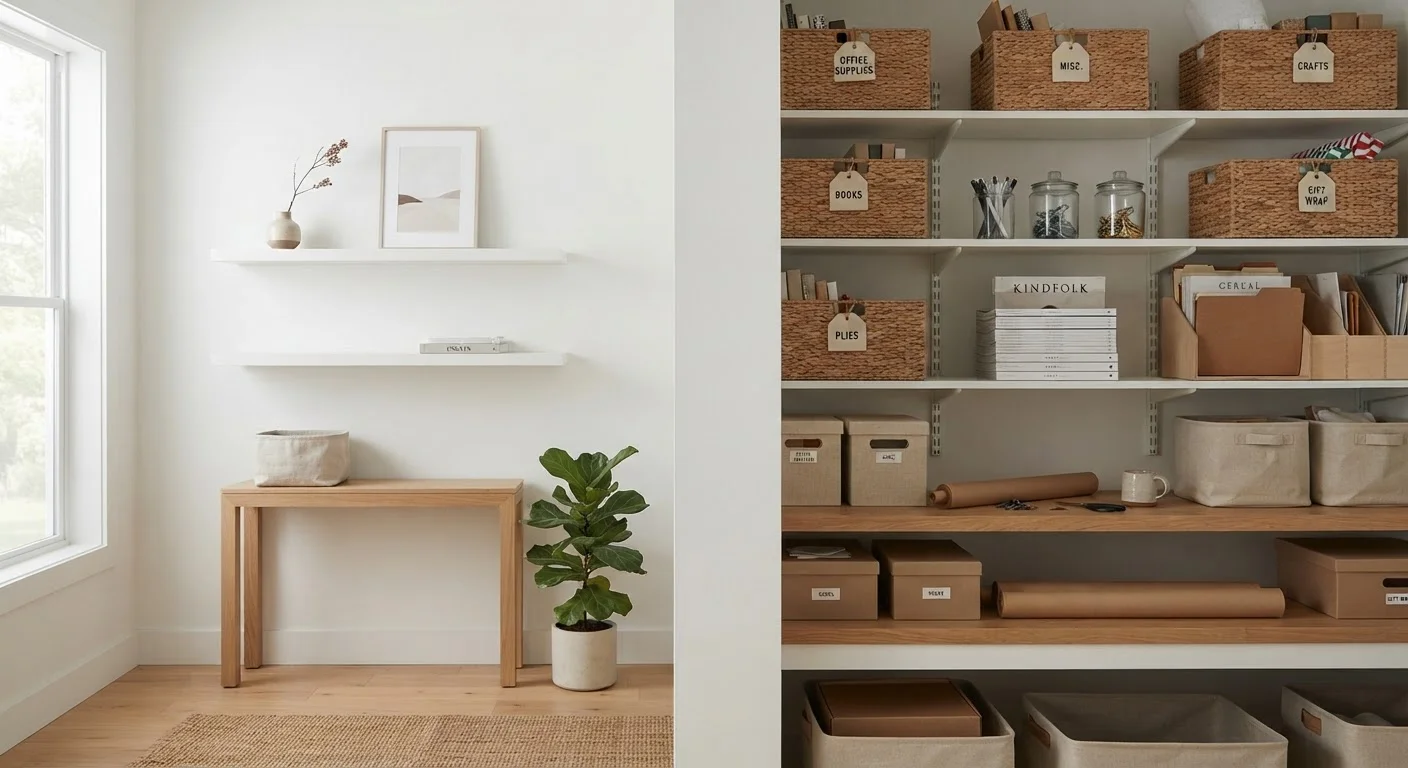
Photo credit: PrimeReads.net | Discover Insightful And Creative Blogs
In this article
Minimalism and zone-based organizing both promise calmer homes — but they work very differently. Here's how to weigh them up.
Key Takeaways
- Minimalist organizing reduces the volume of possessions to simplify maintenance long-term.
- Zone-based systems assign dedicated areas to categories of items, regardless of quantity owned.
- Neither approach is universally superior - the best fit depends on your household size and habits.
- Hybrid approaches that combine both philosophies are practical and common.
- Starting with a clear inventory of what you own is useful before adopting either system.
The Core Philosophy Behind Each Approach
Minimalist organizing starts from a single premise: the fewer things you own, the less you have to manage. Rather than finding clever places to put everything, practitioners reduce their possessions to what they actively use and value. Order emerges naturally when there's simply less to deal with.
Zone-based organizing takes a different angle. It doesn't require you to own less - it requires that everything has a designated area. A kitchen zone for baking supplies, an entryway zone for outerwear and keys, a home office zone for work tools. The logic is that when items consistently return to their zone, disorder doesn't accumulate. For more on the underlying rule that makes this work, see why the 'everything has a home' rule matters.
Both philosophies target the same frustration - feeling like your home controls you rather than the other way around - but their methods diverge significantly from the start.
How Each System Looks in Practice
A minimalist approach typically begins with a full declutter: sorting every category of items and removing anything that doesn't earn its place. What remains gets simple, uncluttered storage. The ongoing discipline is restraint - being selective about what enters the home in the first place.
Zone-based organizing begins with mapping your home's activities. Where do people actually read, work, cook, and decompress? Zones are built around those behaviors, with storage positioned accordingly. Labels, bins, and consistent habits keep each zone functional. This method is especially effective in shared homes, where different people have different needs - something explored in depth in our guide on organizing shared spaces.
If you're building a system from the ground up, our foundational organizing guide can help you assess which starting point makes sense for your home.
| Minimalist Organizing | Zone-Based Systems | |
|---|---|---|
| Core principle | Own less to manage less | Assign every item a dedicated area |
| Starting action | Declutter and reduce possessions | Map activities and build zones |
| Best household size | Individuals or couples | Families or shared households |
| Ongoing maintenance | Gatekeep new acquisitions | Return items to their zones consistently |
| Flexibility with changing needs | Requires re-evaluation of possessions | Adjust or reassign zones as needed |
| Risk if neglected | Gradual accumulation of items | Zones expand into disorganized clutter |
Where Each Approach Falls Short
Minimalism's weakness is rigidity when life changes. A growing family, a new hobby, or a shift to working from home can expose minimalist systems as under-equipped. Reducing possessions requires ongoing emotional energy - repeatedly deciding what stays and what goes isn't sustainable for everyone.
Zone-based systems can quietly accumulate clutter if zones are never audited. Zones created for convenience can expand unchecked, and without periodic culling, they become organized chaos rather than functional order. It's also possible to over-engineer zones - creating so many micro-categories that the system becomes harder to maintain than the disorder it replaced. For a look at how well-intentioned systems commonly go wrong, see organizing approaches that frequently backfire.
Choosing, Combining, or Customizing Your Approach
The most durable organizing systems are rarely pure expressions of one philosophy. Most people benefit from applying minimalist thinking first - reducing what they own before deciding how to store it - and then building zones around what genuinely remains. This sequence prevents the common mistake of buying storage solutions before sorting out what needs storing.
Household size matters considerably. Solo dwellers or couples often find minimalist systems easier to sustain. Larger or more active households tend to need the structure that zones provide. Those in compact homes may find that strategies designed for smaller spaces address both philosophies simultaneously.
Whatever system you choose, the goal is the same: a home that's easier to maintain than it is to let slide. Start with an honest inventory, identify where friction actually occurs in your daily routine, and build from there. The right approach is the one you'll actually sustain.
This article is for general informational and educational purposes only. Individual results will vary based on household circumstances and personal habits.

Author
Living Editorial Team
Living Editorial Team is the collective byline for our editorial team and contributor network. Articles published under this byline or an editorial pen name are researched, written, and reviewed according to our editorial standards for clarity, consistency, and independence before publication.
View all articles →