
Added Sugar vs Natural Sugar: Are They Really That Different?
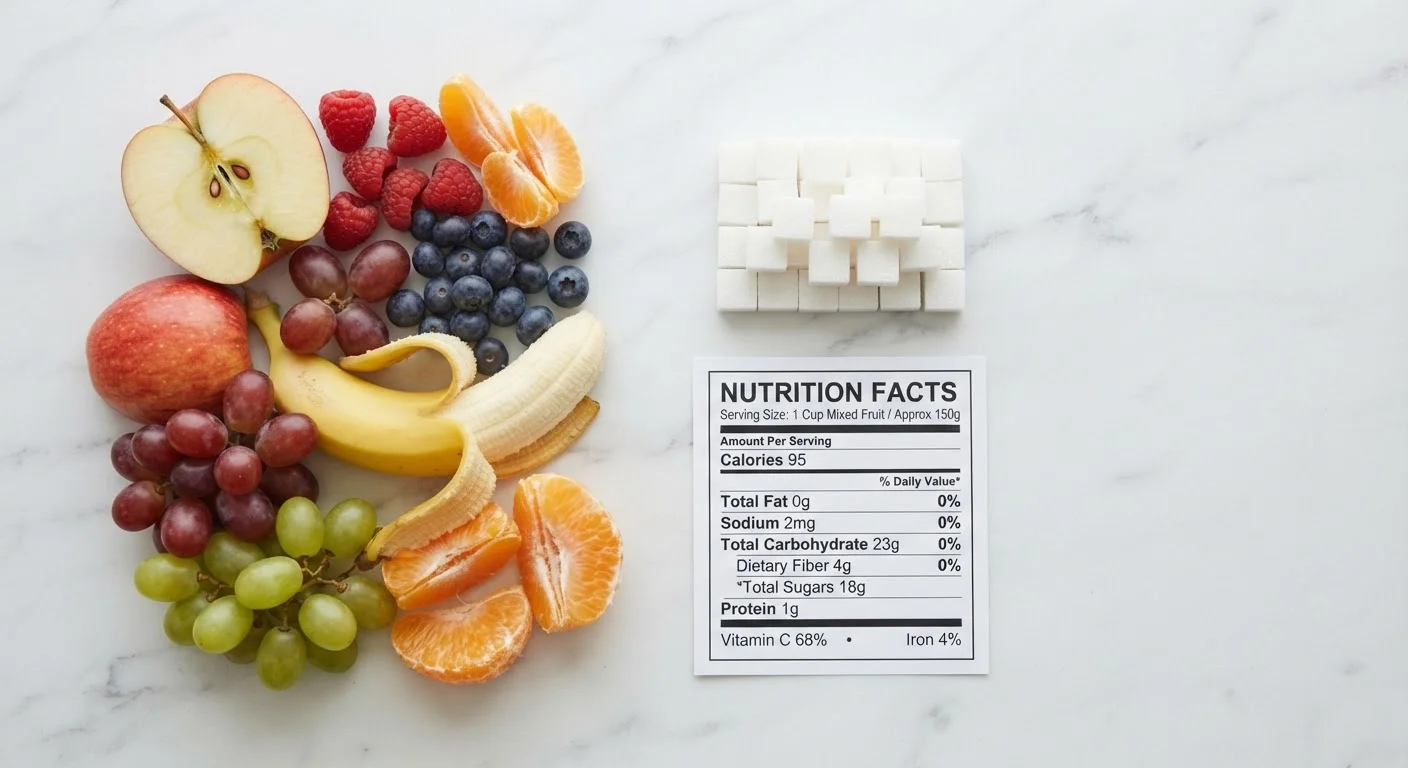
Photo credit: PrimeReads.net | Discover Insightful And Creative Blogs
In this article
Sugar is sugar — or is it? This explainer unpacks how added and naturally occurring sugars differ in context and how the body handles each.
Key Takeaways
- Chemically, natural and added sugars are often identical molecules - context is what sets them apart.
- Natural sugars come bundled with fiber, vitamins, and minerals that slow absorption and add nutritional value.
- Added sugars provide calories without meaningful nutrients, which is why dietary guidelines specifically limit them.
- The FDA requires added sugars to be listed separately on the Nutrition Facts label, making them easier to track.
- Most health authorities recommend limiting added sugar intake, not naturally occurring sugars in whole foods.
- Reading ingredient lists alongside the Nutrition Facts panel is the most reliable way to identify added sugars.
Same Molecule, Very Different Context
At the chemical level, the distinction between natural and added sugar can seem almost nonexistent. A glucose molecule from a ripe mango and a glucose molecule from high-fructose corn syrup are structurally the same. So why does nutrition science - and your food label - treat them so differently?
The answer lies in the food matrix: the surrounding nutrients, fiber, and physical structure that accompany a sugar when it enters your body. When you eat a whole apple, its roughly 19 grams of sugar arrive alongside approximately 4 grams of dietary fiber, vitamin C, potassium, and a range of phytonutrients. That matrix slows digestion, moderates blood glucose response, and contributes to satiety. When the same amount of sugar is stirred into a flavored yogurt or canned sauce, it arrives largely stripped of that beneficial context. For a deeper look at how carbohydrates and sugars function in digestion, see our guide to carbohydrates.
| Criterion | Natural Sugar | Added Sugar |
|---|---|---|
| Origin | Inherent in whole foods | Added during processing or cooking |
| Common sources | Fruit, vegetables, plain dairy | Sodas, baked goods, sauces, cereals |
| Nutrient co-factors | Fiber, vitamins, minerals present | Minimal to none |
| Digestion speed | Slowed by fiber and food matrix | Often rapid, especially in liquids |
| Listed separately on label | No (part of total sugars) | Yes (FDA-mandated since 2020) |
| Dietary guideline target | Not specifically restricted | Under 10% of daily calories (USDA) |
| Caloric value per gram | 4 calories | 4 calories |
How Your Body Handles Each
The metabolic processing of sugar is not simply a matter of source. Fructose, for example, is metabolized primarily in the liver whether it comes from fruit or from added sweeteners. However, research suggests that consuming fructose as part of a whole food - where fiber slows gastric emptying - produces a meaningfully different hormonal and glycemic response than consuming an equivalent amount in a sweetened beverage where it hits the bloodstream rapidly.
Fiber, protein, and fat all act as buffers. Plain whole milk contains lactose (a natural sugar), but also protein and fat that moderate absorption. Strip away those co-nutrients and isolate the sugar, and the physiological picture changes. This is why nutrition researchers study dietary patterns rather than single nutrients in isolation - a point worth keeping in mind when evaluating any sugar-related health claim.
17 tsp
Average daily added sugar intake for US adults
According to CDC data, US adults consume roughly 17 teaspoons of added sugar daily - well above the AHA's recommended maximum of 6-9 teaspoons.
~10%
USDA daily calorie limit for added sugars
The 2020-2025 Dietary Guidelines for Americans recommend that added sugars account for less than 10% of total daily caloric intake.
39g
Added sugar in a typical 12 oz cola
A standard 12-ounce sweetened soft drink typically contains around 39 grams of added sugar - nearly all of the AHA's recommended daily maximum in one serving.
Added sugars also tend to appear in foods that are already energy-dense, meaning excess calories can accumulate quickly without triggering equivalent feelings of fullness. This is a key reason the 2020-2025 USDA Dietary Guidelines for Americans recommend limiting added sugars to less than 10% of daily caloric intake.
Reading Labels: Where the Difference Becomes Practical
Since 2020, the updated FDA Nutrition Facts label has required manufacturers to list added sugars as a separate line item beneath total sugars - a significant win for consumer transparency. If a label shows 12g total sugars and 10g added sugars, you know that only 2g occur naturally in the food itself.
Ingredient lists provide a complementary layer of detail. Added sugars appear under dozens of names: cane juice, dextrose, maltose, agave nectar, brown rice syrup, and more. Spotting these requires some label literacy - our guide to ingredient label terms covers many of the most confusing entries. Because added sugar can appear in foods that don't taste overtly sweet - bread, condiments, pasta sauces - checking labels routinely is more reliable than relying on taste alone. For a breakdown of where added sugar hides most often, see hidden sources of added sugar.
"No Added Sugar" Doesn't Mean Sugar-Free
A label reading "no added sugar" indicates that no sweeteners were introduced during manufacturing, but the product may still contain significant natural sugars - as in 100% fruit juice. The total sugars line on the Nutrition Facts panel reflects both types combined. Always check both the total and added sugar rows alongside the ingredient list for a complete picture.
Sugar is just one facet of overall dietary quality. The same evaluative approach applies to fats - context and co-nutrients shape health impact significantly. Our explainer on saturated vs. unsaturated fat shows how a similar framework plays out for dietary fats.
This article is for general informational and educational purposes only and is not a substitute for professional medical or dietary advice. Consult a qualified healthcare provider or registered dietitian for guidance specific to your health needs.

Author
Food Editorial Team
Food Editorial Team is the collective byline for our editorial team and contributor network. Articles published under this byline or an editorial pen name are researched, written, and reviewed according to our editorial standards for clarity, consistency, and independence before publication.
View all articles →