
Healthy Eating Across a Lifetime: How Nutritional Needs Shift With Age
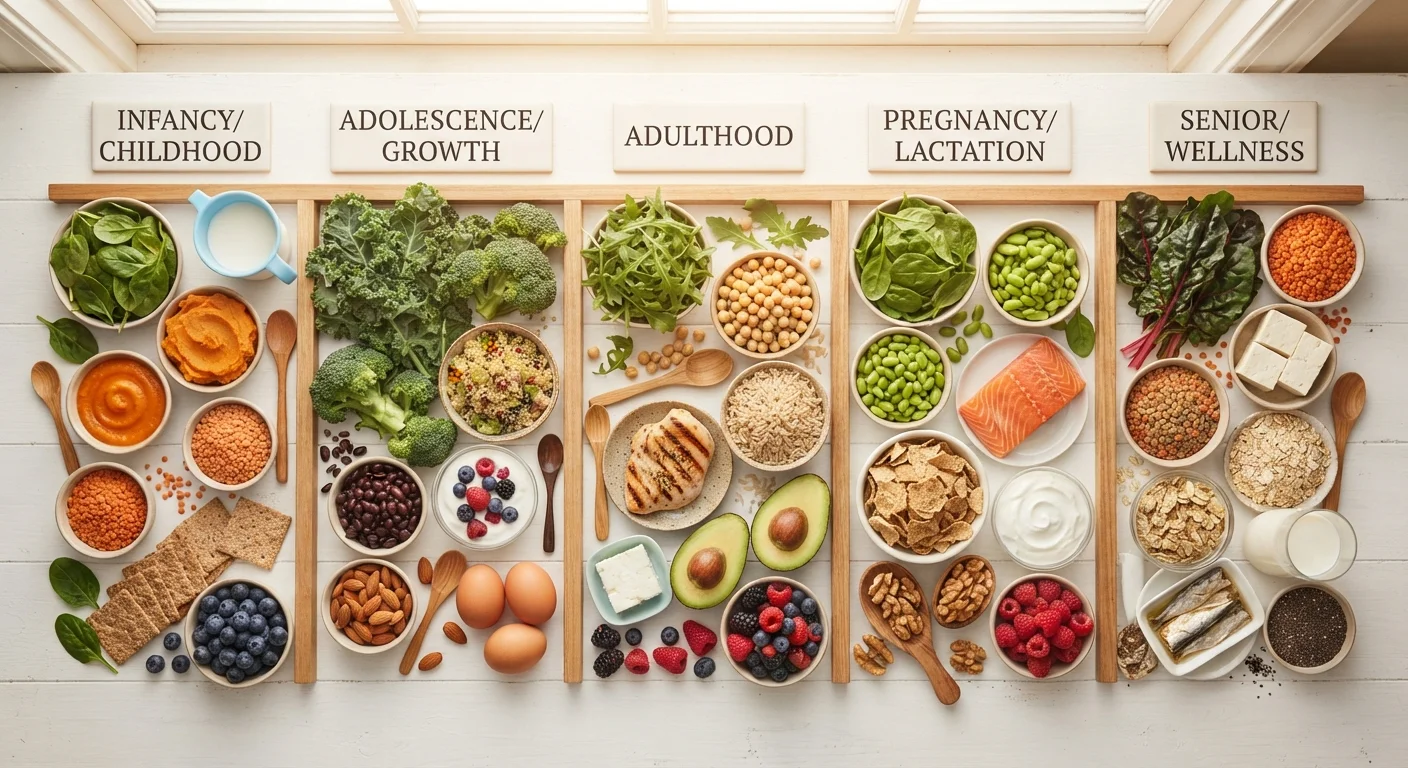
Photo credit: PrimeReads.net | Discover Insightful And Creative Blogs
In this article
From early adulthood to later life, the nutrients your body prioritises change. This guide maps out those shifts and what general patterns support each stage.
Key Takeaways
- Calorie needs generally decline with age, but requirements for several key nutrients increase.
- Protein intake becomes especially important in midlife and later years to preserve muscle mass.
- Calcium and vitamin D needs rise after age 50, supporting bone density as it naturally decreases.
- Dietary patterns built around whole foods tend to support health across every life stage.
- Consult a qualified healthcare or nutrition professional for guidance tailored to your individual situation.
Why Nutritional Needs Change Over Time
The human body is not static. From the bone-building years of early adulthood to the muscle-preserving demands of later life, physiology shifts in ways that directly affect how the body processes, absorbs, and requires specific nutrients. Hormonal changes, declining metabolic rate, changes in gut absorption efficiency, and shifts in activity levels all play a role.
Understanding these transitions is not about following a rigid meal plan for each decade - it is about recognizing the general patterns that research consistently supports. The USDA Dietary Guidelines and guidance from the National Institutes of Health (NIH) acknowledge that while core healthy-eating principles remain constant, the emphasis on specific nutrients changes meaningfully across life stages.
This guide maps those shifts, drawing on established nutritional science to help you make more informed food decisions - whatever stage you are in. For a broader look at how the body changes across decades, see our companion piece on how exercise needs shift with age.
Early Adulthood (20s-30s): Building a Strong Foundation
The 20s and 30s represent a critical window for establishing long-term health patterns. Bone density peaks in early adulthood - typically around age 30 - making adequate calcium (around 1,000 mg daily for most adults in this range, per NIH guidelines) and vitamin D essential during this period. Missing this window can have lasting consequences for skeletal health decades later.
Iron is another priority, particularly for women of reproductive age, who face higher losses each month. Folate remains important for anyone who may become pregnant, as adequate intake before and during early pregnancy is strongly associated with reduced neural tube defect risk.
Energy demands are generally at their highest during this stage, which makes this an ideal time to develop durable dietary habits - prioritizing vegetables, whole grains, legumes, lean proteins, and healthy fats - before metabolic rate begins to slow. Research consistently shows that eating patterns established in young adulthood tend to track into later life.
In your 20s, treat your plate as a long-term investment: prioritize calcium-rich foods like dairy or fortified plant milks daily, since you cannot rebuild peak bone density after your early 30s.
Bone mineral density peaks around age 30, and the calcium deposited during early adulthood directly influences fracture risk decades later, according to NIH bone health research.
Spread protein across three meals rather than concentrating it at dinner - research in nutritional gerontology suggests this distribution supports muscle synthesis more effectively, especially from midlife onward.
Muscle protein synthesis appears to respond to per-meal protein availability, and older muscle tissue becomes less responsive to anabolic signals, making distribution a practical lever.
Midlife (40s-50s): Adapting to Metabolic Shifts
By the mid-40s, most people experience a measurable decline in resting metabolic rate. This means total calorie needs decrease - but nutrient density becomes more important than ever. The challenge of midlife nutrition is essentially fitting the same (or greater) micronutrient requirements into fewer daily calories.
Perimenopause and menopause introduce additional complexity for women. Estrogen's role in calcium regulation means bone loss accelerates after menopause, raising calcium needs to approximately 1,200 mg per day after age 50, according to NIH Dietary Reference Intakes. Cardiovascular risk also tends to rise during this period, reinforcing the importance of unsaturated fats, fiber-rich foods, and reduced sodium intake.
Protein is increasingly recognized as a midlife priority. Sarcopenia - the gradual loss of skeletal muscle - begins to accelerate in the 40s and 50s. Research published in nutritional gerontology literature suggests that distributing protein intake across meals, rather than concentrating it in one sitting, may support muscle protein synthesis more effectively. For those interested in how diet intersects with long-term disease risk, our article on diet and physical activity in long-term disease prevention provides useful context.
Later Life (60s and Beyond): Protecting Muscle, Bone, and Brain
Older adults face a constellation of nutritional challenges: appetite often decreases, digestive efficiency declines, and the ability to absorb certain nutrients - including vitamin B12, calcium, and vitamin D - diminishes. At the same time, the need for several of these nutrients rises.
Vitamin B12 deserves particular attention. The NIH notes that many older adults develop reduced stomach acid production, which impairs the absorption of B12 from food. Fortified foods or supplements may be appropriate - a topic best discussed with a healthcare provider.
Hydration is frequently underappreciated in this age group. The sensation of thirst becomes less reliable with age, raising the risk of chronic mild dehydration, which can affect cognitive function, kidney health, and physical performance. Encouraging regular fluid intake - primarily water and low-sugar beverages - is a practical priority.
Eating patterns that emphasize nutrient-dense whole foods, moderate protein, and fiber continue to show benefit in population research. For context on global dietary patterns linked to healthy aging, see our article on dietary patterns that consistently appear in longevity research.
Older adults with chronic conditions, swallowing difficulties, or significant appetite loss should seek individualized guidance from a registered dietitian or physician.
Nutrients That Matter at Every Stage
While individual priorities shift, several nutrients warrant consistent attention throughout adulthood:
- Fiber: Supports digestive health, blood sugar regulation, and cardiovascular health. Most US adults fall well short of recommended intake levels (25-38 g/day for adults, per USDA guidelines). Whole grains, legumes, vegetables, and fruit are primary sources.
- Omega-3 fatty acids: Found in fatty fish, walnuts, and flaxseed, these support cardiovascular and cognitive health. Evidence across age groups is relatively consistent.
- Magnesium: Involved in hundreds of enzymatic reactions, yet frequently under-consumed. Legumes, nuts, seeds, and leafy greens are good dietary sources.
- Vitamin D: Synthesis via sunlight declines with age and with reduced time outdoors. Dietary sources include fatty fish and fortified foods, though many people require discussion with their provider about supplementation levels.
For a detailed breakdown of all essential vitamins and where to find them, our field guide to vitamins is a practical companion reference. You can also explore the broader Ingredients & Nutrients hub for further breakdowns of key dietary components.
Putting It All Together: Patterns Over Perfection
No single food or supplement defines good nutrition at any age. What research consistently points to is the power of overall dietary patterns - specifically those built around minimally processed whole foods, a variety of plant sources, adequate lean protein, and limited ultra-processed and high-sodium items.
The preventive care decade overview complements this nutritional lens by covering screenings and health habits worth considering at each stage. Nutrition, like physical activity, works best when integrated into a broader approach to health - not treated as an isolated intervention.
Individual variation matters enormously. Genetics, health history, medications, and lifestyle all influence how dietary choices affect a specific person. This article provides general educational information, not personalized nutrition advice. For guidance tailored to your circumstances, consult a registered dietitian or qualified healthcare professional.
This article is for general informational and educational purposes only and does not constitute medical or nutritional advice. Always consult a qualified healthcare professional before making significant changes to your diet, particularly if you have an existing health condition or are taking medication.

Author
Food Editorial Team
Food Editorial Team is the collective byline for our editorial team and contributor network. Articles published under this byline or an editorial pen name are researched, written, and reviewed according to our editorial standards for clarity, consistency, and independence before publication.
View all articles →