
Why Brake Fluid Gets Overlooked - and What Happens When It Does
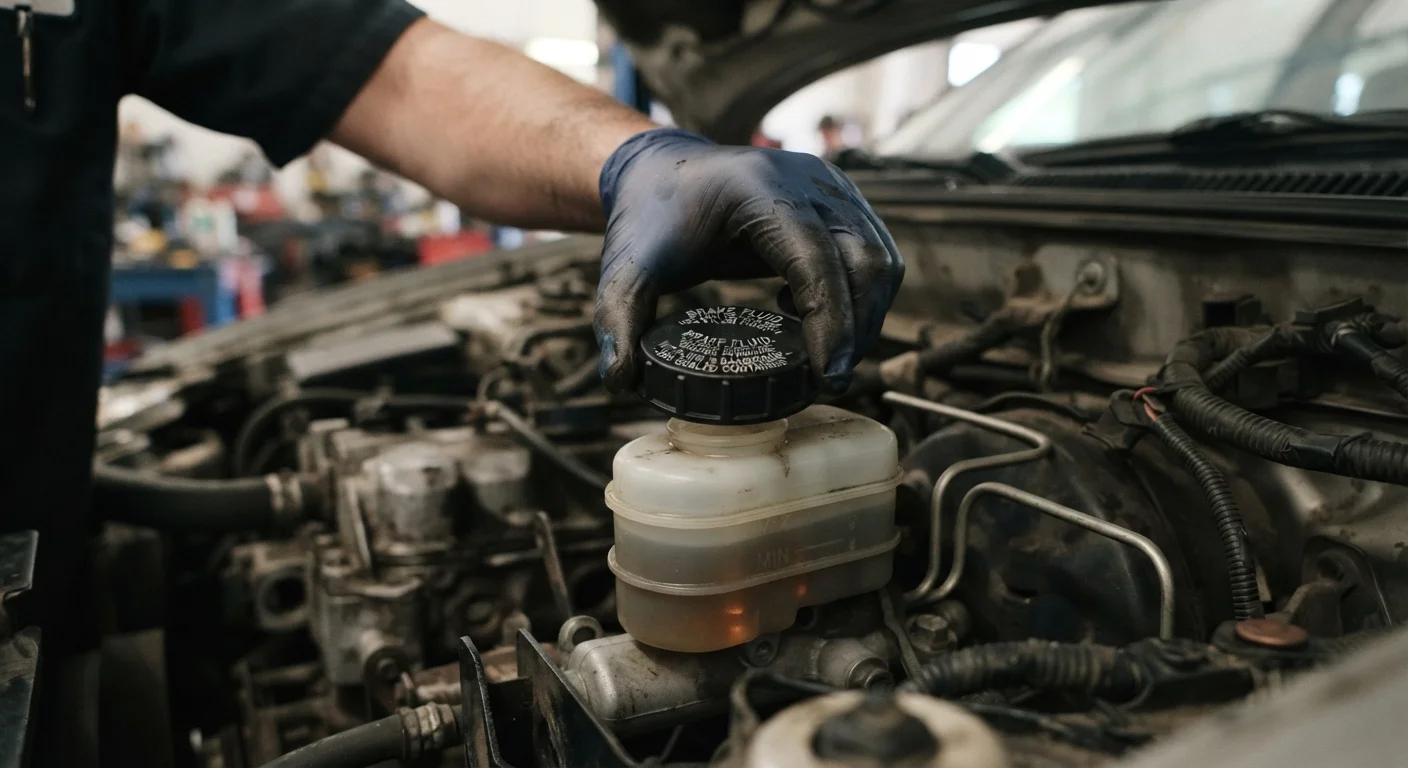
Photo credit: PrimeReads.net | Discover Insightful And Creative Blogs
In this article
Brake fluid absorbs moisture over time, quietly degrading stopping performance. Here's what that means and when it should be addressed.
Key Takeaways
- Brake fluid absorbs moisture over time, which lowers its boiling point and reduces stopping effectiveness.
- Most drivers never check brake fluid, making degradation a silent and gradual safety risk.
- Flushing brake fluid every two to three years is a common manufacturer recommendation, though intervals vary.
- Dark or murky fluid color is a reliable visual cue that a flush may be overdue.
- Ignoring brake fluid can accelerate corrosion inside calipers and brake lines.
Why Brake Fluid Quietly Degrades
Brake fluid is hygroscopic - it naturally absorbs moisture from the air over time. This happens even in a sealed system, because brake fluid circulates through rubber hoses and seals that are slightly permeable. The more moisture the fluid absorbs, the lower its boiling point drops. That matters because the hydraulic braking system generates significant heat, particularly during hard or repeated braking.
Unlike an oil leak or a coolant smell, there's no obvious sign that brake fluid is deteriorating. The reservoir stays full, the pedal feels normal on your daily commute, and nothing triggers a warning light. That invisibility is exactly what makes it easy to overlook - and what makes neglect so common. See our guide on reading your car's fluids for a broader look at how fluid condition signals vehicle health.
3%+
Moisture content that significantly drops boiling point
Studies from brake fluid manufacturers indicate that as little as 3% water content can reduce the boiling point of DOT 3 fluid by roughly 25%, meaningfully increasing the risk of vapor lock under hard braking.
2-3 years
Typical recommended brake fluid flush interval
Many vehicle manufacturers and automotive service organizations suggest flushing brake fluid every two to three years, though the exact interval varies by make, model, and driving conditions.
The Mistakes Drivers Make - and How to Correct Them
The errors around brake fluid maintenance tend to follow a predictable pattern: out of sight, out of mind. Below are the most common mistakes, why they happen, and what to do instead.
Treating brake fluid as a 'set it and forget it' fluid that never needs attention.
Why it happens: Unlike oil or coolant, brake fluid rarely leaks visibly and doesn't produce obvious symptoms until degradation is advanced. Most drivers simply never think about it.
Assuming a full reservoir means the fluid is fine.
Why it happens: Drivers often equate 'enough fluid' with 'good fluid.' The reservoir level can remain stable even as moisture contamination silently degrades the fluid's performance.
Skipping a flush because the brakes still feel normal.
Why it happens: Brake fade from moisture-saturated fluid typically only appears under heavy, repeated braking - the kind that happens on a long downhill or in an emergency stop, not in daily commuting.
Topping off with fresh fluid instead of performing a full flush.
Why it happens: Adding fluid feels like a quick fix, and it does restore the level. But it dilutes rather than replaces contaminated fluid, leaving moisture-laden fluid throughout the lines and calipers.
Ignoring the impact on brake system components beyond the fluid itself.
Why it happens: Most owners think of brake fluid purely as a performance issue, not a corrosion issue. In reality, moisture-contaminated fluid actively corrodes metal components inside calipers and brake lines over time.
Brake Failure Is a Real Consequence
Severely degraded brake fluid can boil under heavy braking, creating vapor pockets that compress instead of transmitting force - a condition called brake fade. This can cause a sudden, dramatic loss of stopping power. If your brake pedal feels soft or spongy, have the system inspected by a qualified mechanic immediately. Do not wait for a scheduled service.
It's worth noting that degraded brakes compound other driving risks. If you regularly drive in challenging conditions, the consequences of reduced stopping power are amplified - something worth considering alongside broader safe-driving habits, such as those covered in our overview of driving in rain, ice, and fog.
Keeping Brake Fluid Service Simple
The practical takeaway is straightforward: brake fluid needs periodic attention, not obsessive monitoring. Set a reminder aligned with your oil change schedule to visually inspect the reservoir - check the color and level, and note when the last flush was performed. Keep a copy of your vehicle's maintenance record so you're not guessing.
Don't Mix Different Fluid Types
Brake fluid comes in different grades - DOT 3, DOT 4, and DOT 5 are not all interchangeable. Using the wrong type can damage seals and compromise braking performance. Always check your owner's manual for the correct specification before adding or replacing fluid. When in doubt, consult a qualified mechanic rather than guessing.
When you do have the fluid serviced, make sure a complete flush is performed rather than a simple top-off. A qualified mechanic can also test moisture content on the spot, giving you an objective measure rather than a guess based on mileage alone. For a useful comparison on how other essential fluids behave, our article on coolant and your engine's cooling system explains how similar preventive logic applies to engine temperature management.
Brake fluid service is one of the lower-cost items on a maintenance schedule. Treating it as a routine task - rather than an emergency response - keeps both your braking system and its connected components in reliable working order.

Author
Cars Editorial Team
Cars Editorial Team is the collective byline for our editorial team and contributor network. Articles published under this byline or an editorial pen name are researched, written, and reviewed according to our editorial standards for clarity, consistency, and independence before publication.
View all articles →