
Synthetic vs. Conventional Motor Oil
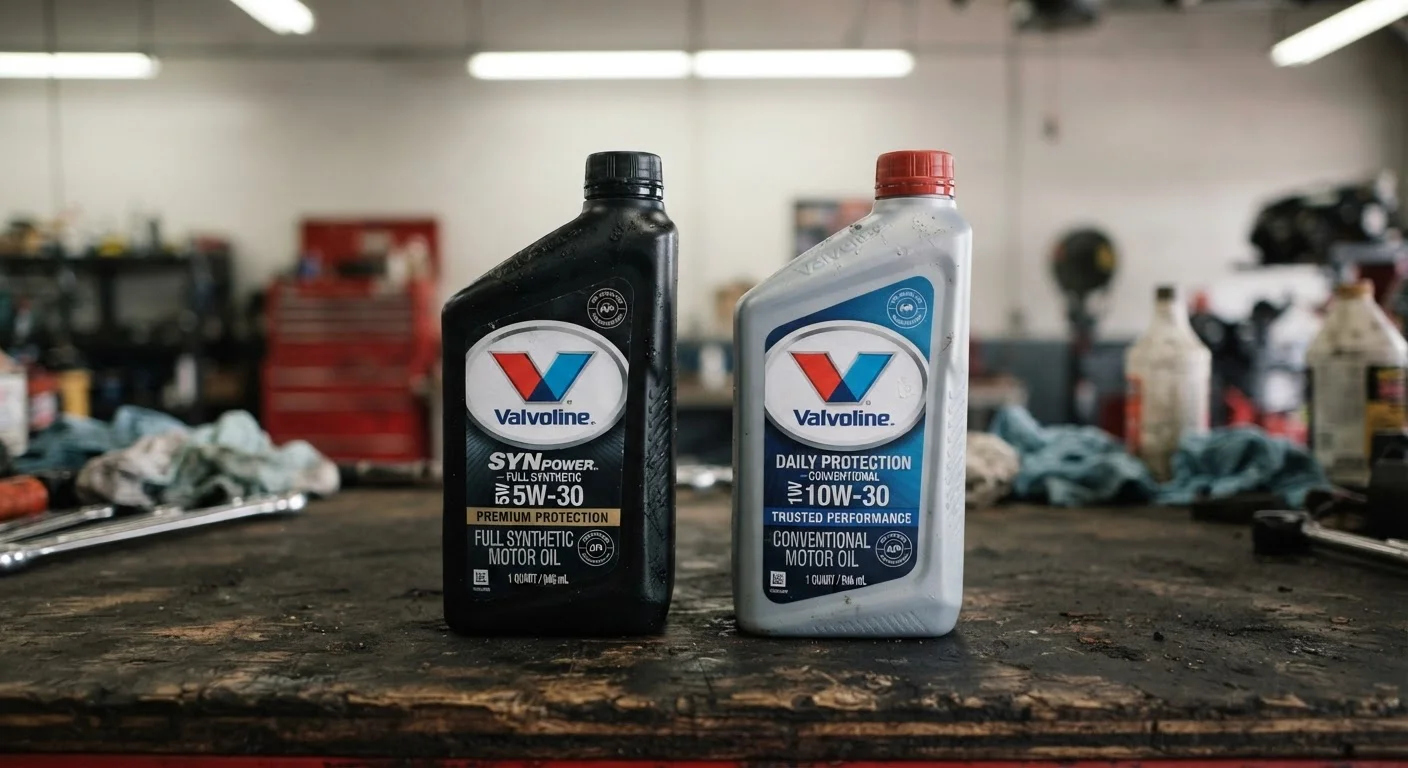
Photo credit: PrimeReads.net | Discover Insightful And Creative Blogs
In this article
How synthetic and conventional motor oils differ in composition, performance, and typical use cases — and what factors matter most for your engine.
Key Takeaways
- Synthetic oil is chemically engineered for more uniform molecules, while conventional oil is refined directly from crude petroleum.
- Synthetic oil generally outperforms conventional oil at temperature extremes and resists breakdown longer.
- Conventional oil costs less per quart but typically requires more frequent changes, often narrowing the cost gap.
- Your owner's manual - not marketing claims - is the authoritative source for which oil type your engine requires.
- Many modern vehicles, especially those with turbochargers, require full synthetic oil to maintain warranty compliance.
- A blend of the two (synthetic blend) exists as a middle-ground option suited to some moderate-duty driving profiles.
What Makes These Oils Different
The fundamental difference between synthetic and conventional motor oil comes down to origin and molecular structure. Conventional motor oil is refined from crude petroleum - a naturally occurring mixture that, even after extensive processing, contains irregularly shaped molecules and naturally occurring impurities. Synthetic motor oil, by contrast, is chemically engineered in a laboratory. Manufacturers build its base molecules to a precise, uniform shape, then tailor the additive package to specific performance targets.
That molecular uniformity is why synthetic oils tend to perform more consistently. Irregular molecules in conventional oil break down and shear apart more readily under mechanical stress and heat, which is why conventional oil typically requires more frequent changes. Synthetic oil's engineered structure resists thermal breakdown and oxidation longer, which is the basis for extended drain intervals that some manufacturers allow - though always verify those intervals with your vehicle's owner's manual rather than marketing claims.
A third category worth knowing: synthetic blend oil mixes conventional base stock with a portion of synthetic, offering a modest step up in protection without the full cost premium. It's a legitimate middle-ground for some drivers but doesn't deliver the full benefits of a true full-synthetic formulation.
Performance Across Real-World Conditions
The performance gap between synthetic and conventional oil becomes most visible at temperature extremes. In cold-weather starts - the moment when most engine wear actually occurs - synthetic oil flows more readily to critical components before the engine fully warms. Conventional oil thickens more in cold temperatures, meaning a longer window of metal-on-metal contact at startup.
At the other extreme, high heat from towing, long highway drives, or turbocharged engines pushes oil to its limits. Turbos spin at extraordinarily high RPM and run very hot; they depend on oil for both lubrication and cooling. Synthetic oil's higher resistance to viscosity breakdown under heat is a key reason most turbocharged vehicles specify full synthetic. Understanding viscosity grades and what the numbers mean helps you read those specifications accurately before choosing.
| Criterion | Synthetic Motor Oil | Conventional Motor Oil |
|---|---|---|
| Base stock origin | Chemically engineered molecules | Refined from crude petroleum |
| Cold-weather flow | Flows readily at low temps | Thickens more in cold starts |
| Heat resistance | High; resists viscosity breakdown | Moderate; breaks down sooner under heat |
| Typical change interval | Longer (per manufacturer specs) | Shorter; more frequent changes needed |
| Cost per quart | Higher | Lower |
| Required for turbocharged engines | Yes, in most cases | Generally not recommended |
| Suitable for older, simple engines | Yes, if specs allow | Yes, commonly used |
It's also worth noting that the long-standing idea that you must change any motor oil every 3,000 miles is widely considered outdated for most modern vehicles and modern oil formulations. The persistent car maintenance myths that cost drivers money article addresses this directly - your owner's manual interval is almost always a more accurate guide than that old rule of thumb.
Cost, Compatibility, and Making the Right Call
Synthetic oil typically costs more per quart than conventional. However, if synthetic allows longer drain intervals (where your manufacturer approves this), the total annual spending can be closer than the per-quart price suggests. Factor in filter costs and your time as well. That said, never extend oil change intervals beyond what your vehicle manufacturer specifies, regardless of which oil type you use.
Compatibility concerns sometimes arise around older seals or engines with high mileage. A common worry is that switching to synthetic on a high-mileage engine will cause leaks. In practice, reputable synthetic oils are formulated to be compatible with the seals found in passenger car engines, though if an older engine already has compromised seals, any oil change could surface a pre-existing problem. If your vehicle has well over 100,000 miles, it's reasonable to discuss the switch with a qualified mechanic before changing oil types.
Always Follow Your Owner's Manual
Vehicle manufacturers specify oil type and viscosity based on engine tolerances, warranty requirements, and real-world testing. Using a different oil type than specified - even a higher-grade one - can void warranty coverage in some cases. When in doubt, a licensed mechanic or your dealership's service department can confirm the correct specification for your specific vehicle and model year.
The most reliable guide for which oil type - and which viscosity grade - belongs in your engine is the owner's manual or the manufacturer's official specification. Neither price nor brand reputation overrides what the engineer who designed your engine specified.

Author
Cars Editorial Team
Cars Editorial Team is the collective byline for our editorial team and contributor network. Articles published under this byline or an editorial pen name are researched, written, and reviewed according to our editorial standards for clarity, consistency, and independence before publication.
View all articles →