
Credit Scores Explained: What the Number Actually Measures
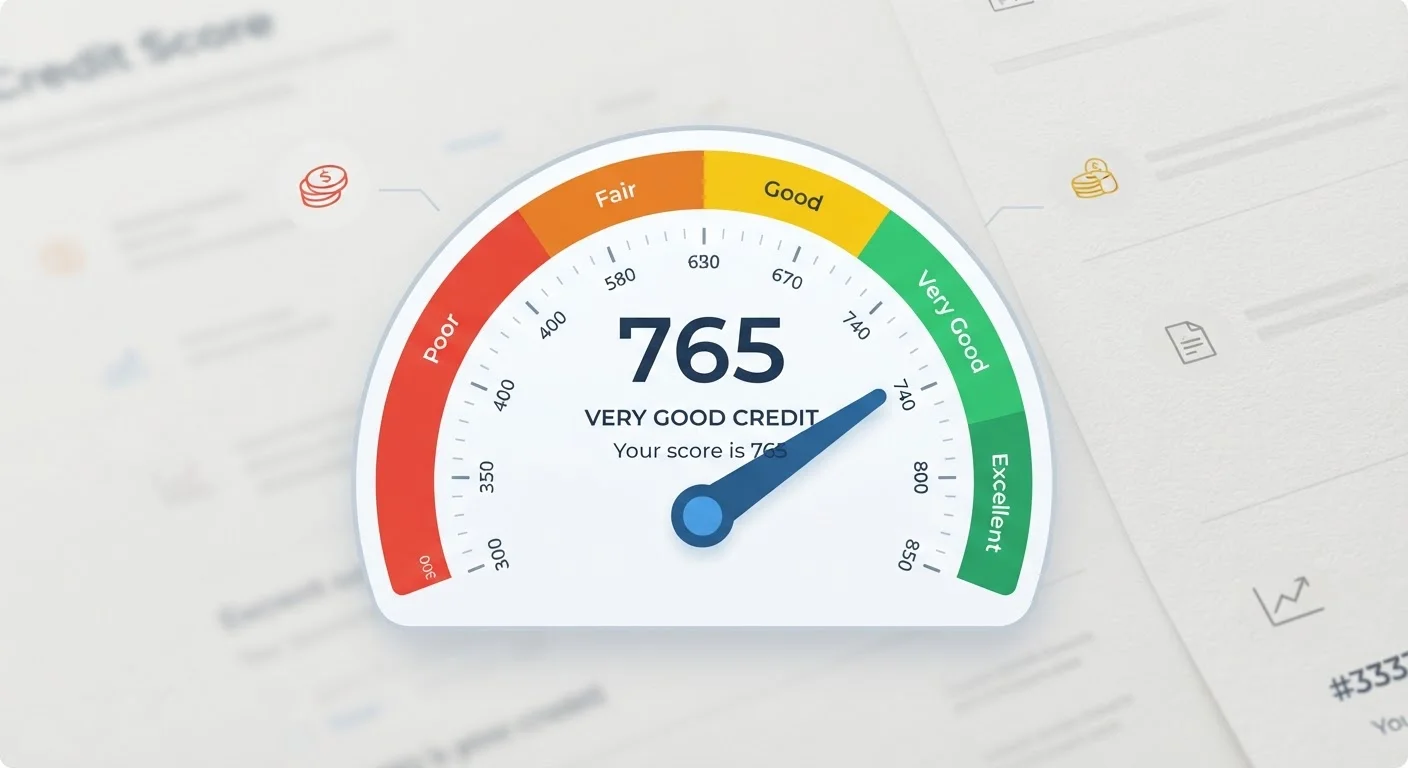
Photo credit: PrimeReads.net | Discover Insightful And Creative Blogs
In this article
Understand what a credit score is, how it's calculated, and why lenders use it to assess your financial reliability.
Key Takeaways
- A credit score ranges from 300 to 850 and reflects your history of managing debt responsibly.
- Scores are calculated from data in your credit report, not from your income or savings.
- Multiple scoring models exist - FICO and VantageScore are the two most common in the U.S.
- A higher score generally means better loan terms, lower interest rates, and wider financial access.
- You have multiple credit scores, not just one, and they can vary slightly across lenders.
What a Credit Score Actually Represents
A credit score isn't a judgment of your character or your wealth - it's a statistical estimate of one specific thing: how likely you are to repay a debt on time. Scoring models analyze the data in your credit report and compress it into a single number that lenders can compare quickly and consistently.
Think of it as a shorthand that lets a lender make an informed decision without reading through years of your financial history line by line. It doesn't factor in your income, your savings account balance, or your net worth. It measures behavior - specifically, how you've handled credit obligations in the past.
To understand what goes into that number in detail, see our breakdown of the factors behind your credit score.
Where the Number Comes From
Your credit score is generated by applying a mathematical formula to the data in your credit report. That report - maintained separately by each of the three major U.S. credit bureaus (Equifax, Experian, and TransUnion) - contains records of your credit accounts, payment history, outstanding balances, and public records such as bankruptcies.
The two dominant scoring models are FICO and VantageScore. Both pull from credit report data, but they weight categories differently. FICO, for example, places the heaviest emphasis on payment history, followed by amounts owed. VantageScore uses similar inputs but may calculate them slightly differently.
300-850
Standard FICO Score range
The FICO Score range used by most U.S. lenders spans from 300 (poor) to 850 (exceptional), with the national average consistently sitting above 700 in recent years.
~45M
Americans with limited or no credit history
The Consumer Financial Protection Bureau has estimated that tens of millions of U.S. adults are 'credit invisible' or have insufficient credit history to generate a mainstream score.
90%+
Top lenders using FICO Scores
According to Fair Isaac Corporation, FICO Scores are used by the vast majority of top U.S. lenders when making credit decisions.
Because different lenders may report to different bureaus, and because multiple scoring models exist, you effectively have dozens of credit scores - not one. The score a mortgage lender pulls may differ from the one your credit card company sees.
For a practical guide to reading the underlying data, see how to read your credit report without getting lost.
Why Lenders Care About Your Score
From a lender's perspective, every loan is a financial risk. Your credit score helps them quantify that risk efficiently. A borrower with a 780 score has demonstrated, statistically, a strong pattern of meeting debt obligations. A borrower with a 580 score has a history that suggests a higher likelihood of missed or late payments.
That risk assessment directly affects the terms you're offered. Borrowers with higher scores typically qualify for lower interest rates, higher credit limits, and more favorable repayment terms. Those with lower scores may face higher rates, stricter conditions, or outright denials.
Lenders don't stop at the score, though. They also consider income, employment stability, and your total debt load. Our article on how lenders evaluate creditworthiness beyond the score explains what else factors into a credit decision.
This article is for general informational and educational purposes only and does not constitute personalized financial advice. Consult a qualified financial professional for guidance specific to your situation.
Frequently Asked Questions

Author
Money Editorial Team
Money Editorial Team is the collective byline for our editorial team and contributor network. Articles published under this byline or an editorial pen name are researched, written, and reviewed according to our editorial standards for clarity, consistency, and independence before publication.
View all articles →