
Personal Productivity: A Starter's Overview
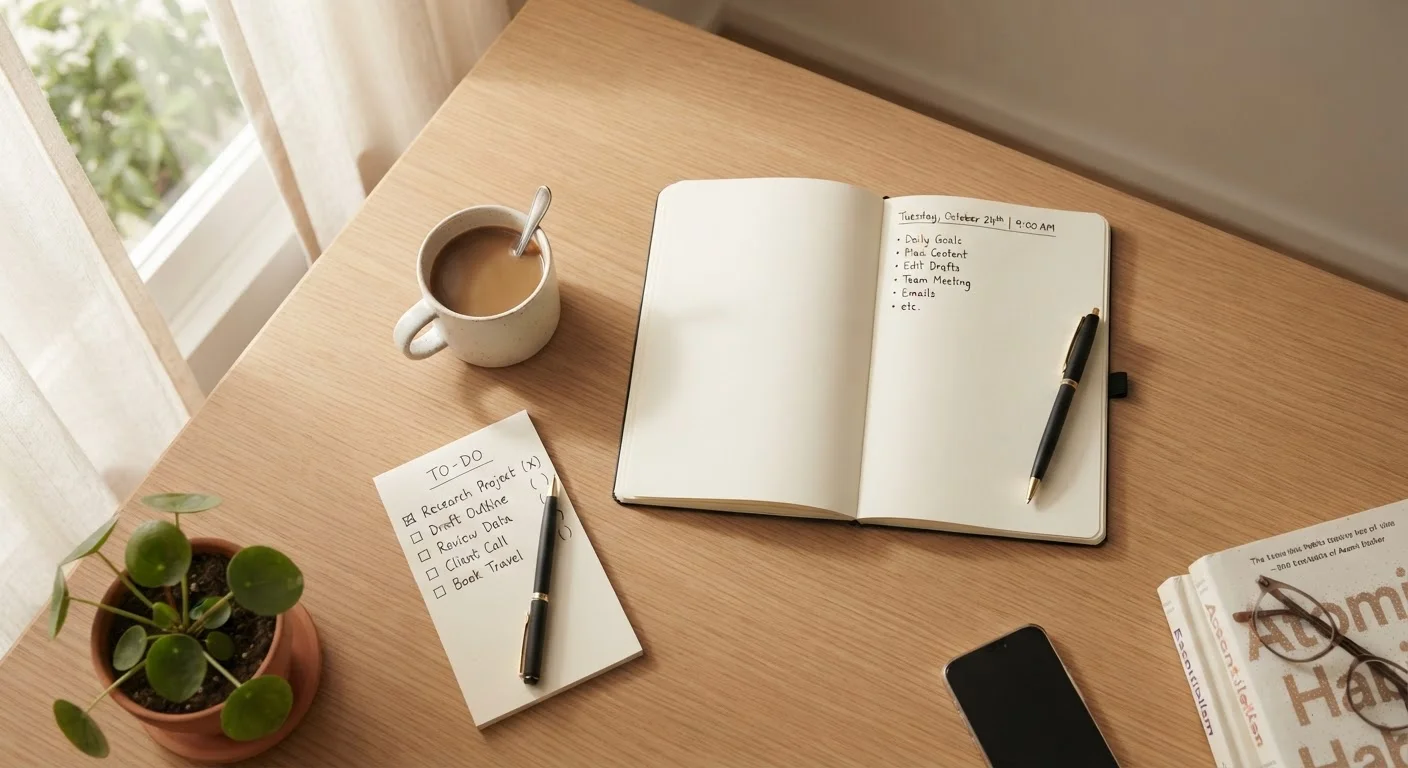
Photo credit: PrimeReads.net | Discover Insightful And Creative Blogs
In this article
New to intentional productivity? This guide covers the core ideas — from task management to energy cycles — to help you get started confidently.
Key Takeaways
- Productivity is about doing the right things consistently, not doing everything faster.
- Your natural energy peaks and dips should shape when you tackle different types of work.
- A simple, maintained task list beats any elaborate system you won't sustain.
- Habits form through repetition and cues, not willpower alone.
- Overloading your schedule early is one of the most common beginner mistakes.
What Productivity Actually Means
Most people come to productivity with a vague goal of getting more done. That framing is worth reexamining from the start. Productivity, in a practical sense, means making consistent progress on the things that genuinely matter to you - not simply staying busy or clearing an inbox.
The distinction matters because busyness and effectiveness are easy to confuse. A packed calendar can mask a day with very little meaningful output. Personal productivity is less about volume and more about intentional action - choosing what to work on, when, and for how long.
This is also why productivity looks different for everyone. A freelancer managing client work operates differently than a parent balancing childcare with part-time employment. Understanding your own context before borrowing someone else's system is step one. For a parallel look at how structured thinking applies to your finances, see our introduction to personal budgeting - the underlying logic of prioritization is surprisingly similar.
Deep work
Focused, uninterrupted effort on a cognitively demanding task. It typically produces higher-quality output than the same amount of time split across interruptions.
Cognitive load
The total amount of mental effort your brain is managing at once. High cognitive load from too many open tasks or decisions can reduce the quality of thinking and increase errors.
Habit loop
A three-part cycle of cue, routine, and reward that underlies automatic behavior. Understanding it helps you design habits that are easier to start and maintain.
Time blocking
A scheduling method where you assign specific tasks to defined windows of time in your calendar, rather than working from an open list reactively.
Energy management
The practice of aligning the type of work you do with your natural mental and physical energy levels throughout the day, rather than treating all hours as equal.
Understanding Your Energy Cycles
Time is fixed, but energy is variable. One of the most overlooked beginner insights is that when you work on something matters almost as much as what you work on.
Most people have a natural cognitive peak - a window of the day when focus comes more easily and decision-making is sharper. For many, this falls in the mid-to-late morning, though individual variation is real. Scheduling your most demanding tasks during this window, and leaving lower-effort tasks (email, routine admin) for your natural dips, is a straightforward way to get more from the same number of hours.
Rest is part of this equation too. Short breaks spaced through a work session are associated with more sustained attention than grinding through without pausing. Ignoring physical needs - sleep, movement, adequate nutrition - consistently undermines cognitive output in ways no planning system can compensate for. Our mental wellness resources cover the stress and recovery side of this in more depth.
The Basics of Task Management
Productivity systems can get complicated quickly, but beginners are usually better served by something simple they will actually use. The core of any task management approach is a trusted capture system - a single place where you record what needs to get done, so it is not rattling around in your head competing for attention.
From there, daily prioritization makes a significant difference. Rather than working through a list from top to bottom, identify the one to three tasks that would make the day feel worthwhile if completed. These become your anchors. Everything else is secondary.
A few principles that hold up well in practice:
- Write tasks as specific actions, not vague categories. Draft project proposal intro is more useful than work on project.
- Break anything that feels overwhelming into smaller, concrete steps.
- Review your list at the end of each day and set up the next morning before you close out.
For a deeper dive into where well-intentioned task habits go wrong at work, see our article on habits that quietly undermine professional output.
Building Habits That Actually Stick
Willpower is a limited resource. Productivity routines that rely on daily motivation tend to erode within weeks. Habits work differently - over time, a repeated behavior in a consistent context becomes more automatic, requiring less conscious effort to initiate.
The practical implication: design your routines so the desired behavior is easy to start and hard to skip. A morning routine works better when it follows an existing anchor (waking up, making coffee) than when it requires a separate decision each day.
Start Smaller Than Feels Ambitious
When building a new routine, err on the side of underwhelming yourself at the start. A two-minute daily review you actually do beats an elaborate system you abandon after ten days. Once a small habit is reliable, expanding it is straightforward.
It also helps to start smaller than feels meaningful. Committing to five minutes of focused planning each morning is more likely to become a lasting habit than an ambitious 45-minute ritual you abandon by week three. Consistency over intensity, especially early on.
Be aware that popular productivity beliefs do not always hold up. Our companion piece on common productivity myths is a useful reality check once you have a foundation in place.
Common Mistakes to Avoid Early On
A few patterns reliably derail beginners before they get traction:
- Trying to optimize everything at once
- Introducing multiple new systems simultaneously - new task app, new morning routine, new time-blocking method - creates cognitive overload. Pick one change, stabilize it, then add the next.
- Mistaking planning for doing
- Reorganizing a task list or refining a schedule can feel productive while consuming time that could go toward actual work. Planning has real value, but keep it bounded.
- Setting unrealistic daily targets
- Overloading a to-do list and ending every day feeling behind is discouraging and unsustainable. Build in buffer - most people underestimate how long tasks take.
- Ignoring recovery
- Sustainable productivity requires rest. A preventive health mindset includes protecting sleep and managing stress, not just optimizing working hours.
Getting your environment in order can also support focus. If physical clutter competes for your attention, our home organization starter guide offers a practical parallel for structuring your space the same way you are structuring your time.
Frequently Asked Questions

Author
Living Editorial Team
Living Editorial Team is the collective byline for our editorial team and contributor network. Articles published under this byline or an editorial pen name are researched, written, and reviewed according to our editorial standards for clarity, consistency, and independence before publication.
View all articles →