
Deep Work vs. Shallow Work: Understanding the Difference
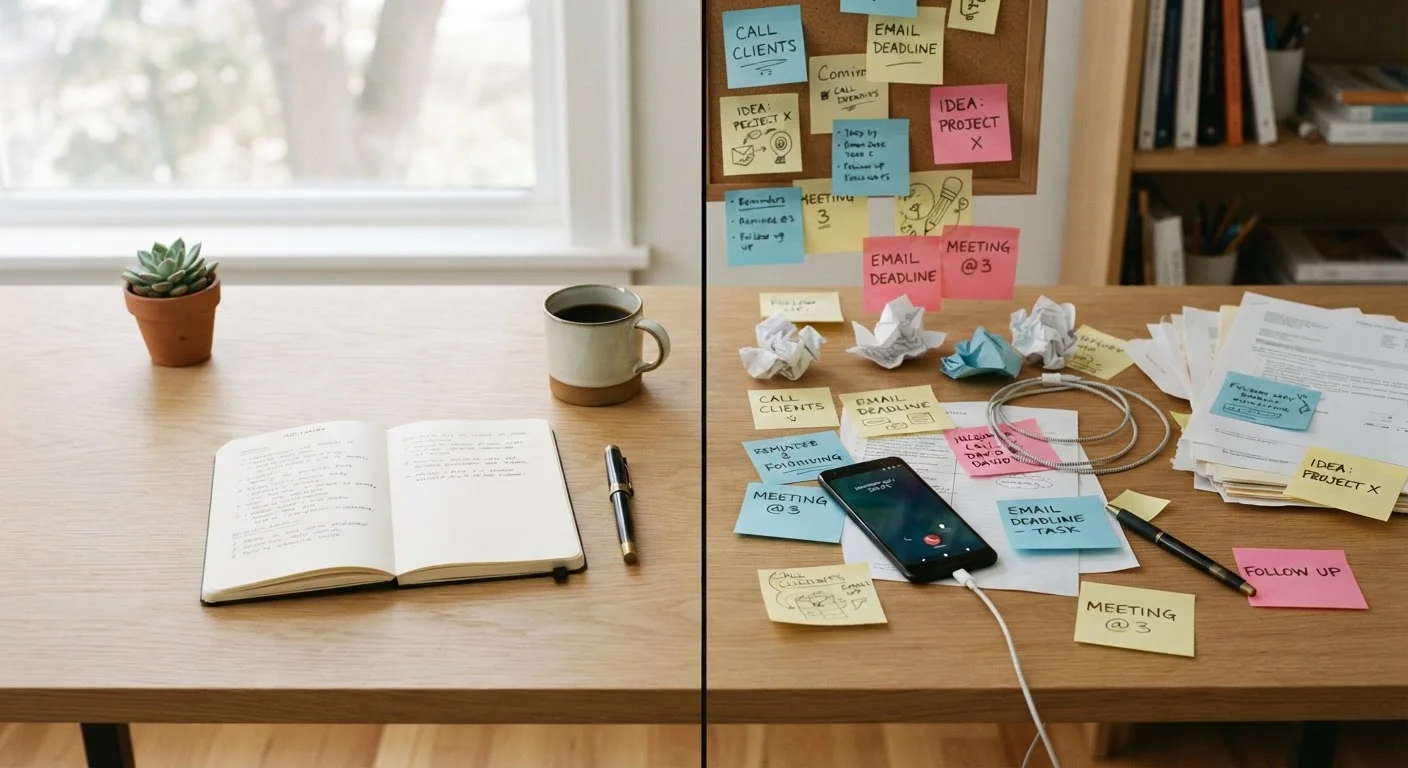
Photo credit: PrimeReads.net | Discover Insightful And Creative Blogs
In this article
Deep work and shallow work aren't just buzzwords — they reflect two fundamentally different modes of thinking. Here's what sets them apart.
Key Takeaways
- Deep work requires sustained, distraction-free focus and produces your most cognitively demanding output.
- Shallow work encompasses low-intensity tasks that are necessary but rarely generate significant value.
- Most knowledge workers spend the majority of their day in shallow work without realizing it.
- Protecting blocks of time for deep work requires deliberate scheduling and boundary-setting.
- Both modes are necessary - the goal is balance and intentionality, not eliminating shallow work entirely.
What Each Mode of Work Actually Means
The terms deep work and shallow work were popularized by computer science professor and author Cal Newport to describe two fundamentally different cognitive modes that knowledge workers move between - often without realizing it.
Deep work refers to cognitively demanding tasks performed in a state of distraction-free concentration. Writing a complex report, designing a software architecture, developing a business strategy, or mastering a new skill all qualify. These tasks push your cognitive capabilities and, when done well, produce results that are difficult to replicate quickly.
Shallow work covers the low-intensity, logistical tasks that fill most workdays - replying to emails, attending status meetings, reformatting documents, or scheduling calls. These tasks are often necessary, but they don't require deep thinking and rarely generate significant new value on their own.
The critical distinction isn't effort or importance in a general sense - it's cognitive depth. A task can feel busy and even urgent while still being shallow. Understanding which mode a given task demands is the first step toward structuring your day more intentionally. For a closer look at how common workplace habits can quietly undermine this balance, see the productivity habits that hold most professionals back.
How They Compare Side by Side
The contrast between deep and shallow work becomes clearer when you look at specific dimensions - from how each mode affects cognitive load to what kinds of outputs each typically produces.
| Criterion | Deep Work | Shallow Work |
|---|---|---|
| Cognitive demand | High - requires full concentration | Low - can be done while distracted |
| Typical outputs | Complex analysis, creative work, skill development | Emails, scheduling, routine updates |
| Value generated | High - hard to replicate quickly | Moderate - necessary but rarely transformative |
| Interruption tolerance | Very low - interruptions are costly | High - easily resumed after breaks |
| Ideal time block | 90+ minutes of uninterrupted time | Batched windows of 30-60 minutes |
| Energy required | Peaks in personal high-focus periods | Manageable at lower-energy times |
One pattern worth noting: shallow work tends to expand to fill available time. Notifications, quick questions, and inbox management are each individually small, but collectively they can fragment an entire workday into segments too short for any meaningful concentration.
Why Most Workdays Default to Shallow
Despite the higher value that deep work tends to produce, most knowledge workers spend the majority of their time in shallow mode. There are structural reasons for this. Open-plan offices, always-on communication tools, and cultural norms around rapid response all create environments hostile to sustained focus.
There's also a psychological component: shallow work feels productive. Clearing an inbox or completing a round of quick replies creates visible, immediate progress - even if it doesn't move high-stakes projects forward. Deep work, by contrast, often involves sitting with difficulty and uncertainty before producing anything tangible, which is cognitively uncomfortable.
~47%
Time minds spend wandering during tasks
Research published in Science found that people's minds wander nearly half the time they are performing everyday activities, underlining how difficult sustained focus can be.
23 min
Average recovery time after an interruption
A study by Gloria Mark at the University of California, Irvine found it takes an average of 23 minutes to fully regain focus after being interrupted during a task.
28%
Workday spent on email by average worker
A McKinsey Global Institute report estimated that knowledge workers spend roughly 28% of their workweek managing email - a quintessential shallow work activity.
Recognizing this default pattern is important. The goal isn't to eliminate shallow work - coordination, communication, and routine tasks genuinely need to happen. The goal is to stop letting them crowd out the deeper thinking that drives meaningful progress.
Building a Day That Protects Both
A practical approach isn't about choosing one mode over the other - it's about assigning each the right time and structure. A few principles tend to help:
- Schedule deep work blocks proactively. Treat them like appointments. Early mornings or periods when your energy is naturally higher often work best, though individual rhythms vary.
- Batch shallow work. Rather than responding to messages as they arrive, designate specific windows for email, Slack, and administrative tasks. This creates clear cognitive boundaries between modes.
- Protect the transition. Switching from shallow to deep work takes time - the brain doesn't shift gears instantly. Building in a brief transition ritual (a short walk, a few minutes of planning) helps signal the shift.
- Audit your default patterns. Spend a few days tracking how your time actually breaks down. Many people discover they're getting far less deep work time than they assumed.
The ability to concentrate deeply is also connected to broader habits around mental focus and presence. If you're exploring the attention side of this further, our comparison of mindfulness vs. meditation covers two practices that support sustained attention in different ways.
Ultimately, structuring your day around these two modes - rather than just reacting to whatever surfaces - is one of the more durable productivity shifts a knowledge worker can make.

Author
Living Editorial Team
Living Editorial Team is the collective byline for our editorial team and contributor network. Articles published under this byline or an editorial pen name are researched, written, and reviewed according to our editorial standards for clarity, consistency, and independence before publication.
View all articles →