
Fixed Deposits vs. Savings Accounts: A Side-by-Side Look at Two Core Options
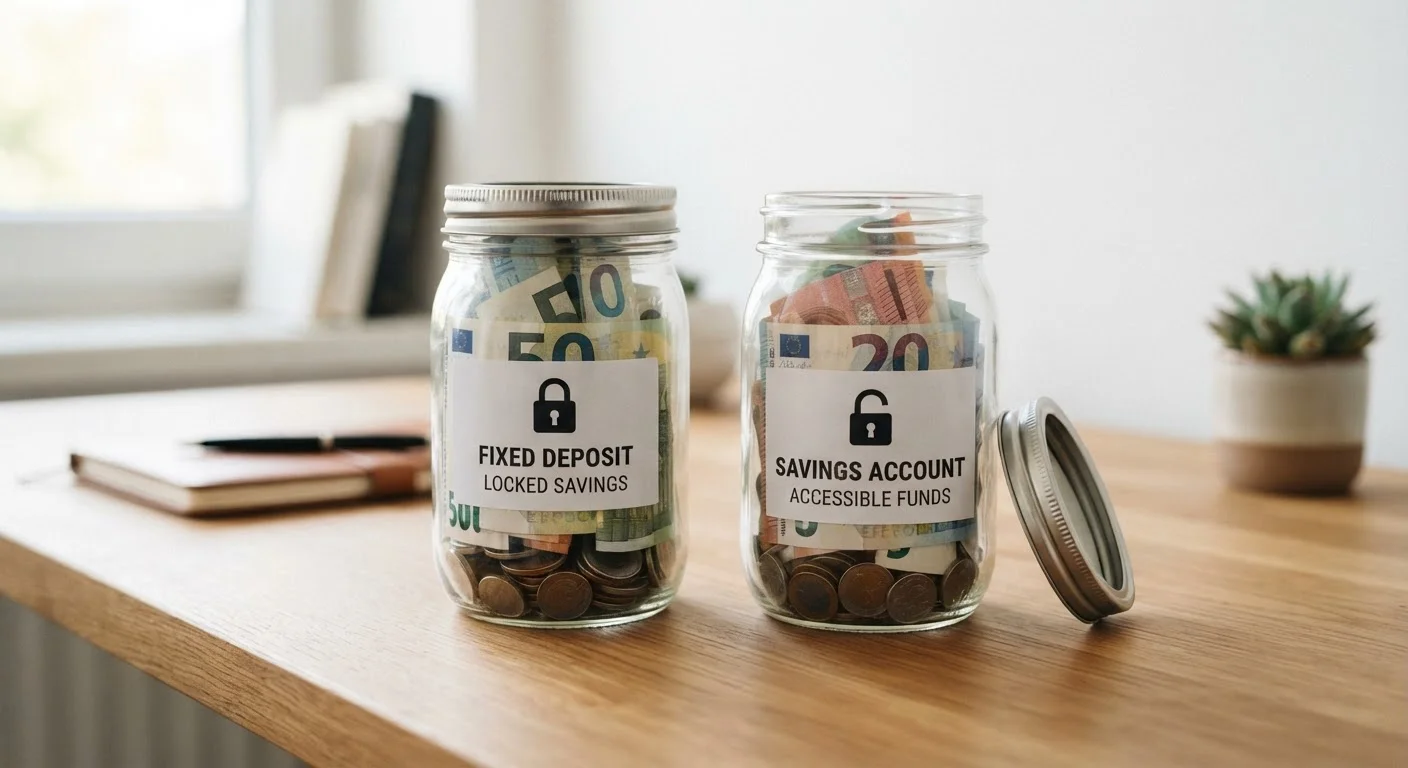
Photo credit: PrimeReads.net | Discover Insightful And Creative Blogs
In this article
Fixed deposits and savings accounts both preserve capital, but they work differently. Compare liquidity, returns, and suitability for different financial goals.
Key Takeaways
- Fixed deposits offer higher interest rates in exchange for locking up your money for a set term.
- Savings accounts provide flexible, penalty-free access to your funds at any time.
- Emergency funds generally belong in a savings account due to immediate accessibility needs.
- Fixed deposits suit money you know you won't need until a specific future date.
- Both account types are generally insured by the FDIC up to applicable limits at participating institutions.
How Each Account Works
A savings account is a deposit account held at a bank or credit union that earns interest on your balance while keeping funds available on demand. You can deposit or withdraw at will, though some institutions limit the number of transfers per month. Interest is typically variable, meaning the rate can change at any time based on market conditions or the institution's own policies.
A fixed deposit - commonly called a certificate of deposit (CD) in the United States - requires you to deposit a lump sum for a predetermined term, which can range from a few months to several years. In return, the institution agrees to pay a fixed interest rate for that entire period. When the term ends (called the maturity date), you receive your principal plus accrued interest. Withdrawing early typically triggers a penalty, often equivalent to a portion of the interest earned.
Understanding this structural difference is the starting point for any comparison. For a broader look at where saving fits alongside other financial strategies, see Saving vs. Investing: Understanding When Each One Makes Sense.
Liquidity, Returns, and Risk - The Core Trade-Offs
| Savings Account | Fixed Deposit (CD) | |
|---|---|---|
| Access to funds | Anytime, on demand | Only at maturity without penalty |
| Interest rate type | Variable - can change anytime | Fixed for the full term |
| Typical yield | Generally lower | Generally higher |
| Early withdrawal | No penalty | Penalty applies (varies by institution) |
| Minimum deposit | Often low or none | Often higher minimums |
| Best use case | Emergency fund, ongoing savings | Defined future goals, idle cash |
| FDIC/NCUA insurance | Yes, up to applicable limits | Yes, up to applicable limits |
The comparison table above captures the most practical differences. The central trade-off is straightforward: liquidity versus yield. Savings accounts give you immediate access, which is essential for money you might need at short notice. Fixed deposits reward you for giving up that access with a higher, locked-in rate.
On risk, both options are low. As long as the institution is FDIC-insured (or NCUA-insured for credit unions), deposits are generally protected up to $250,000 per depositor, per institution, per ownership category. Neither account exposes your principal to market fluctuations - a meaningful distinction from investing in stocks or bonds.
One nuance worth noting: because savings account rates are variable, your actual return over time is uncertain. A fixed deposit eliminates that uncertainty for its term, which can be valuable when planning around a specific financial goal. For guidance on aligning account choices with your timeline, Short-Term vs. Long-Term Savings Goals is a practical next read.
Choosing the Right Account for Your Situation
The most important question to ask yourself is: When might I need this money?
- Emergency fund: Financial educators broadly recommend keeping three to six months of essential expenses in a readily accessible account. A savings account - ideally a high-yield savings account - is the standard vehicle here. A fixed deposit is not appropriate for emergency savings because early withdrawal penalties can erode the very funds you need in a crisis.
- Defined future goal: If you're saving for something specific - a home down payment in 18 months, a planned large purchase - and you're confident you won't need that money before the target date, a fixed deposit can deliver a more competitive yield with complete principal protection.
- Using both together: Many savers maintain a savings account for liquidity and layer in one or more CDs for money they can afford to lock away. This approach, sometimes called a CD ladder, staggers maturity dates so that a portion of your fixed deposits becomes accessible at regular intervals.
Before deciding, it helps to audit your overall savings structure. The Financial Foundations Checklist can help you determine whether the basics - emergency fund, account structure, automation - are actually in place.
This article is for general informational and educational purposes only and does not constitute personalized financial advice. Consult a qualified financial professional regarding decisions specific to your situation.

Author
Money Editorial Team
Money Editorial Team is the collective byline for our editorial team and contributor network. Articles published under this byline or an editorial pen name are researched, written, and reviewed according to our editorial standards for clarity, consistency, and independence before publication.
View all articles →