
Fitness Tracking: What Wearable Data Can and Cannot Tell You
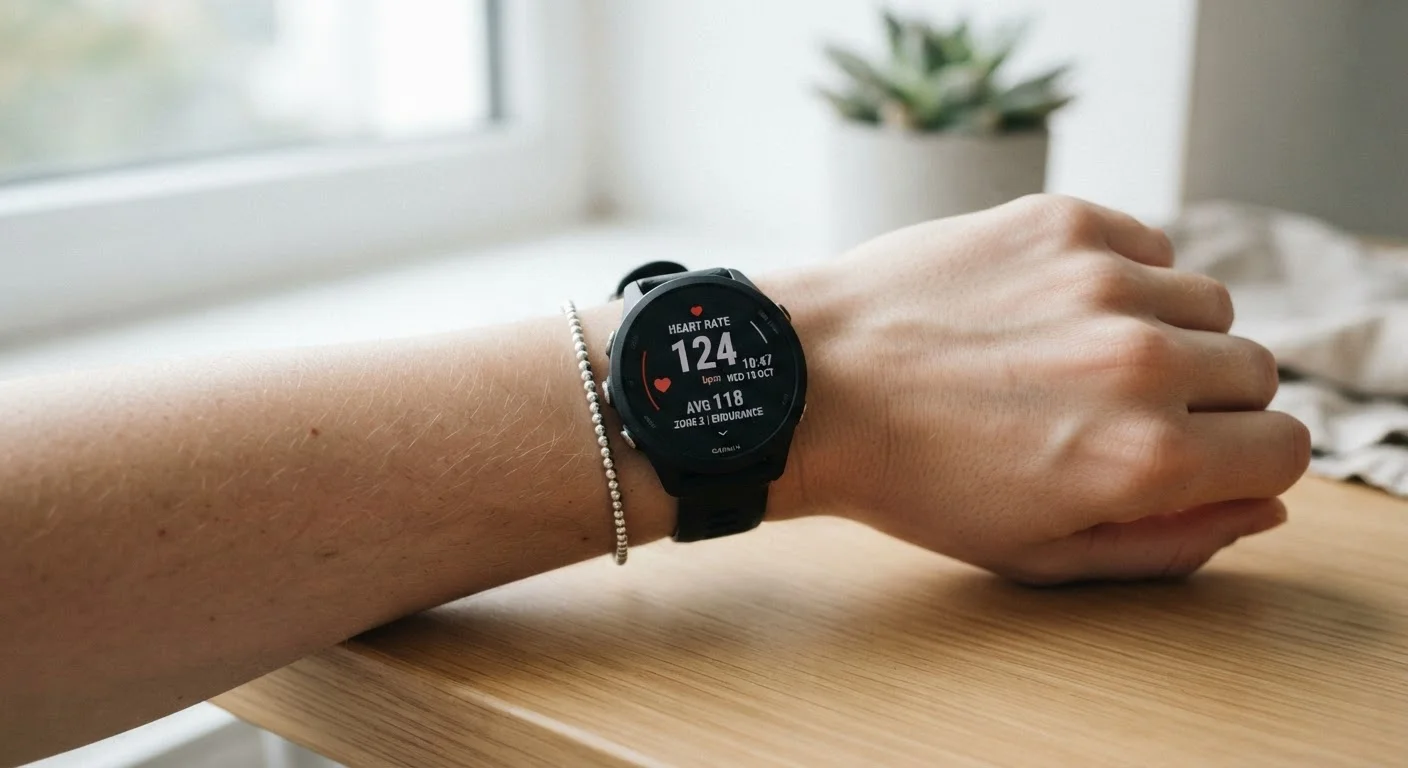
Photo credit: PrimeReads.net | Discover Insightful And Creative Blogs
In this article
Step counts, heart rate zones, calorie burns — a clear look at which metrics wearables measure reliably and where their accuracy falls short.
Key Takeaways
- Step counting is among the most reliable metrics wearable devices provide.
- Heart rate readings are generally accurate at rest but can drift during high-intensity or irregular movement.
- Calorie burn estimates carry significant error margins and should be treated as rough guides only.
- Sleep staging data from consumer wearables does not match clinical sleep study accuracy.
- Wearable data is most useful as a behavioral motivator and trend tracker, not a clinical diagnostic tool.
Reliable step counting encourages daily movement goals
Accelerometer-based step tracking is among the most validated functions of consumer wearables, with studies showing reasonable agreement with observed step counts under normal walking conditions.
Resting heart rate trends can signal recovery changes
Overnight heart rate monitoring is relatively accurate and can help users notice patterns - such as elevated resting heart rate during illness or overtraining - worth discussing with a clinician.
Behavioral motivation through real-time feedback
Research on self-monitoring suggests that visibility into daily activity levels can increase physical activity, particularly for people building new exercise habits.
Accessible long-term trend tracking
Wearables generate longitudinal data over weeks and months that would be impractical to collect any other way, helping users identify seasonal or lifestyle-linked patterns.
Calorie burn estimates carry large error margins
Multiple peer-reviewed studies have documented errors of 15-40% or more in wearable calorie estimates, making them unreliable for precise dietary planning or weight management calculations.
Heart rate accuracy drops during vigorous or irregular movement
Optical wrist-based sensors struggle with activities involving significant arm movement, dark skin tones in some device generations, or irregular rhythms, leading to readings that may meaningfully diverge from actual heart rate.
Sleep staging data does not match clinical accuracy
Consumer devices cannot replicate polysomnography's electrode-based measurements, so REM and deep sleep breakdowns are algorithmic estimates that may misclassify sleep stages.
Risk of over-reliance on imprecise numbers
When users treat wearable data as clinically precise, it can lead to unnecessary anxiety about readings that fall outside expected ranges or misguided changes to training and diet.
What Wearables Actually Measure
Consumer fitness trackers collect data through a handful of core sensors. Most rely on accelerometers to detect movement, optical photoplethysmography (PPG) sensors to estimate heart rate by measuring blood flow through the skin, and altimeters for elevation. Some higher-end devices add electrodermal activity sensors, skin temperature monitors, or electrical heart sensors for single-lead ECG readings.
Understanding the underlying method matters because each sensor has defined conditions under which it performs well - and conditions where it does not. A PPG sensor on a wrist, for example, is more susceptible to motion interference than a chest strap heart rate monitor, which is closer to the source. Knowing this helps set realistic expectations before interpreting any number the device displays.
Where Wearables Tend to Perform Well
Reliable step counting encourages daily movement goals
Accelerometer-based step tracking is among the most validated functions of consumer wearables, with studies showing reasonable agreement with observed step counts under normal walking conditions.
Resting heart rate trends can signal recovery changes
Overnight heart rate monitoring is relatively accurate and can help users notice patterns - such as elevated resting heart rate during illness or overtraining - worth discussing with a clinician.
Behavioral motivation through real-time feedback
Research on self-monitoring suggests that visibility into daily activity levels can increase physical activity, particularly for people building new exercise habits.
Accessible long-term trend tracking
Wearables generate longitudinal data over weeks and months that would be impractical to collect any other way, helping users identify seasonal or lifestyle-linked patterns.
Step counting is the headline strength of most wearables. Research comparing accelerometer-based step counts against direct observation has found reasonably close agreement in typical walking conditions. This makes wearables a practical tool for monitoring daily movement volume - a metric that correlates with meaningful health outcomes. If you're curious about the broader research picture on walking as activity, see what research says about walking as exercise.
Resting heart rate monitoring is another relative strength. When measured during stationary periods - such as overnight - optical sensors show reasonably consistent readings that can reflect cardiovascular trends over time. Many clinicians consider resting heart rate a useful, if indirect, signal of cardiovascular fitness and recovery.
Where the Data Falls Short
Calorie burn estimates carry large error margins
Multiple peer-reviewed studies have documented errors of 15-40% or more in wearable calorie estimates, making them unreliable for precise dietary planning or weight management calculations.
Heart rate accuracy drops during vigorous or irregular movement
Optical wrist-based sensors struggle with activities involving significant arm movement, dark skin tones in some device generations, or irregular rhythms, leading to readings that may meaningfully diverge from actual heart rate.
Sleep staging data does not match clinical accuracy
Consumer devices cannot replicate polysomnography's electrode-based measurements, so REM and deep sleep breakdowns are algorithmic estimates that may misclassify sleep stages.
Risk of over-reliance on imprecise numbers
When users treat wearable data as clinically precise, it can lead to unnecessary anxiety about readings that fall outside expected ranges or misguided changes to training and diet.
Calorie burn estimates are among the least reliable outputs wearables generate. Published studies have found error margins ranging from roughly 15% to over 40% across different devices and activities. The algorithms behind these estimates rely on population-level models that may not reflect an individual's body composition, metabolic rate, or movement efficiency. Treating a calorie burn figure as precise enough to guide food intake decisions can easily backfire.
Sleep staging - the breakdown of light, deep, and REM sleep - is another area where consumer devices diverge substantially from gold-standard polysomnography (clinical sleep studies). Wearables can approximate total sleep duration with reasonable accuracy, but the stage-by-stage breakdown depends on indirect signals that are much harder to interpret correctly. This doesn't mean the data is useless, but it should be read as an estimate rather than a clinical finding. For broader context on how activity intersects with long-term health, see the role of physical activity in disease prevention.
Using Wearable Data Constructively
Wearables Are Not Medical Devices
Most consumer fitness trackers are classified as general wellness products, not FDA-cleared medical devices. This distinction matters: the data they provide is not held to the same accuracy standards as clinical instruments. Some devices have received clearance for specific features (such as ECG or irregular rhythm notifications), but this applies narrowly to those functions - not to the device as a whole. Always consult a healthcare provider if wearable data raises health concerns.
The most evidence-consistent way to use a fitness tracker is as a behavioral feedback tool rather than a diagnostic instrument. Noticing that your step count drops sharply on work-from-home days, or that your resting heart rate rises during periods of poor sleep, offers genuinely useful behavioral insight - even if the underlying numbers carry some margin of error.
Trends over days and weeks are more informative than individual data points. A single high heart rate reading during a stressful workout tells you little. A consistently elevated resting heart rate over two weeks may be worth paying attention to and discussing with a healthcare provider.
Wearables work best alongside, not instead of, other health practices. Consistent, moderate activity has a stronger evidence base than any individual metric a device can display. If you are new to tracking or exercise, it is also worth reviewing common beginner exercise habits that can backfire to avoid over-relying on numbers at the expense of sustainable habits.
~27%
Average calorie estimate error across devices
A study published in the Journal of Personalized Medicine found that popular fitness trackers had a mean calorie error of approximately 27%, with some devices exceeding 40% in certain activities.
~3%
Typical step count error in controlled conditions
Research comparing wrist-worn accelerometers against manual step counts has generally found errors of around 1-3% during treadmill walking under controlled conditions.
This article is for general informational purposes only and does not constitute medical advice. Consult a qualified healthcare professional before making changes to your health or exercise routine based on wearable data or any other source.

Author
Health Editorial Team
Health Editorial Team is the collective byline for our editorial team and contributor network. Articles published under this byline or an editorial pen name are researched, written, and reviewed according to our editorial standards for clarity, consistency, and independence before publication.
View all articles →