
What Applicant Tracking Systems Actually Do to Your CV
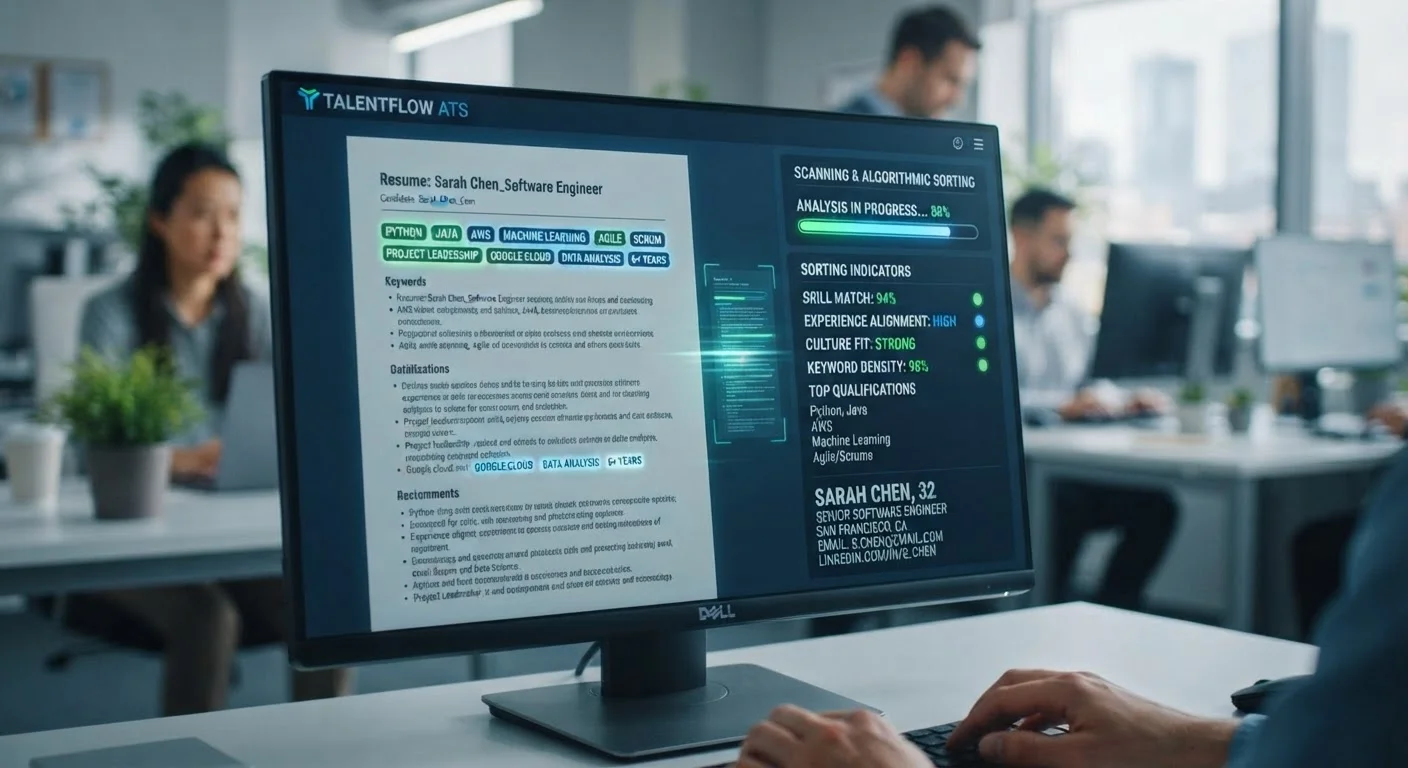
Photo credit: PrimeReads.net | Discover Insightful And Creative Blogs
In this article
ATS software filters applications before any human reads them. Here's how these systems work and what that means for how you write your CV.
Key Takeaways
- Most large employers route every application through an ATS before a recruiter sees it.
- The system parses your CV into structured fields - skills, experience, education - and matches them against job requirements.
- Keyword relevance is the primary driver of whether your CV advances past automated screening.
- Complex formatting, graphics, and non-standard file types can cause parsing errors that hurt your chances.
- A CV optimized for ATS should still be clear and readable for the human reviewer who comes next.
How an ATS Actually Processes Your CV
When you submit an application through a company's online portal, your CV doesn't land in a recruiter's inbox - it enters a database. The ATS first parses your document, breaking it into structured fields: your name and contact details, work history (employer, title, dates), education, and skills. Think of it as the software trying to read your CV the way a form would - categorizing each piece of information into a designated slot.
After parsing, the system compares your structured data against the requirements defined for that specific role. Hiring managers typically configure the ATS with must-have criteria - certain job titles, years of experience, specific skills or certifications - and the system scores or ranks each application accordingly. Applications that score above a threshold are surfaced to recruiters; those that don't may never be reviewed by a human at all.
For a broader picture of how this fits into the job search process, see our complete overview of navigating the modern job market.
Why Keywords Matter More Than You Think
The most direct lever you have over your ATS ranking is keyword alignment. An ATS doesn't read your CV the way a person does - it looks for the presence of specific terms that match the job description. If a posting asks for "project management" and your CV says "program coordination," the system may not register them as equivalent, even though a recruiter would.
This is why reading the job description carefully and mirroring its language - not copying it verbatim, but adopting its specific terminology - is one of the highest-impact steps you can take. Identify the skills, tools, and qualifications that appear repeatedly in the posting and make sure your CV reflects those exact phrases where they genuinely apply to your background.
Match the Job Description's Exact Language
Copy the specific terms the posting uses - not synonyms you prefer - wherever they honestly describe your experience. If the role says "cross-functional collaboration," use that phrase rather than "teamwork" or "interdepartmental coordination." Small word choices can meaningfully affect your ranking.
This doesn't mean padding your CV with terms that don't apply to you. Misrepresenting your skills creates problems at the interview stage and beyond. The goal is accurate alignment, not inflation. For more on what genuine tailoring looks like, see what tailoring your application really means.
Formatting Mistakes That Break ATS Parsing
A CV that looks polished to a human reader can be nearly unreadable to an ATS. Several common formatting choices cause parsing failures:
- Tables and columns: ATS software often reads left-to-right across a row, scrambling content that was designed to appear in separate columns.
- Text boxes and graphics: Content placed inside a text box or embedded as an image is frequently invisible to the parser.
- Headers and footers: Contact details placed in the document header may not be extracted correctly.
- Unusual section labels: Headings like "My Story" or "Where I've Been" can confuse systems expecting standard labels like "Work Experience" or "Education."
- Non-standard fonts and symbols: Decorative bullets or uncommon characters sometimes render as garbled text.
The safest approach is a clean, single-column layout using standard section headings, a common font, and submitted as a .docx or PDF file. Keep visual design minimal - formatting that impresses a human recruiter means little if the ATS can't parse the content beneath it.
~75%
Applications filtered out before human review
Industry estimates suggest roughly three-quarters of applications are filtered or ranked out by ATS before a recruiter reviews them, though exact figures vary by employer and platform.
98%
Fortune 500 companies using ATS
According to widely cited workforce research, nearly all Fortune 500 companies rely on ATS platforms to manage the volume of applications they receive.
What Happens After the ATS - and Why It Still Matters
Passing the ATS is not the finish line. Once your application is surfaced to a recruiter, it faces a different kind of scrutiny - a fast human scan that has its own rules and priorities. What recruiters notice in the first 30 seconds is a separate challenge from ATS optimization, and the two goals must work together.
This means the CV you optimize for ATS still needs to be readable, logically structured, and compelling to a person. Keyword density alone won't carry you through an interview process. Think of ATS optimization as clearing the first gate - after that, the quality of your experience, the clarity of your writing, and the relevance of your background take over.
It's also worth questioning some of the assumptions you may have about how hiring works. Common job search myths - like the idea that a great CV is always enough - can cause candidates to over-invest in one part of the process while neglecting others.
Frequently Asked Questions

Author
Career Editorial Team
Career Editorial Team is the collective byline for our editorial team and contributor network. Articles published under this byline or an editorial pen name are researched, written, and reviewed according to our editorial standards for clarity, consistency, and independence before publication.
View all articles →