
Job Boards, Recruiters, and Networking: Weighing Your Main Search Channels
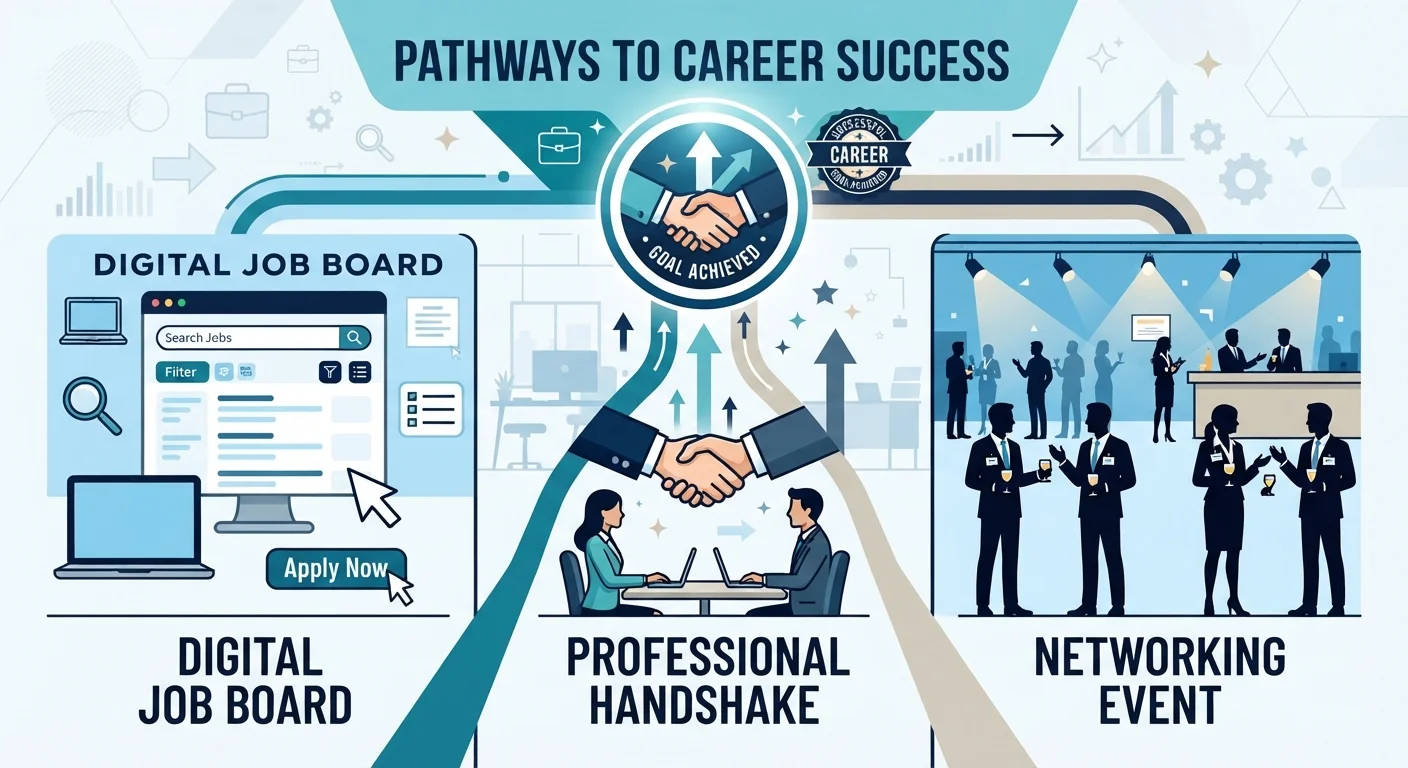
Photo credit: PrimeReads.net | Discover Insightful And Creative Blogs
In this article
Each job search channel has different strengths and blind spots. Compare how job boards, recruiters, and direct networking each work in practice.
Key Takeaways
- Job boards offer broad access but high competition; tailoring applications is essential to stand out.
- Recruiters work fastest for specialized or senior roles but prioritize employer needs over candidates'.
- Networking reaches the hidden job market - roles filled before they're ever publicly posted.
- Most successful searches combine all three channels strategically rather than relying on just one.
- Your career stage and urgency should guide how much weight you give each channel.
How Each Channel Works
Understanding the mechanics behind each channel helps you use it on its own terms rather than treating all three as interchangeable. For a broader orientation to how today's hiring landscape operates, see this complete overview of the modern job market.
Job Boards
Job boards - general platforms and industry-specific sites - aggregate postings from employers and staffing firms. You search, you apply, and your materials enter an applicant tracking system (ATS) where they are screened before a human reviews them. The process is transparent but highly competitive: a single posting can attract hundreds of applicants within days.
Recruiters
Recruiters - whether in-house talent teams or third-party agencies - are hired by employers to fill specific roles. External (agency) recruiters typically work on contingency, meaning they earn a fee only when a placement is made. Their incentive is to fill the role efficiently, which makes them fast and well-connected but not primarily focused on your long-term career interests. For a detailed look at how agencies operate, explore the pros and cons of working with a recruitment agency.
Networking
Networking means building and activating professional relationships - with former colleagues, industry contacts, alumni connections, and hiring managers directly. It is the primary gateway to what researchers call the hidden job market: roles filled through referrals or internal promotion before a public posting ever appears. Learn more about why so many roles are never publicly advertised.
Comparing the Three Channels
Each channel has distinct strengths and real limitations. The table below maps them across the criteria that matter most in a practical search.
| Job Boards | Recruiters | Networking | |
|---|---|---|---|
| Visibility of opportunities | High - broad market view | Medium - curated, role-specific | Low upfront, high once activated |
| Competition level | Very high - hundreds of applicants | Lower - pre-screened pool | Lowest - referral advantage |
| Speed to first conversation | Variable - days to weeks | Often fast - days | Slow to build, then faster |
| Effort required | Moderate - tailoring each application | Low to moderate - responsive availability | High - relationship maintenance |
| Access to hidden market | None | Partial - some unlisted roles | Strong - primary access point |
| Best career stage fit | Early to mid-career | Mid to senior / specialist | Mid to senior / all stages long-term |
| Control over process | High - you apply directly | Low - recruiter steers pace | High - you drive relationships |
Job boards reward volume and keyword precision. Recruiters reward specialization and responsiveness. Networking rewards consistency and genuine relationship-building over time - and it frequently delivers the highest-quality introductions because someone vouches for you before the employer ever reads your resume.
When to Lean on Each One
Your optimal channel mix shifts depending on where you are in your career and how urgently you need to move.
Lean on job boards when:
- You are entering the workforce or changing industries and need broad market exposure.
- You want to benchmark what roles and salaries exist in your target field.
- You have the capacity to tailor applications carefully and track them systematically. See how to build a job search routine that holds up over weeks for a practical framework.
Lean on recruiters when:
- You hold specialized credentials or senior-level experience that commands a defined talent market.
- You need to move quickly and want someone actively presenting your profile to employers.
- You are open to roles you might not find or think to search for independently.
Lean on networking when:
- You are targeting specific companies rather than generic job titles.
- You are in a field where reputation and referrals drive most hiring decisions.
- You want to explore roles before committing to a formal application - informational interviews are a structured way to do this.
Common Mistakes With Each Channel
Candidates often underperform not because a channel is wrong for them, but because of avoidable missteps.
Job board pitfalls
Sending identical resumes to every posting is the most common error. ATS filters are designed to match specific language, so a generic application rarely advances. Understand what recruiters notice in the first 30 seconds to frame your materials more effectively.
Recruiter pitfalls
Treating a recruiter like a career coach will lead to frustration. They are intermediaries with a mandate to fill a specific role. Be clear about your non-negotiables upfront, respond promptly, and don't rely on a single recruiter as your only external champion.
Networking pitfalls
Reaching out only when you need something erodes trust quickly. Effective networking is ongoing - sharing useful resources, congratulating contacts on milestones, and contributing to professional communities. When you do make direct outreach, respectful, specific cold outreach tends to outperform generic connection requests.
For a clear-eyed look at assumptions that can stall any channel's effectiveness, review common job search myths that keep candidates stuck.
Building a Multi-Channel Strategy
The most resilient searches treat these channels as complementary rather than competing. A practical starting allocation might be: spend roughly 40% of your search effort on targeted networking, 35% on curated job board applications, and 25% engaging with relevant recruiters. These proportions should shift as you gather feedback - if a recruiter has active roles that match your profile, weight that relationship higher temporarily.
Track your activity across all three channels. Knowing your application-to-interview ratio by channel tells you where to invest more - and where to course-correct. If you are just beginning this process, start with the foundational groundwork before applying anywhere to make every channel more effective from day one.
Finally, consider whether your current search posture is active or passive - your channel mix should reflect that. Weigh the differences between active and passive job searching to calibrate your approach.

Author
Career Editorial Team
Career Editorial Team is the collective byline for our editorial team and contributor network. Articles published under this byline or an editorial pen name are researched, written, and reviewed according to our editorial standards for clarity, consistency, and independence before publication.
View all articles →